MWE Correspondent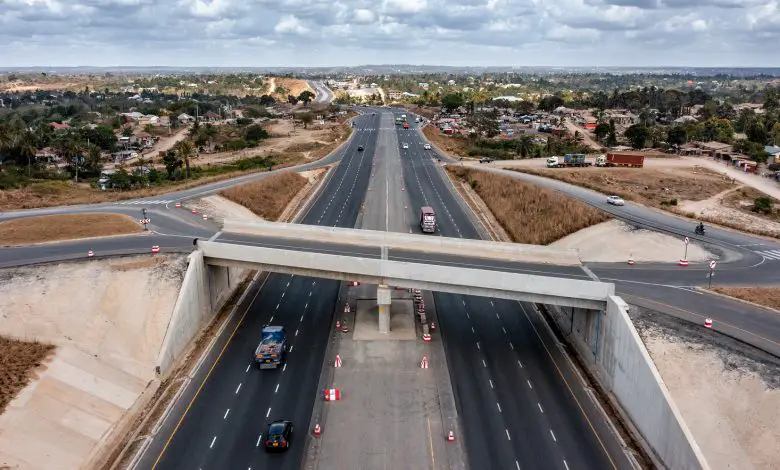
Before dawn, freight trains rolled through East Africa, cargo ships docked at expanding ports along the Atlantic and Indian Ocean coastlines, and construction crews resumed work on highways designed to connect some of the continent’s fastest-growing economies.
To millions of Africans, these projects represent jobs, faster transport and economic opportunity.
To the world’s major powers, they represent something far bigger.
Infrastructure has become one of the most valuable geopolitical assets of the twenty-first century.
Throughout 2026, competition among China, the United States, the European Union, Gulf states, Turkey and other international partners has intensified as each seeks a stronger presence in Africa through investment in transport corridors, energy projects, telecommunications and industrial parks.
While each partner promotes its own development model, analysts say the growing interest reflects Africa’s rising strategic importance in a rapidly changing global economy.
The continent is no longer viewed simply as a destination for development assistance.
It is increasingly recognised as a future centre of manufacturing, trade, energy production and economic growth.
That transformation has elevated infrastructure from a development issue to a geopolitical priority.
China remains one of Africa’s largest infrastructure partners, having financed and constructed railways, highways, ports, airports and power projects across dozens of countries over the past two decades.
Beijing argues that improved infrastructure supports economic growth by lowering transport costs, strengthening regional connectivity and expanding trade opportunities.
At the same time, the United States and the European Union have increased their own engagement through infrastructure financing, private-sector investment and initiatives aimed at strengthening resilient supply chains and sustainable development.
The Gulf states have also expanded investment, particularly in ports, logistics and renewable energy, while countries such as Türkiye and India continue increasing their commercial footprint across the continent.
For African governments, the expanding competition presents both opportunity and responsibility.
More international partners mean greater access to finance, technology and expertise.
But they also require careful negotiation to ensure projects align with national priorities rather than external strategic interests.
This has brought Infrastructure Development to the centre of Africa’s long-term economic strategy.
Modern transport networks, reliable electricity and efficient logistics systems are essential for industrialisation, regional integration and international competitiveness.
Also Read, The Arctic Is Redefining Global Geopolitics
Without them, even resource-rich economies struggle to move goods efficiently or attract large-scale manufacturing.
Increasingly, African leaders are emphasising that infrastructure agreements should create long-term domestic value through technology transfer, local employment, skills development and support for local industries.
Economists argue that roads and railways alone do not guarantee prosperity.
Their greatest value comes when they connect productive industries, stimulate manufacturing and encourage regional trade.
The implementation of the African Continental Free Trade Area (AfCFTA) has strengthened this thinking.
As tariffs decline and regional commerce expands, demand for efficient transport corridors and logistics hubs is expected to grow significantly.
Infrastructure therefore becomes more than concrete and steel.
It becomes the foundation of economic integration.
Yet concerns remain over financing models, debt sustainability and project transparency.
Many governments are seeking investment arrangements that balance infrastructure development with long-term fiscal stability.
Analysts note that strong governance, competitive procurement and effective project management are essential to maximise economic returns while protecting public finances.
This broader debate has strengthened calls for Economic Sovereignty.
Economic sovereignty means ensuring that countries retain the ability to make independent development decisions while using international partnerships to advance national priorities rather than create long-term dependence.
For Africa, this principle is becoming increasingly important as global competition for influence continues to grow.
The continent’s strategic location, youthful population, expanding consumer markets and abundant natural resources have made it one of the world’s most attractive destinations for long-term investment.
As a result, infrastructure is no longer simply about connecting cities.
It is about connecting Africa to the future global economy.
The competition now unfolding across the continent is unlikely to slow.
If managed strategically, it could accelerate industrialisation, create millions of jobs and strengthen Africa’s position within global trade.
If managed poorly, it risks reinforcing patterns in which external powers benefit more than local economies.
The cranes rising above African ports and the railways stretching across the continent tell a story that extends far beyond construction.
They reveal a continent whose infrastructure has become one of the defining geopolitical prizes of the twenty-first century.