 Hassan Magulumali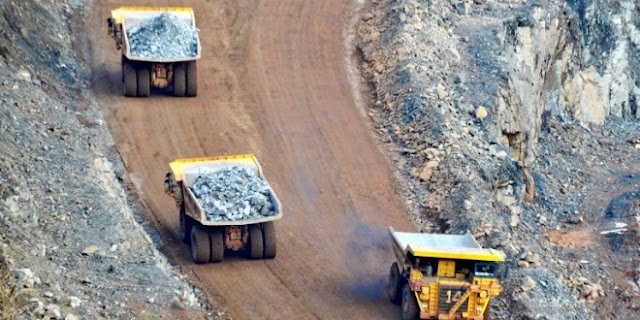
Africa is becoming increasingly important to the global transition towards cleaner energy, with countries across the continent holding minerals needed for batteries, electric vehicles, renewable-energy systems and other technologies.
But for Tanzania, the emerging green-minerals economy raises a critical question: Will the country become a supplier of minerals for industries abroad, or will it develop the capacity to manufacture products from those minerals at home?
The United Nations has warned that African countries have historically exported raw and semi-processed commodities while capturing a relatively small share of the wealth generated further along global value chains. It says the current increase in demand for critical minerals could repeat that pattern unless countries invest in processing, manufacturing and skills.
Tanzania already has a significant position in the mineral sector. According to the U.S. Geological Survey, Tanzania was the world’s fifth-largest producer of natural graphite in 2024, while mining and quarrying contributed about 10% of the country’s GDP.
Read More: Tanzania Must Learn From Africa’s Costly Mining Deals
A 2026 study published by researchers from Mzumbe University and the University of Dar es Salaam says Tanzania has opportunities to move beyond raw mineral exports into battery-material refining, graphite processing and rare-earth separation. However, it identifies shortages in refining capacity, technical skills, supplier networks and certification systems as obstacles to deeper industrialisation.
The experiences of the Democratic Republic of Congo, Zimbabwe and Namibia demonstrate why mineral wealth alone does not guarantee industrial transformation.
Zimbabwe has moved aggressively to prevent its lithium sector from becoming primarily an export industry. In February 2026, the government banned exports of raw minerals and lithium concentrates, citing concerns over export malpractices and leakages. The country had previously restricted raw lithium exports and invested in domestic processing.
Namibia, meanwhile, remains heavily dependent on a relatively narrow range of commodity exports. UNCTAD has warned that such dependence leaves economies vulnerable to commodity-price volatility and external shocks, while recommending domestic processing, manufacturing, skills development and diversification.
For Tanzania, the lesson is that the green transition should not simply replace an old form of resource extraction with a new one.
What Tanzania can do
Tanzania could reduce the risk by:
developing domestic graphite, nickel and other mineral-processing capacity;
linking mining projects to Tanzanian manufacturing industries;
investing in engineering, chemistry and battery-processing skills;
requiring meaningful technology transfer and local supplier participation;
supporting research institutions to develop mineral-processing technologies;
developing reliable electricity and transport infrastructure for processing industries;
negotiating investment agreements that include measurable value-addition targets; and
strengthening environmental monitoring as processing activities expand.
The country is already considering greater capacity in this area. The government has discussed establishing a strategic minerals centre of excellence focused partly on battery technology and mineral value addition.
The central issue for Tanzania is therefore not simply how much graphite, nickel or other critical minerals it can extract, but how much of the final economic value it can retain inside the country.