 editor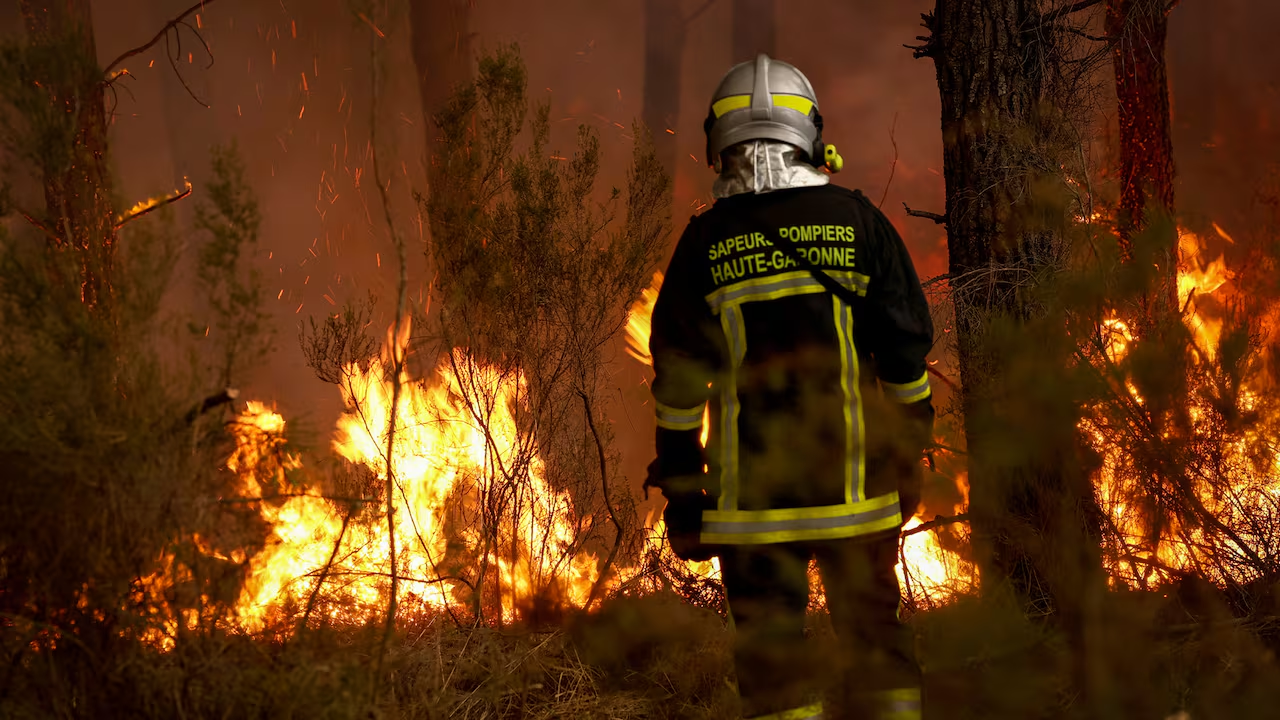
For thousands of families across France and Spain, the summer of 2026 has become a desperate race against fire.
With smoke covering once-familiar landscapes and flames moving dangerously close to communities, more than 300,000 people have been forced to leave their homes as some of the most destructive wildfires in recent European history continue spreading.
Behind the numbers are families who have had to make heartbreaking decisions — leaving behind homes, farms, memories and belongings as emergency authorities order evacuations to protect lives.
The fires, intensified by extreme heat, powerful winds and months of drought, have turned forests and dry fields into dangerous fuel, allowing flames to travel rapidly across large areas.
In France, around 220,000 people have been evacuated as wildfires push closer to the Bordeaux region. Entire communities have been placed on alert, with residents watching anxiously as firefighters battle to stop the flames from reaching more populated areas.
For many evacuees, the warning came suddenly. Some left with only essential items, uncertain about when — or even whether — they would be able to return to their homes.
Across the border in Spain, the situation has become equally severe. More than 75,000 residents have been ordered to evacuate, while another 30,000 people have been instructed to remain indoors as authorities attempt to limit exposure to the danger.
Near Madrid, the crisis reached a critical point when three major fires merged into one massive wildfire, overwhelming firefighting operations and forcing Spain to declare its first national wildfire emergency.
The declaration reflected the scale of a disaster that officials say is no longer a localized problem but a national emergency requiring extraordinary measures.
The fires are unfolding during a year when Europe has experienced some of its harshest weather conditions.
Also Read, Hormuz Crisis Sends Global Oil Prices Higher
Scientists say Europe is the fastest-warming continent, with rising temperatures contributing to longer heatwaves, reduced rainfall and increasingly dry landscapes.
In 2026, Europe has already endured three intense heatwaves, leaving forests and vegetation extremely vulnerable. A single spark in such conditions can quickly become a major disaster, spreading faster than communities can prepare.
Environmental experts warn that climate change is reshaping the way Europe experiences summer. Seasons that were once associated with predictable weather patterns are increasingly being marked by extreme heat, water shortages and destructive fires.
Monitoring data shows that wildfires this year have already burned more land than the average annual area destroyed across Europe during the past two decades — a sign that the continent is facing a growing environmental challenge.
As flames continue spreading, firefighters from across Europe have joined the battle, bringing additional crews, aircraft and emergency equipment to support overwhelmed teams.
But the conditions remain extremely difficult.
High temperatures are exhausting firefighters, while strong winds continue changing the direction of fires and creating new threats even after some areas appear under control.
Authorities say the biggest challenge is not only stopping existing fires but preventing new ones from starting in a landscape that remains dangerously dry.
Emergency officials have repeatedly urged residents to follow evacuation orders, saying cooperation is critical to saving lives and allowing firefighters to focus on controlling the disaster.
For affected communities, the wildfire emergency is not only about damaged forests or destroyed land. It is about people facing uncertainty about their future.
Families who fled their homes are now waiting for updates from authorities, hoping they will return to find their communities standing.
Business owners, farmers and local residents are also counting the cost of a disaster that threatens livelihoods built over generations.
The crisis has renewed a wider debate across Europe about how governments prepare for extreme weather events. Leaders are facing growing pressure to invest more in prevention, strengthen emergency systems and develop long-term strategies to protect communities.
Experts say fighting fires after they begin is only part of the solution. Europe must also address the deeper factors driving these disasters, including rising temperatures and prolonged drought.
For now, the immediate battle continues. Thousands of firefighters remain on the front lines, while hundreds of thousands of displaced residents wait for one thing — the moment when the flames are finally under control and they can safely go home.
The fires burning across France and Spain are not just a story of destruction. They are a warning of a changing climate and a test of how prepared Europe is for the challenges ahead.