 Hassan Magulumali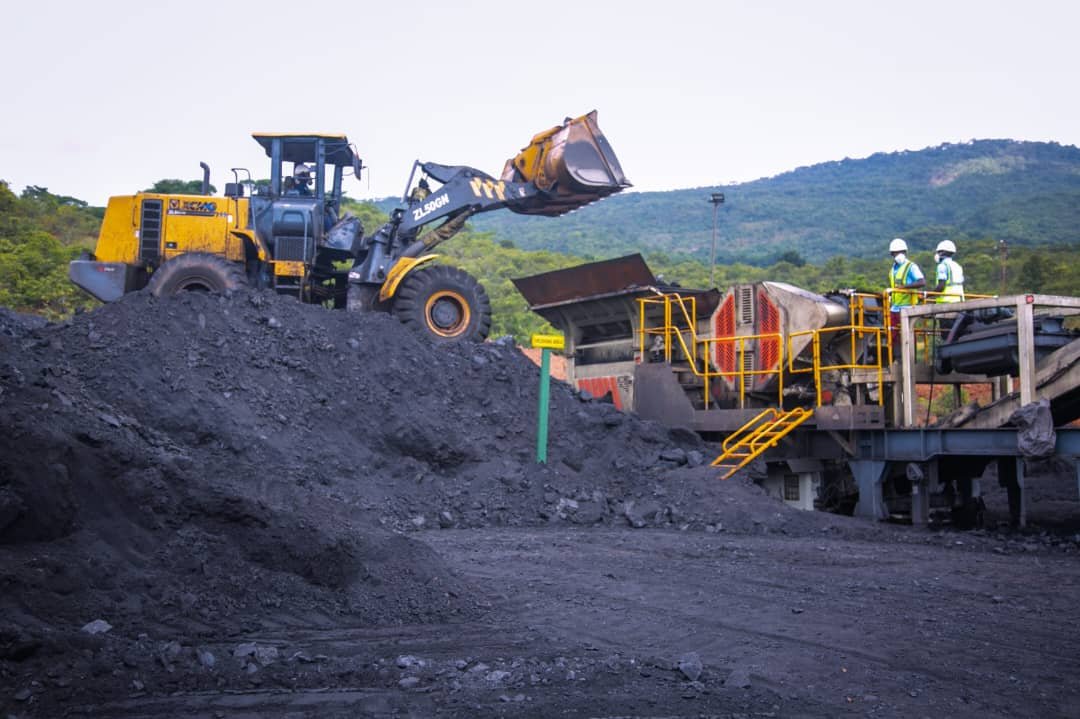
Tanzania’s growing graphite and critical-minerals sector is placing the country closer to the global battery supply chain, but an important question remains: How much of the battery industry’s value will actually remain in Tanzania?
The country is already attracting investment aimed at supplying the rapidly growing battery-materials market.
In August 2026, Tanzania signed a $100 million agreement with China’s Henan Yudi Mining Company for a graphite project in Morogoro. The government is expected to hold a 17% equity stake, while the Chinese company holds the remaining 83%, according to S&P Global. The project is targeting annual graphite production of 50,000 metric tonnes.
Read More:Tanzania Faces Critical Minerals Risks From Global Demand
Tanzania’s graphite production has also expanded rapidly. USGS data shows production rising from about 13,500 tonnes in 2023 to 38,140 tonnes in 2024.
But producing graphite is only one part of the battery industry.
The highest-value stages can involve refining, production of battery materials, cathode and anode materials, battery-cell manufacturing, recycling and eventually electric-vehicle manufacturing.
A 2026 academic study on Tanzania’s critical-minerals sector found that the country’s more realistic near-term opportunities include battery-material refining, graphite processing and rare-earth separation. It also identified limited refining capacity, technical skills and supplier networks as constraints.
Indonesia shows the danger of stopping halfway
Indonesia provides an important comparison.
The country restricted exports of raw nickel ore to encourage domestic processing and attracted major investment into nickel-processing facilities. This helped Indonesia become a dominant force in global nickel supply.
However, the rapid expansion of the nickel-processing industry has also generated serious environmental and social concerns. The International Institute for Sustainable Development has documented significant environmental and social impacts associated with nickel mining and processing, while the Associated Press has reported extensive deforestation and high emissions linked to coal-powered nickel smelters.
Indonesia’s experience therefore shows that building processing plants does not automatically create a sustainable domestic battery industry.
Tanzania could also face a different risk: becoming a major supplier of battery minerals while the highest-value processing and manufacturing takes place elsewhere.
The global battery supply chain is already highly concentrated. Indonesia’s nickel industry has attracted substantial Chinese investment, while Tanzania is also receiving Chinese investment in graphite.
This does not necessarily mean Tanzania will lose control of its resources. But it makes the structure of investment agreements important.
Tanzania needs to ask:
Who owns the processing facilities?
Where will the refined material be sold?
How much technology will be transferred to Tanzanian companies?
How many Tanzanians will acquire the skills required to operate the industry?
Can Tanzanian companies eventually participate in battery-material and battery manufacturing?
Preventing a raw-material dependency
Tanzania can prepare by developing a long-term battery-minerals strategy that connects mining with industrialisation.
That could include:
establishing graphite and nickel processing plants;
developing battery-material research centres;
training Tanzanian engineers and chemical-processing specialists;
creating incentives for battery-component manufacturers;
requiring technology and skills transfer in major projects;
developing local companies capable of supplying mining and processing industries;
establishing battery-recycling capacity;
using government equity strategically where appropriate; and
ensuring environmental standards are maintained throughout the supply chain.
The government has already been considering a strategic minerals centre of excellence with a focus on battery technology and mineral value addition.
The opportunity is therefore larger than simply exporting graphite or nickel.
Tanzania’s real test will be whether its mineral wealth becomes the foundation for a domestic battery-material and manufacturing industry—or whether the country remains primarily at the beginning of a global supply chain whose highest-value stages occur elsewhere.