MWE Correspondent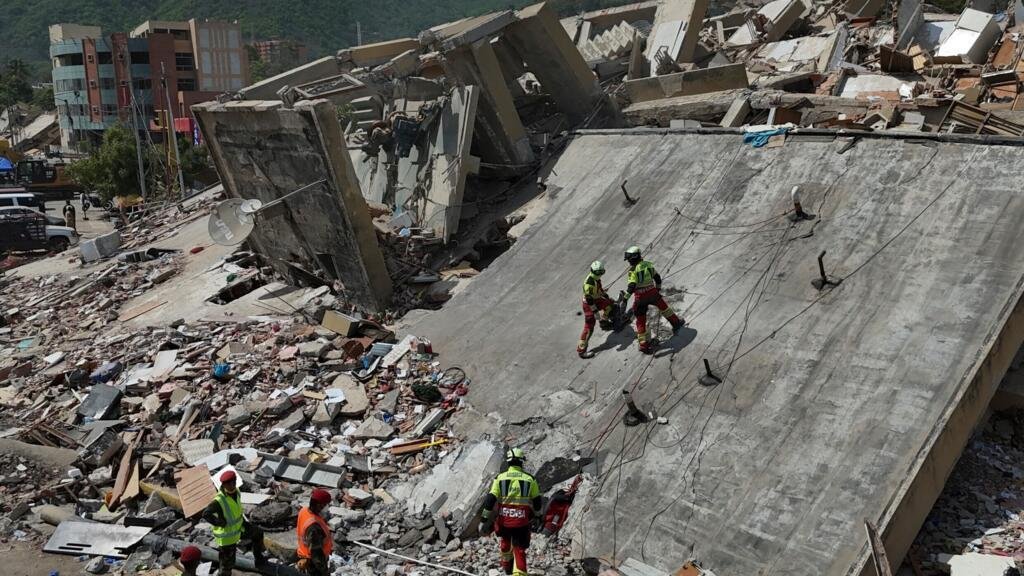
Rescue teams equipped with specialised dogs are racing against time to find survivors trapped beneath collapsed buildings after one of the most devastating earthquakes in Venezuela’s modern history left nearly 1,500 people dead and entire communities struggling to recover.
Emergency crews from Venezuela and international partners have been searching through mountains of rubble, using advanced equipment and trained rescue dogs to locate people who may still be alive beneath the ruins.
A rare moment of hope emerged on Sunday when rescuers discovered a man and his young son alive beneath the debris of a collapsed building in Caraballeda, a coastal city located about 40 kilometres north of Caracas. The rescue was carried out by emergency teams from France and the United States, offering a powerful reminder that survivors can still be found even after days trapped underground.
The emotional rescue brought relief to a country facing one of its darkest moments, as families continue waiting for news about missing relatives and communities struggle to understand the scale of the destruction.
However, the search has become increasingly difficult as the critical 72-hour rescue window — considered the most important period for finding survivors trapped after major disasters — has passed.
Authorities fear the death toll could continue rising as rescue workers reach areas that remain inaccessible and emergency services assess the full extent of the damage.
Nearly 200 buildings have reportedly collapsed completely, while thousands of residents have been displaced and left without safe shelter, clean water, sanitation facilities and other essential supplies.
The disaster has created additional pressure on Venezuela, a country that has already endured years of economic hardship, political instability and strained public services.
Also Read, Israel Rejects Withdrawal Until Hezbollah Disarms
Humanitarian organisations warn that the aftermath of the earthquake could create a secondary crisis if affected communities do not receive urgent assistance, particularly in densely populated areas where infrastructure has suffered severe damage.
International rescue teams have joined local authorities in the search operation, bringing specialised skills, equipment and experience from previous major disasters around the world.
For survivors, the earthquake has transformed ordinary neighbourhoods into scenes of devastation, with families forced to sleep outdoors while waiting for emergency support and information about missing loved ones.
The discovery of survivors beneath the rubble has provided a moment of hope amid widespread tragedy, but officials caution that the humanitarian challenge facing Venezuela is only beginning.
As rescue operations continue, attention is now turning toward the enormous task of rebuilding damaged communities, restoring essential services and supporting thousands of people whose lives have been permanently changed by the disaster.
The coming days will determine the final human cost of the earthquake — and the scale of the international response needed to help Venezuela recover from one of its worst natural disasters in decades.