MWE Correspondent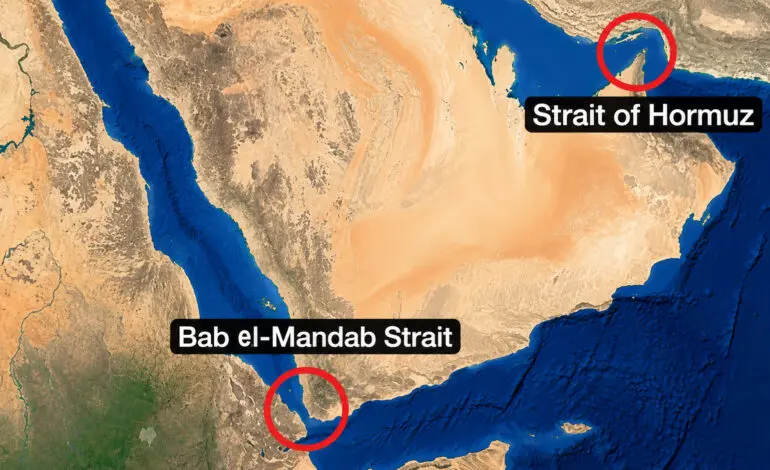
Tensions between the United States and Iran have entered a dangerous new phase as American forces launched another wave of strikes against Iranian targets, while Tehran responded with missile and drone attacks on US-linked military positions across the region.
The latest confrontation marks the ninth consecutive day of US military operations against Iran, deepening fears of a wider regional conflict and raising international concern over the security of the Strait of Hormuz, one of the world’s most important energy shipping routes.
The crisis intensified after Iran reported that two oil tankers were hit and disabled, increasing fears that military escalation could disrupt the movement of crude oil and other commercial vessels through the strategic waterway.
The Islamic Revolutionary Guard Corps (IRGC) said it had targeted US military assets, including American aircraft at Jordan’s Aqaba airport, as well as facilities at Kuwait’s Al-Adiri camp, Ali Al Salem Air Base and locations in Syria.
Regional tensions also spread across the Gulf, with authorities in Bahrain reporting warning sirens and Kuwait announcing that its military was responding to hostile drone activity linked to the Iranian attacks.
The United States said its latest strikes were aimed at weakening Iran’s ability to threaten international shipping. In a statement, US Central Command (CENTCOM) said it had launched a “new wave of strikes” designed to reduce Tehran’s capacity to attack commercial vessels operating in the Strait of Hormuz.
Washington has accused Iran of endangering global trade routes and disrupting energy markets, while Tehran has defended its military actions as a response to US aggression and attacks against its territory.
Iran’s semi-official Tasnim news agency reported that US missiles struck several locations inside Iran, including Tabriz, Chabahar, Konarak, Bandar Mahshahr and Bandar Imam Khomeini, with explosions reported in those areas.
Also Read, ICC Faces Historic Showdown Over Karim Khan’s Future
US Secretary of State Marco Rubio said Washington would continue military action against Iran as long as Tehran targets international commercial shipping, signalling that the confrontation could continue unless both sides reach a new diplomatic arrangement.
The renewed fighting has raised concerns beyond the Middle East, with global markets watching closely for possible impacts on oil prices, inflation and supply chains. The Strait of Hormuz handles a significant share of the world’s energy shipments, making any prolonged disruption a major threat to the global economy.
The collapse of the previous ceasefire agreement has now pushed the US and Iran into a cycle of retaliation, creating one of the most serious security crises in the region in recent years.
International leaders are calling for restraint as fears grow that continued strikes and counterattacks could transform the confrontation into a broader regional war involving multiple countries and threatening global energy stability.