MWE Correspondent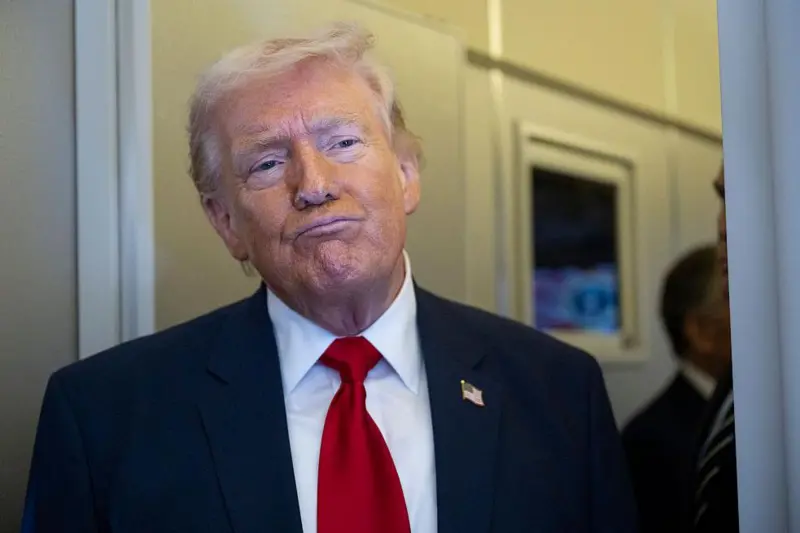
US President Donald Trump has declared that the United States intends to become the “guardian” of the Strait of Hormuz, saying Washington should take responsibility for protecting one of the world’s most strategically important maritime corridors while insisting allied nations should pay for the security the US provides.
Speaking in an interview with Fox News on Monday, July 13, Trump argued that the United States has spent decades safeguarding international shipping lanes and ensuring the uninterrupted flow of global trade, adding that wealthy allies benefiting from those efforts should share the financial burden.
“We cannot be expected to do that for nothing,” Trump said, suggesting that countries relying heavily on energy imports transported through the Strait of Hormuz should contribute more to maritime security operations.
His remarks come as tensions between the United States and Iran remain high following recent military confrontations that have heightened concerns over freedom of navigation through the narrow waterway, a critical artery for global energy supplies.
The Strait of Hormuz connects the Persian Gulf with the Gulf of Oman and the Arabian Sea, serving as the primary export route for crude oil and liquefied natural gas produced by Gulf nations.
According to international energy agencies, roughly one-fifth of the world’s seaborne oil trade passes through the strait each day, making it one of the most strategically important shipping lanes on the planet.
Major energy exporters including Saudi Arabia, Iraq, the United Arab Emirates, Kuwait and Qatar depend on the route to deliver oil and gas to international markets across Asia, Europe and other regions.
Any disruption to shipping through the strait has the potential to trigger higher energy prices, disrupt supply chains and increase inflation worldwide.
President Trump said countries that benefit from secure shipping should assume greater responsibility for financing maritime security rather than relying primarily on the United States.
The proposal reflects his long-standing foreign policy approach, which has consistently called on US allies to contribute more towards defence and collective security arrangements.
Throughout his political career, Trump has argued that Washington has disproportionately funded global security while other wealthy nations have benefited without contributing enough financially.
Iran has repeatedly maintained that it retains sovereign rights over parts of the Strait of Hormuz and has opposed any expansion of the US military presence in the region.
Also Read, Hormuz Crisis Sends Global Oil Prices Higher
Tehran has also called for an end to American military operations near its territorial waters, arguing that foreign military deployments increase rather than reduce regional instability.
Iranian officials continue to insist that lasting maritime security can only be achieved through regional cooperation among Gulf states without external military intervention.
Financial markets remain highly sensitive to developments in the Strait of Hormuz because of its importance to global energy supplies.
Even limited military confrontations or threats to commercial shipping have historically led to sharp increases in international oil prices, higher transportation costs and renewed concerns about global inflation.
Energy analysts warn that prolonged uncertainty in the region could place additional pressure on economies already facing elevated fuel costs and fragile supply chains.
Trump’s remarks are expected to generate fresh debate among US allies and Middle Eastern governments over the future of maritime security in the Gulf.
While Washington has long maintained a strong naval presence in the region to protect international shipping, any significant policy changes would likely require close coordination with regional partners and allied nations.
Analysts say the latest comments underscore the growing strategic importance of the Strait of Hormuz as geopolitical competition intensifies and energy security remains at the centre of global economic stability.
Although President Trump’s statement signals a more assertive US posture, no official policy has been announced indicating that the United States has assumed control of the Strait of Hormuz. Any such move would involve complex diplomatic, legal and military considerations under international law.