MWE Correspondent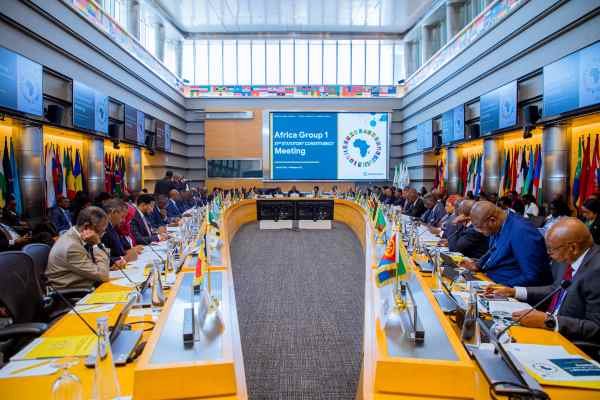
The Tanzanian government has intensified its call for a strategic shift in global development financing, urging the World Bank to significantly expand its support for private sector growth across Africa as a pathway to sustainable economic transformation.
Speaking at the Africa Group 1 Constituency meeting at the World Bank headquarters in Washington, D.C., Finance Minister Khamis Mussa Omar framed the appeal as part of a broader rethinking of how African economies should be financed in an era of rising debt and tightening global financial conditions.
The meeting, which brings together sub-Saharan African member states, has increasingly become a platform for pushing reforms within the global financial system—particularly in how institutions like the World Bank engage with developing economies.
At the heart of Tanzania’s message is a growing recognition that traditional models of development—largely driven by public borrowing—are becoming less sustainable. Across Africa, rising debt levels and higher global interest rates have limited governments’ ability to finance infrastructure and social programs through loans alone.
Minister Omar emphasized that while governments are under pressure to increase domestic revenue, fiscal space remains constrained. This has forced policymakers to explore alternative engines of growth, with the private sector emerging as a central pillar.
Analysts say this reflects a wider continental shift. African economies are increasingly positioning private investment not just as a supplement to public funding, but as a primary driver of industrialization, job creation, and economic diversification.
Beyond general support, Tanzania’s appeal signals a demand for a deeper transformation in how development finance is structured. This includes expanding access to affordable credit for businesses, especially small and medium-sized enterprises, which form the backbone of most African economies.
There is also a push for more blended finance models—where public funds are used to reduce risk and attract private investors into sectors such as energy, agriculture, and infrastructure. Such mechanisms are seen as critical in unlocking large-scale investment flows that governments alone cannot sustain.
Also Read; Gold Demand Rises As Stability Becomes Top Priority
Additionally, Tanzanian officials are advocating for stronger technical support to improve regulatory environments, making it easier for businesses to operate, expand, and compete globally.
The call aligns with broader concerns across Africa, where many countries are grappling with similar fiscal pressures. As debt servicing costs rise, governments are forced to balance development needs with financial stability, often leading to difficult policy choices.
By emphasizing private sector development, Tanzania is effectively positioning itself within a growing bloc of countries pushing for a more investment-driven growth model. This approach also reflects the priorities of regional frameworks such as the African Union, which has long promoted economic integration and private enterprise as drivers of development.
For the World Bank, the request comes at a critical moment. The institution has been under increasing pressure to evolve its role, particularly in response to calls from developing countries for more flexible, responsive, and inclusive financing solutions.
Expanding private sector support would likely involve scaling up initiatives through its private investment arms and increasing risk-sharing mechanisms to encourage global investors to enter African markets.
However, experts caution that attracting private investment requires more than funding alone. Political stability, policy consistency, and strong institutions remain essential factors in building investor confidence.
While no immediate commitments were announced, Tanzania’s intervention is expected to influence ongoing discussions within the World Bank and other global financial institutions. The issue is likely to feature prominently in future policy dialogues, particularly as African nations continue to advocate for reforms in the international financial architecture.
For Tanzania and many of its regional peers, the stakes are high. The success of this shift could determine whether African economies can achieve sustained growth without falling deeper into debt.
As global economic dynamics continue to evolve, the push for a private sector-led development model may well redefine the relationship between Africa and the institutions that finance its future.