
 Hassan Magulumali
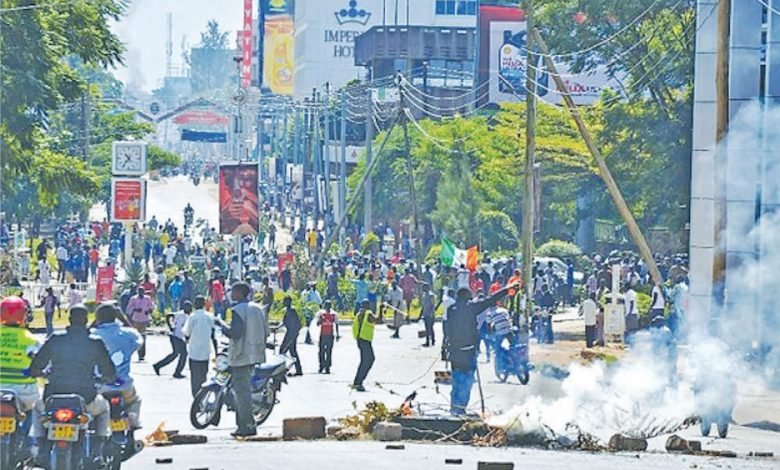
Tanzania’s long-term political stability will depend on its ability to address domestic disagreements through inclusive national dialogue, credible institutions and respect for sovereignty, as the country continues to confront the political divisions left by the disputed October 2025 general elections.
One year after the election-related violence, questions surrounding accountability, democratic participation, constitutional reforms and national reconciliation remain central to the country’s political future. The challenge facing Tanzania is how to rebuild public confidence while ensuring that decisions about its political direction are made through legitimate national processes rather than external pressure.
The October 29, 2025 elections exposed deep disagreements between the government and sections of the opposition. The main opposition party, CHADEMA, boycotted the election, citing the failure to implement electoral reforms, while ACT-Wazalendo’s presidential candidate, Luhaga Mpina, was disqualified. The African Union Election Observation Mission subsequently raised concerns about the competitiveness and credibility of the electoral environment.
The violence that followed voting further intensified the political crisis. A government-appointed commission chaired by retired Chief Justice Mohamed Chande Othman submitted its findings to President Samia Suluhu Hassan on April 23, 2026. It documented at least 518 deaths, although it noted that the figure might not be conclusive.
President Hassan subsequently announced plans for a national reconciliation commission and a renewed constitutional process. During a meeting with leaders of 18 political parties on July 30, 2026, she also proposed regular meetings with political party representatives to discuss the country’s political, economic and social development. CHADEMA was not represented at the meeting, leaving questions about the inclusiveness of the proposed process.
The government has also established a second commission, chaired by retired Court of Appeal Judge Shabani Ally Lila, to investigate criminal acts connected to the election violence. The commission began its work on August 7 and was given 150 days to complete its investigations. Its mandate includes examining deaths, injuries, disappearances, property damage and allegations of excessive use of force.
By October 27, the commission had completed evidence collection in all districts of Dar es Salaam Region and entered a new phase focused on identifying individuals suspected of planning, financing, coordinating or participating in the violence. Its chairman said the investigation would consider information from citizens, public institutions and private organisations.
These developments provide an opportunity to move beyond political accusations towards establishing facts and addressing the grievances that contributed to the crisis.
Read More: Africa’s Right to Choose Its Economic Partners
The question of external involvement has also become part of the debate. Following the violence, the European Union and several Western governments called for investigations, respect for fundamental freedoms and inclusive political dialogue. The EU’s November 2, 2025 statement specifically encouraged Tanzania to engage opposition parties and civil society in reconciliation efforts.
Tanzania, however, has consistently emphasised the importance of sovereignty and the independence of its domestic institutions. Its Foreign Policy, revised in 2024, identifies the protection of national sovereignty, territorial integrity and political independence as fundamental principles of international engagement.
This position raises an important distinction between legitimate international cooperation and external interference. International organisations and development partners have a role in promoting human rights, democratic standards and peaceful conflict resolution. However, sustainable political solutions must ultimately be developed and owned by Tanzanians through constitutional and lawful processes.
National sovereignty should not be interpreted as freedom from accountability. Equally, international criticism should not become a substitute for domestic political participation or an attempt to determine the country’s leadership and constitutional arrangements.
Tanzania’s Constitution provides for freedom of expression, association and citizens’ participation in public affairs. These principles are essential to maintaining a political environment in which disagreements can be expressed peacefully and competing political interests can be addressed through established institutions.
The African Union’s approach to democratic governance also provides a relevant continental framework. Its African Charter on Democracy, Elections and Governance emphasises constitutionalism, democratic participation, credible elections and the peaceful resolution of political disputes.
For Tanzania, the immediate priority should therefore be to ensure that the ongoing investigations establish the circumstances surrounding the violence, identify individual responsibility where evidence supports it and provide justice to victims without political discrimination.
The proposed reconciliation process will also need broad participation, including the government, opposition parties, religious institutions, civil society, young people and other stakeholders. Excluding significant political voices risks weakening public confidence before the process has even begun.
Constitutional reforms should similarly emerge from meaningful public consultation rather than being treated as an agreement between political elites. Issues concerning electoral institutions, political competition, accountability and the protection of fundamental rights require national consensus and transparent implementation.
Ultimately, Tanzania’s political stability cannot be secured through political victories alone. It requires institutions trusted by citizens, leaders willing to engage with opposing views and a political culture that places national interests above partisan competition.
The October 2025 crisis demonstrated the consequences of unresolved political disagreements. The opportunity now is to transform that difficult experience into a foundation for institutional improvements, national healing and stronger democratic participation.


