 Agencies
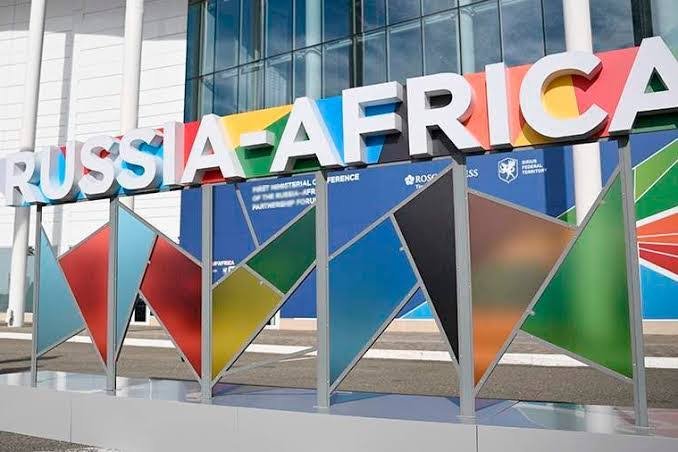
The third Russia-Africa Summit in Moscow has established a new framework for expanding cooperation in energy, agriculture, trade, education and artificial intelligence, as African countries seek investment and technology to accelerate industrialisation and strengthen economic independence.
The two-day summit, held on October 28–29, 2026, brought together representatives from 48 African countries, including 22 represented by heads of state or government. It concluded with three major documents: the final summit declaration, the Russia-Africa Partnership Forum Action Plan for 2027–2029 and a declaration on cooperation in the civilian use of artificial intelligence.
The agreements provide a framework for the next phase of relations between Moscow and African countries, with an emphasis on translating diplomatic commitments into practical economic cooperation.
Russian President Vladimir Putin described the relationship as one built on longstanding ties, saying: “Russia and Africa are united by truly strong bonds of friendship and close partnership.”
Addressing the summit, Putin also referred to the words of Tanzania’s founding president, Julius Nyerere, that “independence means self-reliance”, linking the principle to the importance of African countries pursuing sovereign development and strengthening their economies.
Energy security emerged as one of the major priorities, as many African economies continue to face electricity shortages, limited generation capacity and inadequate infrastructure.
Russia has offered cooperation in conventional energy, renewable power and the peaceful use of nuclear technology. Nuclear energy attracted particular attention, with Russian state nuclear corporation Rosatom reporting discussions with several African countries over potential projects.
According to Reuters, Rosatom Chief Executive Alexei Likhachev said the company was discussing large nuclear power plant projects with Uganda, Ghana, Ethiopia and Egypt. He also said detailed discussions concerning floating nuclear power technology were under way with Egypt, Tanzania, Togo and Namibia.
For Tanzania, the discussions could create opportunities to explore alternative electricity-generation technologies as the country pursues its industrialisation and energy development ambitions. However, the reported negotiations should not be interpreted as a concluded agreement to construct a nuclear power plant.
Tanzania’s position on energy cooperation was also outlined by Prime Minister Mwigulu Nchemba, who represented President Samia Suluhu Hassan at the summit. In his address at the Kremlin, he urged African leaders to prioritise clean cooking energy, describing it as both an environmental and development issue.
“If we decide to address this challenge, we will not only be meeting an environmental requirement, but also addressing an important development priority that saves the lives of millions of people, empowers and frees up time used by women, and above all protects our forest ecosystems,” Nchemba said, according to the Prime Minister’s Office.
View this post on Instagram
His remarks broadened the energy discussion beyond electricity generation to include household energy access, public health, women’s welfare and environmental protection.
Read More: Traore Demands Results From Russia-Africa Partnership
Food security was another important issue, reflecting Africa’s vulnerability to international supply disruptions, rising agricultural production costs and dependence on imported fertilisers and food commodities.
Russia is a significant supplier of wheat and fertilisers to African markets. The new cooperation framework seeks to expand agricultural technology exchanges, improve productivity, support irrigation and develop drought-resistant crop varieties.
Such cooperation could help African countries increase domestic food production while strengthening agricultural processing and distribution systems. Beyond commodity supplies, opportunities also exist in modern farming equipment, seed development, research and food-processing industries.
The African Union Commission’s Chairperson, Mahmoud Ali Youssouf, placed particular emphasis on ensuring that Africa’s natural resources generate greater benefits for its people. Addressing the summit, he called for “local processing, value addition and industrialisation”, arguing that African countries must capture more economic value from their agricultural and mineral resources.
On the sidelines of the 3rd Russia–Africa Summit in Moscow, the Chairperson of the African Union (AU) Commission, H.E. Mahmoud Ali Youssouf @ymahmoudali & H.E. Sergey Lavrov, the Minister of Foreign Affairs of the #Russian Federation signed the AU Commission–Russian Federation Action Plan 2027–2029, reaffirming their commitment to strengthening dialogue and advancing cooperation in areas of mutual interest.
Building on the Memorandum of Understanding on the Basic Principles of Relations & Cooperation, the Action Plan provides a framework for deepening AU–Russia engagement across 19 areas of cooperation over the 2027–2029 period.
The framework underscores the importance of sustained political dialogue, institutional engagement & coordination on regional & international issues, including cooperation within the United Nations.
Peace & security remain important pillars of the partnership, with proposed activities focusing on counterterrorism, combating transnational organised crime, exchanging expertise & strengthening institutional capacities, in support of the AU’s Silencing the Guns in Africa by 2030 initiative.
The Action Plan further identifies science, technology & innovation as important areas for collaboration, particularly artificial intelligence, digital transformation, cybersecurity & space technology. Proposed initiatives include joint research & the development of AI-enabled early-warning systems for conflict risks, public health emergencies & natural disasters.
Cooperation will also encompass energy, transport infrastructure, agriculture, water resources management, climate change adaptation, healthcare, humanitarian affairs, education, trade, investment & financial cooperation. Particular attention is given to capacity-building, knowledge-sharing, academic partnerships & the development of technical expertise in AU Member States.
The framework also promotes exchanges in culture, sports & youth engagement, alongside cooperation in child protection & the preservation of cultural heritage.
Through this Action Plan, the AU Commission & the Russian Federation seek to further strengthen their partnership through dialogue, practical cooperation & the exchange of experience, in support of the AU’s integration & development objectives under Agenda 2063: The Africa We Want.
The Action Plan constitutes a framework for cooperation & does not create rights or obligations under international law.
Read @ https://t.co/oPUSiUZuxH
— African Union (@_AfricanUnion) October 28, 2026
His remarks reflect a longstanding continental development priority: reducing dependence on raw-material exports while building industries capable of creating employment, expanding manufacturing and increasing domestic revenue.
The 2027–2029 cooperation framework also identifies mineral processing, metallurgy, fertiliser production and medical technologies as areas for collaboration. Africa possesses substantial deposits of critical minerals, but many countries continue to export raw materials while importing finished products made from those resources.
Technology and artificial intelligence represent another expanding area of cooperation. The summit adopted a separate declaration on civilian AI applications, highlighting digital innovation, scientific research and specialist training.
The African Union-Russia Action Plan for 2027–2029, signed by Youssouf and Russian Foreign Minister Sergey Lavrov on October 28, covers 19 areas of cooperation. These include science, technology and innovation, artificial intelligence, digital transformation, cybersecurity, energy, agriculture, education, healthcare, trade and investment.
For African countries, the significance of these initiatives will depend on whether they strengthen local technological capabilities rather than create new dependence on foreign software, equipment and technical services. Training specialists, supporting research institutions and developing African technological solutions will therefore be important measures of progress.
Education is also part of Tanzania’s priorities. During his address, Nchemba thanked Russia for providing scholarships to Tanzanian students and requested an increase in opportunities, particularly in engineering, medicine and advanced sciences. Such training could support the development of local expertise needed to manage future energy, industrial and technological projects.
Trade expansion is another major objective. Putin said Russia’s trade with African countries exceeded $27 billion in 2025, while Moscow has expressed ambitions to increase the figure to $50 billion.
The summit declaration calls for reducing trade barriers, increasing investment, expanding exports of value-added African products and improving transport and logistics connections. However, the success of these commitments will depend on financing, implementation capacity and the ability of African businesses to access the Russian market.
The African Union’s participation provides an institutional channel through which continental priorities can be discussed collectively rather than relying exclusively on separate bilateral negotiations. The AU Commission-Russia Action Plan, however, describes itself as a framework for cooperation and does not create legal obligations under international law.
For Africa, the opportunity is not simply to attract another international development partner, but to use international cooperation to strengthen domestic production, improve technological capacity and reduce economic vulnerabilities.
The summit’s real value will therefore be measured not by the number of declarations adopted, but by the projects implemented, technologies transferred, industries established and opportunities created for African citizens.