MWE Correspondent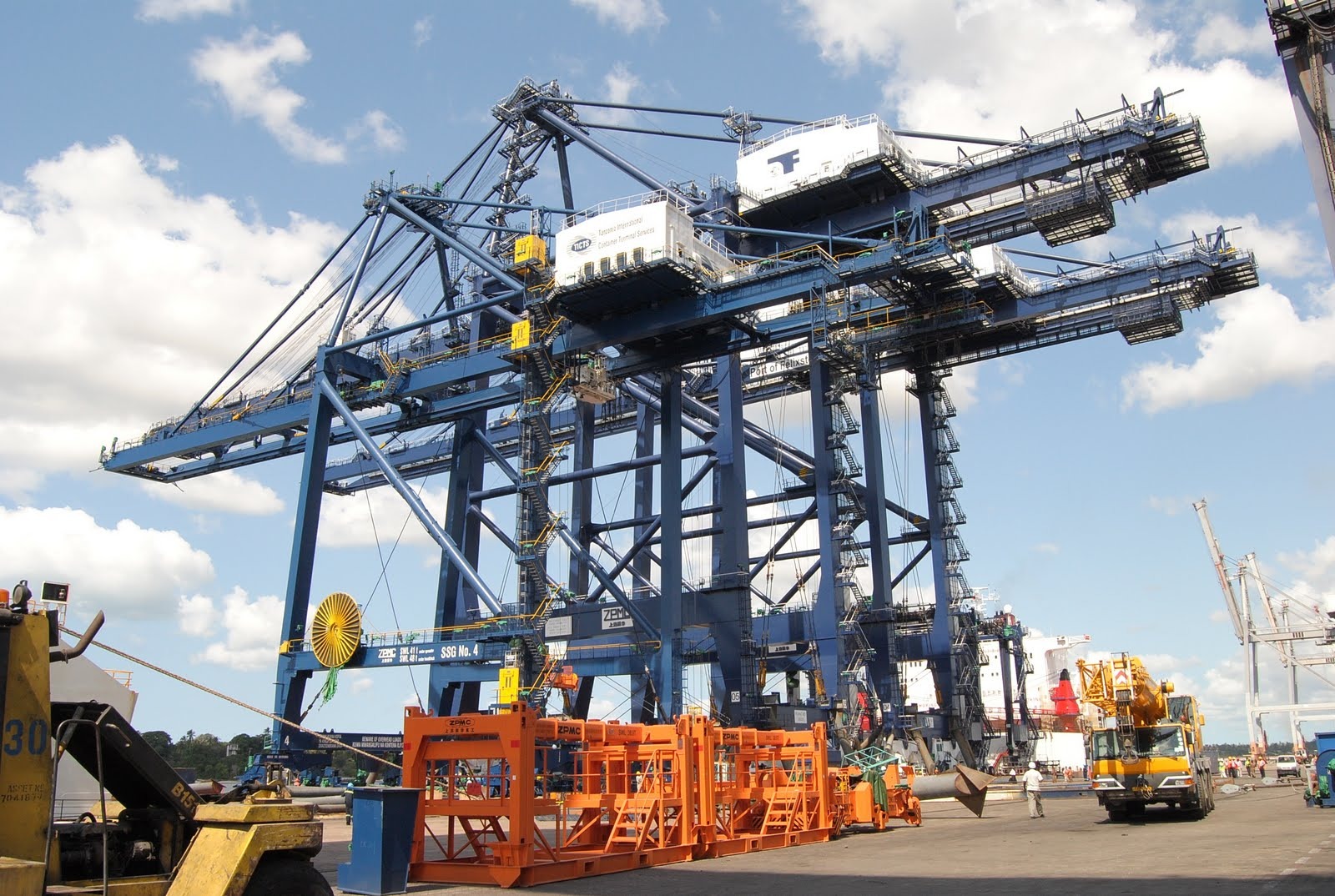
A container ship enters a major port at dawn, guided not only by physical infrastructure but also by layers of digital tracking systems, customs databases, and financial clearing networks.
To an observer on the ground, it looks like routine trade. But behind every movement is a tightly connected system of technology, finance, and logistics that now defines modern economic strength.
In recent months, global attention has increasingly shifted away from traditional measures of power—military capacity or resource ownership—toward something less visible but more decisive: control of systems.
Across multiple regions, governments are investing heavily in ports, rail corridors, digital infrastructure, and energy transmission networks. These are no longer seen simply as development projects. They are strategic assets that determine access to markets, speed of trade, and resilience during global disruptions.
At the center of this transformation lies Economic Sovereignty—the ability of a country to maintain meaningful control over the systems that sustain its economy. This includes not only production, but also logistics, finance, and data flow.
In practical terms, it means that a nation may possess resources, but without control over transport routes or digital systems, it cannot fully capture their value.
This shift is visible in the way infrastructure is being financed and negotiated. Large-scale investments in ports and industrial corridors are now tied to long-term strategic agreements, often involving multiple global partners. These agreements extend far beyond construction—they shape trade alignment, industrial direction, and geopolitical influence for decades.
For ordinary people, these changes are often invisible.
A logistics worker scanning cargo in a warehouse in a coastal city may not see the geopolitical implications of the system he operates. A truck driver moving goods across a regional border may not realize that his route is part of a wider economic strategy connecting continents. Yet their daily work sits inside a much larger framework of global competition.
Also Read. South Africa Braces For Anti-Immigration Protests
Alongside physical infrastructure, digital systems are becoming equally important.
Data centers, undersea cables, satellite networks, and cloud platforms now form the backbone of modern economies. Control over these systems increasingly determines how information flows, how businesses operate, and how governments manage services.
This has brought Digital Sovereignty into sharper focus.
Countries are now debating how much of their digital infrastructure should be locally controlled, how data should be stored, and how critical systems can be protected from external disruption. In an era where artificial intelligence and automated systems are expanding rapidly, control over data is becoming a strategic priority.
At the same time, infrastructure and systems are shaping international relationships in new ways.
Trade corridors, energy pipelines, and logistics hubs are no longer neutral spaces. They are embedded in broader diplomatic arrangements that influence alliances and economic partnerships. Investment decisions in these areas are increasingly viewed through the lens of long-term geopolitical positioning.
This is where Global Diplomacy is evolving.
Diplomatic engagement is no longer limited to treaties and political agreements. It now includes infrastructure financing, technology partnerships, and coordination over supply chains. Countries are building influence not only through political negotiation but also through long-term system integration.
Recent years have shown how fragile global systems can be when disrupted. Supply chain delays, energy fluctuations, and transport bottlenecks have revealed how dependent modern economies are on interconnected networks.
As a result, governments are reassessing how much reliance they place on single routes, single suppliers, or single financial channels.
This reassessment is creating a more competitive but also more flexible global environment. Countries are diversifying partnerships, investing in alternative routes, and strengthening regional systems to reduce vulnerability.
Yet the most important transformation is conceptual.
Power is no longer located in one place. It is distributed across systems.
Those who design, finance, and manage these systems increasingly shape the flow of global commerce without necessarily appearing at the center of political attention.
For developing and emerging economies, this shift presents both opportunity and challenge. On one hand, infrastructure investment can accelerate growth and integration into global markets. On the other hand, long-term dependency on external systems can limit strategic autonomy if not carefully managed.
The future global order may therefore depend less on territorial control and more on system control.
In this emerging reality, influence is not always visible. It is embedded in networks, encoded in infrastructure, and sustained through continuous coordination.
The world is not only being connected.
It is being reorganized through the systems that make connection possible.
And those systems are now where global power quietly resides.