MWE Correspondent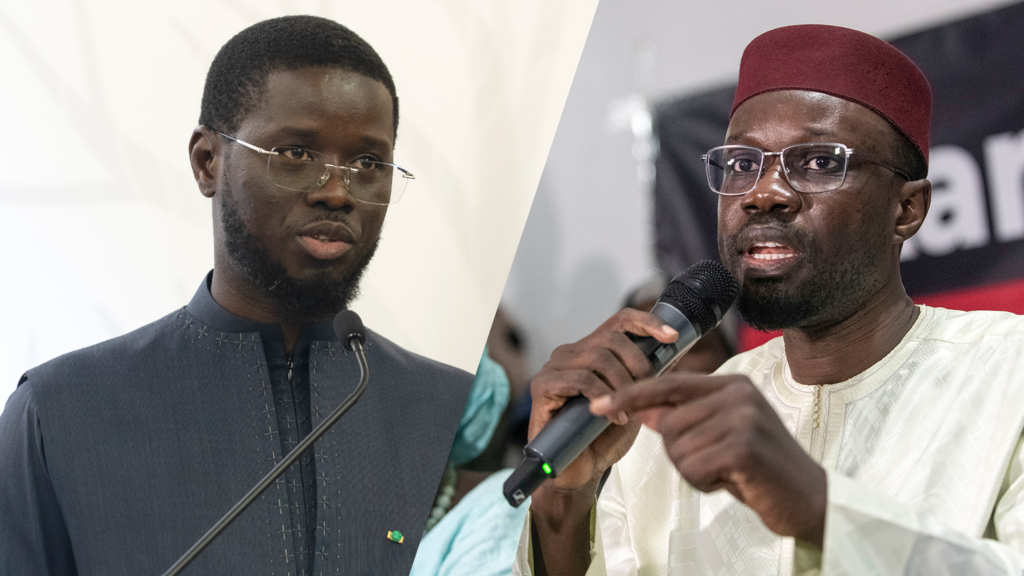
Senegal’s lawmakers have elected former Prime Minister Ousmane Sonko as Speaker of the National Assembly in a dramatic political comeback that has intensified tensions within the country’s leadership and deepened uncertainty over the future direction of the government.
The vote took place on Tuesday, only days after President Bassirou Diomaye Faye dismissed Sonko from his position as prime minister amid growing disagreements inside the ruling administration. Despite his removal from government, Sonko quickly returned to the political center stage after being reinstated as a Member of Parliament before lawmakers overwhelmingly voted to elevate him to one of the country’s most powerful institutional roles.
According to parliamentary results, Sonko secured 132 votes out of 133 cast in the National Assembly, replacing former Speaker El Malick Ndiaye, who resigned on May 24. The near-unanimous outcome demonstrated the continued dominance and loyalty Sonko commands within the ruling Pastef party and the wider governing coalition.
The election marks a significant twist in Senegal’s evolving political crisis and highlights the growing divisions between the presidency and key figures within the ruling establishment. Political analysts say Sonko’s rapid return to a senior leadership position signals that his influence inside government structures remains deeply entrenched despite his dismissal from the executive branch.
President Faye removed Sonko from office last week and dissolved the cabinet following reported disagreements over economic reforms, governance priorities, and the country’s worsening debt situation. Although official details of the dispute remain limited, sources close to the administration suggest tensions had been building for months over the pace and direction of national economic policy.
The decision to dismiss Sonko shocked many supporters, given the close political alliance that helped bring both men to power. Sonko had long been viewed as one of Senegal’s most influential political figures and a driving force behind the ruling coalition’s popularity, especially among young voters demanding economic change and institutional reform.
Now, with Sonko elected Speaker of Parliament, observers warn that Senegal could face increasing institutional friction between the presidency and the legislature. Opposition lawmakers have already criticized the process surrounding his reinstatement as a Member of Parliament, questioning its legality and raising concerns about constitutional procedures.
Also Read; Tanzania Mourns Death of Magufuli’s Mother Suzana Magufuli
Critics argue that Sonko’s new role may create competing centers of power within the state, particularly as Parliament controls key legislative processes and holds oversight authority over government actions. Some analysts believe the situation could complicate President Faye’s efforts to stabilize his administration and push forward economic reforms during a period of mounting public pressure.
Despite the controversy, Sonko’s supporters celebrated the vote as proof of his enduring political strength. Crowds gathered outside parts of the National Assembly in Dakar following the announcement, with supporters chanting slogans and praising what they described as a victory for democratic representation within the ruling coalition.
The ruling Pastef party continues to maintain a strong parliamentary majority, giving Sonko significant leverage in his new position as Speaker. Political commentators note that while his dismissal from the premiership may have weakened his direct control over government operations, his move to Parliament could allow him to shape national politics from a different but equally influential platform.
The latest developments have drawn regional and international attention, with Senegal widely regarded as one of West Africa’s most stable democracies. However, the growing tensions between President Faye and Sonko are raising concerns about possible political instability at a time when the country faces economic challenges, debt pressures, and demands for institutional reforms.
As Senegal navigates this rapidly evolving political landscape, attention is now focused on whether the country’s leadership can prevent internal divisions from escalating further. The relationship between President Faye and Speaker Sonko is expected to play a defining role in shaping Senegal’s political future in the months ahead.