MWE Correspondent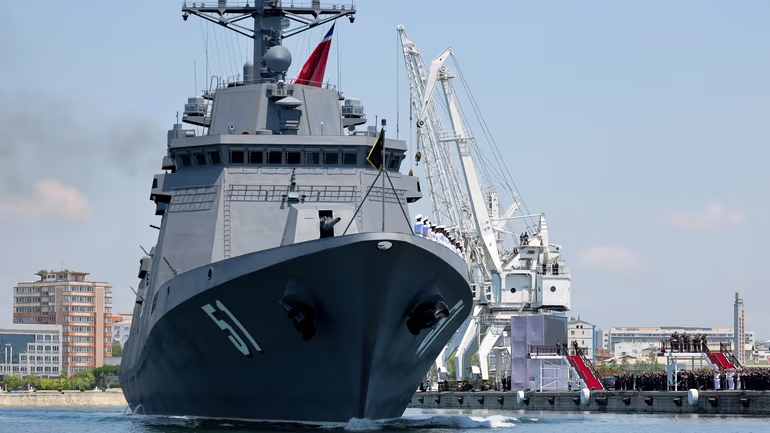
North Korea has taken a major step in its naval expansion programme by commissioning the largest warship ever built for its navy, a move that signals leader Kim Jong Un’s ambition to transform the country’s maritime capabilities and strengthen its military presence beyond its coastline.
The 5,000-tonne destroyer, named Choe Hyon destroyer, officially entered service during a ceremony held at the western port of Nampo, with Kim Jong Un attending the event as the country showcased what it described as a new era in naval development.
The vessel represents a significant milestone for North Korea, which has historically focused much of its military strategy on land forces, ballistic missiles and nuclear capabilities rather than large surface naval vessels.
The commissioning of the destroyer demonstrates Pyongyang’s attempt to broaden its military reach and develop a more advanced naval force capable of operating in increasingly contested waters.
During the ceremony, Kim Jong Un announced an ambitious plan for rapid naval expansion, saying North Korea should build two warships of similar size every year for the next five years. He also indicated that the country aims to develop even larger vessels, including ships weighing around 10,000 tonnes, as part of a long-term strategy to strengthen its maritime power.
The announcement highlights a major shift in North Korea’s military priorities.
For decades, Pyongyang’s strategic focus has centred on nuclear weapons and missile technology as its main tools of deterrence against perceived threats from the United States and its allies. However, the development of larger naval vessels suggests that North Korea is seeking additional ways to project power and protect its interests at sea.
Also Read, The Battle For Justice In A Divided World
According to state media reports, the destroyer is equipped with modern weapons systems and is intended to contribute to North Korea’s broader military strategy, including what Kim described as strengthening the country’s nuclear deterrent at sea.
Military analysts say the development reflects North Korea’s efforts to close the technological gap with more advanced naval powers in the region, including South Korea, Japan and the United States.
However, experts caution that building a modern warship is only one part of creating a capable navy.
A powerful naval force requires advanced training, maintenance systems, satellite communication, supply networks and the ability to operate effectively far from national waters. These areas remain significant challenges for North Korea, which has faced decades of international sanctions and economic restrictions.
The timing of the announcement is also significant.
The Korean Peninsula has experienced rising tensions in recent years, with North Korea continuing missile tests and military demonstrations while South Korea and its allies have increased joint military exercises.
Pyongyang has repeatedly stated that it will continue expanding its military capabilities despite international pressure, arguing that stronger armed forces are necessary for national security.
The new destroyer therefore carries importance beyond its physical size.
For North Korea, it represents technological progress, military ambition and a message of defiance to the international community.
For regional powers, it raises questions about the future balance of military power in Northeast Asia and whether Pyongyang’s naval expansion could introduce new risks into already tense waters.
The launch of the Choe Hyon destroyer marks a new chapter in North Korea’s military development.
The key question now is whether the vessel will remain a symbolic achievement or become the foundation of a much larger transformation of North Korea’s naval power.