MWE Correspondent
 Joseph Isangura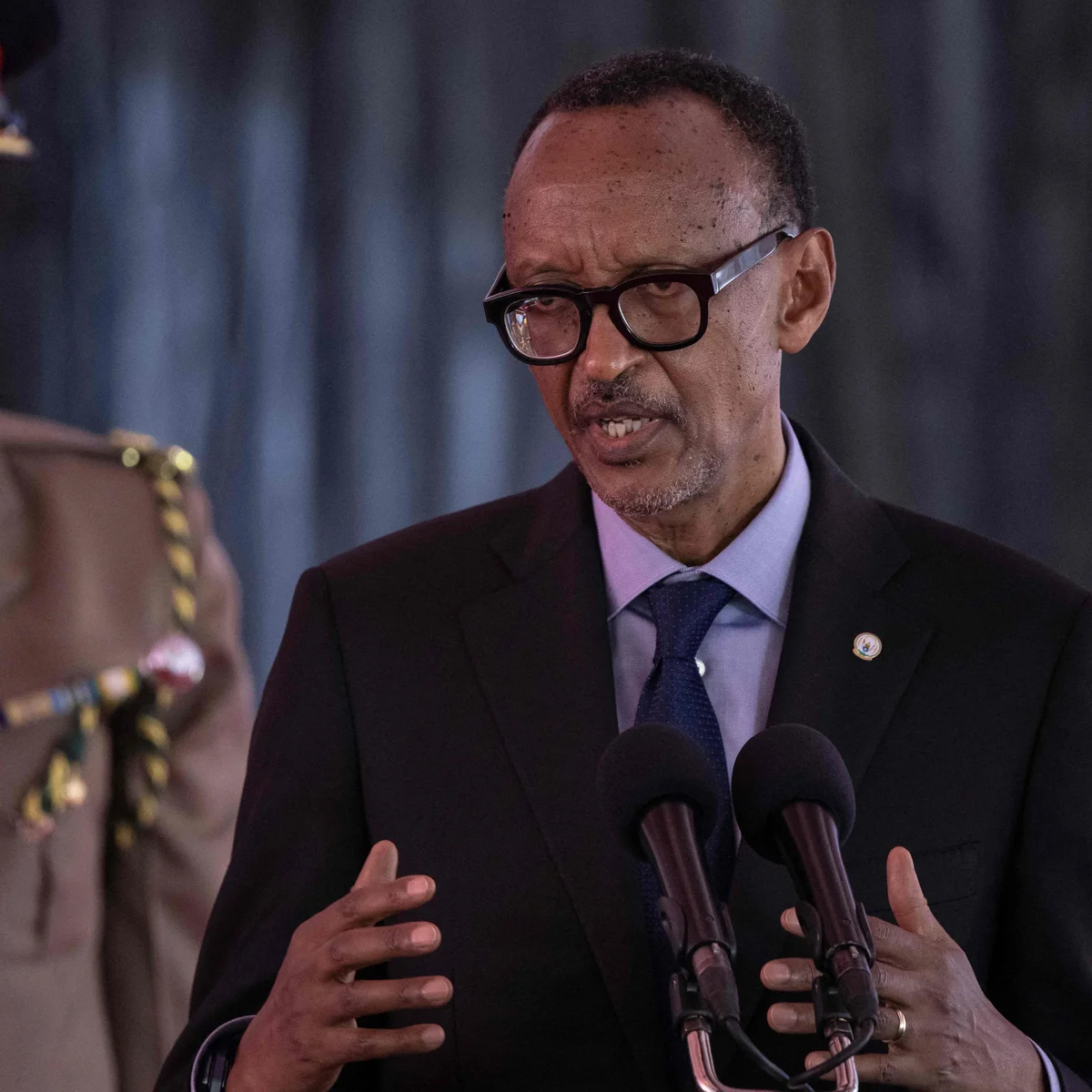
Rwandan President Paul Kagame has launched a forceful challenge to Western governments over their approach to human rights and governance, questioning whether Europe has the moral authority to position itself as the world’s primary judge of political values.
Speaking during an interview with France 24 in Brussels, Kagame rejected what he described as a persistent “superiority complex” in Western discourse toward Africa, arguing that human rights are universal principles that cannot be owned, defined or interpreted exclusively by any one region of the world.
His remarks touch on a debate that has increasingly shaped relations between Africa and Western powers: who gets to define democracy, governance and human rights in a rapidly changing global order.
“Who are you to tell us what to do?” Kagame asked during the interview, criticizing what he portrayed as a paternalistic attitude that continues to influence some international relationships between Europe and African nations.
The comments represent one of Kagame’s strongest public responses to long-standing criticism directed at Rwanda by Western governments, human rights organizations and international observers.
For years, Rwanda has been praised for economic growth, security, infrastructure development and public sector reforms under Kagame’s leadership. At the same time, international rights groups have repeatedly raised concerns regarding political freedoms, opposition activities, media independence and civil liberties.
Also Read. Tanzania’s Shilling Revolution Takes On Dollar Era
Kagame’s latest remarks suggest growing frustration among some African leaders who argue that international discussions about governance often apply different standards to different regions.
He criticized what he called the concept of “two worlds” — one where certain countries present themselves as the exclusive custodians of human rights while others are treated as perpetual students in need of instruction.
According to Kagame, such assumptions ignore the reality that human rights belong equally to all societies and cultures.
“These are our human rights,” he declared, insisting that African countries have the same right as European nations to participate in defining and protecting universal values.
The comments come at a time when Africa’s diplomatic influence is expanding on the global stage.
Across the continent, governments are increasingly seeking greater influence within international institutions while advocating for reforms to global political and economic structures established after the Second World War.
Many African leaders have argued that the current international system continues to reflect historical power imbalances that no longer correspond to modern geopolitical realities.
Kagame’s remarks therefore resonate beyond Rwanda.
They reflect a broader sentiment emerging in parts of Africa, Asia and Latin America where leaders increasingly challenge what they view as unequal power dynamics in international affairs.
Supporters of Kagame’s position argue that Western governments sometimes overlook governance shortcomings among allies while applying stronger criticism toward countries that pursue independent political paths.
Critics, however, maintain that universal human rights standards should apply equally to all governments regardless of geography, history or political circumstances.
The debate highlights one of the defining tensions of modern diplomacy.
While human rights are internationally recognized as universal, disagreements often emerge over interpretation, implementation and who holds authority to evaluate compliance.
As global power becomes more distributed and emerging nations demand a stronger voice in international affairs, questions about legitimacy, sovereignty and moral authority are likely to become increasingly prominent.
For Kagame, the issue is clear.
Africa should no longer be treated as a passive recipient of political lessons from abroad.
Instead, he argues, African nations should participate as equal partners in shaping the global conversation about rights, governance and the future international order.
Whether his comments deepen divisions or encourage a broader discussion about global equality remains to be seen.
But the message from Kigali was unmistakable: the era of unquestioned Western authority over the human rights debate is being openly challenged.