Joseph Isangura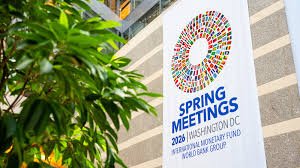
Sub-Saharan Africa’s economic recovery has suffered a fresh setback after the International Monetary Fund and the World Bank both downgraded their 2026 growth projections, warning that escalating geopolitical tensions linked to the US–Iran crisis are weighing heavily on global markets and African economies.
Announced during the Spring Meetings in Washington, the revisions mark a reversal of earlier optimism at the start of the year, when improving inflation trends and stabilizing post-pandemic recovery conditions had suggested stronger regional performance.
The IMF now projects sub-Saharan Africa’s growth at 4.3% in 2026, down 0.3 percentage points from its January outlook. The World Bank has similarly lowered its forecast to 4.1%, citing weaker external demand, tighter global financial conditions, and renewed volatility in energy markets.
Officials at both institutions warned that the risks extend beyond 2026, with 2027 also facing “significant downside pressure” if geopolitical instability continues to disrupt trade and investment flows.
A senior IMF official, speaking on condition of anonymity due to the sensitivity of ongoing assessments, said the region remains “highly exposed to external shocks that are increasingly unpredictable in origin and scale.”
Economists say the latest downgrade reflects a broader pattern in which African economies—particularly those dependent on commodity exports and external financing—remain vulnerable to crises originating outside the continent.
The current slowdown comes as global markets continue to absorb the economic ripple effects of tensions in the Middle East, which have contributed to fluctuating oil prices, higher transport costs, and tighter liquidity conditions across emerging markets.
Analysts also pointed to parallels with the disruption caused by the Russian invasion of Ukraine, which previously triggered sharp increases in food and fuel prices, hitting African import-dependent economies and slowing post-COVID recovery momentum following the COVID-19.
“Africa is once again caught in a cycle of external shocks,” said a Nairobi-based economic analyst. “Even when domestic fundamentals improve, global instability quickly offsets those gains.”
Also Read; Botswana–South Africa Crisis Over Migrant Abuse
Several African economies had entered 2026 with cautious optimism, supported by easing inflation and gradual fiscal consolidation efforts. However, rising global uncertainty is now complicating debt management strategies and limiting access to affordable international credit.
In some countries, currency pressures are already emerging, while governments face renewed challenges in financing infrastructure and social spending programs without widening fiscal deficits.
Despite the downgrade, the IMF and World Bank emphasized that long-term growth potential in sub-Saharan Africa remains intact, driven by demographic expansion, urbanization, and regional trade integration efforts.
However, both institutions stressed that unlocking that potential will depend on stronger governance, improved debt sustainability frameworks, and greater resilience to external shocks.
The latest warning underscores a familiar reality for policymakers across the continent: while Africa’s growth story remains promising, its trajectory is increasingly shaped by global instability beyond its control.