MWE Correspondent
The future of one of the world’s largest food assistance programmes is undergoing a significant transformation, and Africa may need to prepare for its consequences.
For more than seven decades, the United States’ Food for Peace programme has served as a critical source of emergency food assistance for countries facing hunger, conflict and humanitarian crises. Millions of people across Africa have benefited from the programme during periods of drought, displacement and economic hardship.
Today, however, Food for Peace is entering a new phase.
Recent developments in Washington suggest that the programme is being reshaped under the U.S. Department of Agriculture (USDA), with greater emphasis on supporting American agricultural interests alongside humanitarian objectives. The shift has sparked debate among development experts about how food aid may be managed in the future and whether aid decisions could become increasingly linked to trade and economic priorities.
For Africa, the changes highlight a reality that policymakers have discussed for decades: food security cannot depend indefinitely on decisions made outside the continent.
Food aid remains an important tool during emergencies. In regions affected by conflict, drought or natural disasters, humanitarian assistance often provides a critical lifeline. Yet international aid programmes are ultimately shaped by the political, economic and budgetary priorities of donor countries. When those priorities change, aid systems can change as well.
The Food for Peace debate therefore raises a broader question about Africa’s long-term preparedness to withstand external shocks.
The continent possesses enormous agricultural potential. Africa is home to vast tracts of arable land, significant water resources and a growing workforce. Yet many countries continue to face recurring food insecurity while spending billions of dollars annually on food imports.
This contradiction has become one of the defining development challenges of the continent.
For Tanzania, the immediate impact of changes to Food for Peace may be limited compared to countries that rely heavily on emergency food assistance. Tanzania is generally food secure at the national level and remains one of East Africa’s leading producers of maize, rice, cassava and other staple crops. In recent years, the government has increased investments in irrigation schemes, fertilizer support programmes and agricultural modernization as part of broader efforts to strengthen food production and rural incomes.
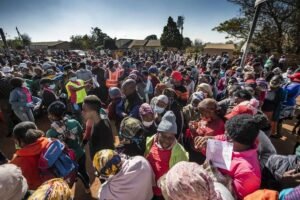
The country has also expanded the role of the National Food Reserve Agency (NFRA), which purchases and stores grain to help stabilize supplies during shortages and emergencies. Beyond domestic needs, Tanzania has increasingly emerged as a regional supplier of food commodities to neighboring countries, particularly during periods of drought in the Horn of Africa and parts of Southern Africa. These measures provide a degree of resilience against fluctuations in international food aid programmes.
Climate change, population growth, supply chain disruptions and geopolitical tensions have nevertheless increased pressure on food systems worldwide. At the same time, international development assistance is becoming more constrained as donor countries face domestic economic pressures and competing global priorities.
Against this backdrop, strengthening domestic food production is no longer simply an agricultural objective. It is increasingly a strategic necessity.
Several African countries have already begun taking steps in that direction. Investments in irrigation, fertilizer access, agricultural mechanization and climate-smart farming are expanding. Regional initiatives under the African Continental Free Trade Area (AfCFTA) aim to improve cross-border trade and reduce barriers that often prevent food from moving efficiently between African markets.
However, progress remains uneven across the continent. Weak infrastructure, limited access to financing, post-harvest losses and fragmented markets continue to undermine agricultural growth. Addressing these challenges will require sustained investment, policy coordination and stronger regional cooperation.
The evolving Food for Peace programme should not be viewed as a threat to Africa. Rather, it should be seen as a reminder that global assistance programmes are not permanent guarantees. Their structure, priorities and funding can change over time.
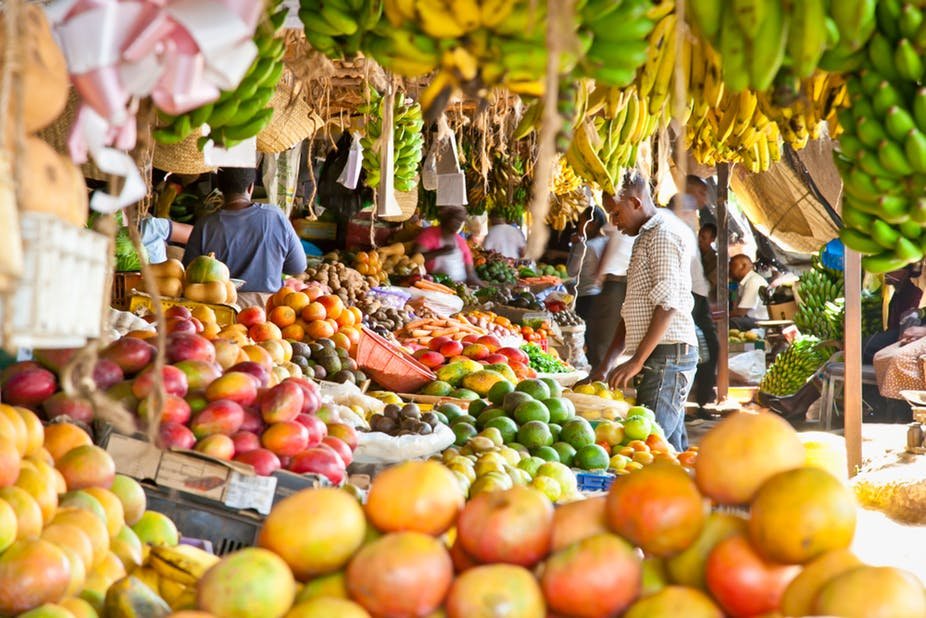
For African governments, the lesson is clear. Humanitarian aid will continue to play a vital role during crises, but long-term food security must be built on domestic production, regional trade and resilient agricultural systems.
As global food aid enters a period of transition, Africa faces an opportunity to accelerate a goal that has long been central to the continent’s development agenda: the ability to feed itself.
The question is no longer whether food aid is changing. The question is whether Africa is prepared for a future in which self-reliance becomes increasingly important.