Agencies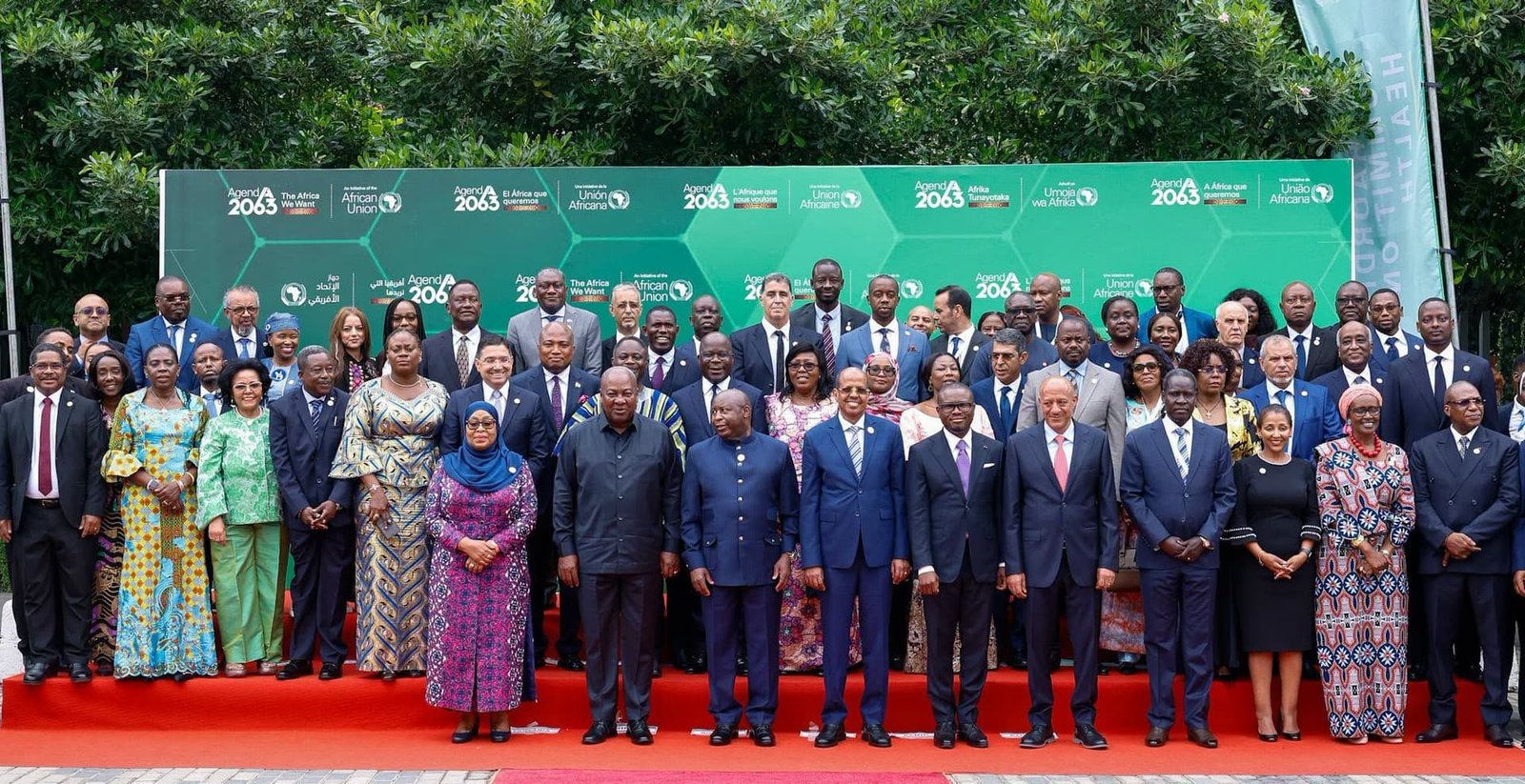
For decades, African countries have faced a structural problem in international affairs: political independence does not always translate into economic independence.
A government may be sovereign on paper, yet its policy choices can still be affected by external financial systems, foreign currencies, international banks and economic restrictions imposed by powerful states.
For Africa, the question is increasingly urgent: Can African countries build collective protection against political and economic coercion?
An AU document examining unilateral coercive measures states that harmful sanctions against African states can undermine economic and social development and identifies sovereignty, territorial integrity and political independence as fundamental principles of the Union. The document also raises concerns about the effects of unilateral measures on developing countries.
This points toward a broader African strategy: collective economic protection rather than isolated national resistance.
No African country, acting alone, can easily redesign the international financial system. But 55 countries acting through continental and regional institutions possess a far greater economic base..
The AU already recognises eight Regional Economic Communities — including the East African Community, SADC, ECOWAS, COMESA, ECCAS and IGAD — as building blocks of African economic integration.
These institutions could become increasingly important in protecting African trade from external financial disruptions.
The AU’s long-term institutional framework includes proposals for an African Central Bank, African Investment Bank and African Monetary Fund. The proposed monetary architecture includes mechanisms for monetary cooperation and a multilateral payments system designed to reduce restrictions on intra-African transactions.
The challenge is turning those ambitions into functioning institutions with sufficient capital, political backing and continental participation.
In February 2026, the African Development Bank brought together the continent’s recognised regional economic communities around its proposed New African Financial Architecture, explicitly focusing on stronger financial sovereignty, mobilisation of African capital and greater coordination between regional institutions.
In July 2026, the EAC Monetary Affairs Committee reaffirmed its commitment to regional monetary integration and reviewed implementation of a cross-border payment system intended to make regional transactions more efficient, promote local-currency use and reduce transaction costs. The EAC is working toward a single regional currency under its existing monetary-union roadmap.
Several African countries are now participating in BRICS, creating additional channels for economic cooperation with major emerging economies. The strategic importance for Africa is not necessarily to replace one external financial dependency with another. It is to increase the number of available economic options.
If African countries can trade more with one another, settle a larger share of transactions through African payment systems, use local currencies where practical and maintain multiple international trading relationships, the ability of any single external power to disrupt African economic activity could be reduced.
That would represent a different model of sovereignty.
Instead of asking whether Africa should align itself with Washington, Beijing, Moscow or any other external centre of power, African states could pursue a principle of strategic autonomy: cooperate with different partners while retaining the ability to make independent policy decisions.
The African Union‘s own peace and security discussions have already raised concerns about unilateral sanctions and called for measures to avoid socioeconomic harm to populations and neighbouring countries.
Read More :The Extradition and Financial Jurisdiction Trap
African countries have different currencies, economic structures, political interests and levels of financial development. Regional integration also requires trust, compatible regulations, reliable payment infrastructure and strong institutions.
When African countries negotiate separately, their individual bargaining power is limited. When they coordinate trade, finance, infrastructure and diplomatic positions, the continent can become a more significant economic actor.
The goal should therefore not be isolation from the world.
It should be freedom of choice within the world economy.
Africa should be able to trade with the United States without depending entirely on American financial infrastructure. It should be able to trade with China without replacing one dependency with another. It should be able to engage Russia, Europe, India, the Gulf states and emerging economies without allowing any single external power to determine the limits of African economic policy.
African sovereignty will remain vulnerable if political independence is not supported by financial independence, regional integration and diversified international partnerships.
The continent already possesses the institutions, markets and economic resources to begin building that protection.
What remains is the political decision to turn continental integration from an aspiration into practical economic power.