MWE Correspondent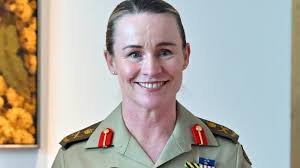
Australia has announced a landmark change in its military leadership, confirming that Susan Coyle will become the first woman to lead the nation’s army in its 125-year history.
The appointment, set to take effect in July, marks a significant milestone in the evolution of the Australian Defence Force and reflects broader efforts to modernize and diversify its ranks.
Lieutenant General Coyle, currently serving as Chief of Joint Capabilities, will replace Simon Stuart as Chief of Army. Her elevation comes at a time when Australia’s military is confronting longstanding challenges related to gender representation, workplace culture, and accountability.
Prime Minister Anthony Albanese described the appointment as a historic breakthrough, emphasizing its symbolic and practical importance. Defence Minister Richard Marles echoed that sentiment, calling it a defining moment not only for the armed forces but for women across the country considering careers in military service.
Coyle’s rise through the ranks reflects decades of gradual but often uneven progress for women in Australia’s armed forces. Women were first formally integrated into non-combat roles during the 20th century, but it was not until 2013 that the Australian government lifted all remaining gender restrictions in combat positions. This policy shift opened the door for women to serve in frontline roles, including infantry and special operations, fundamentally reshaping the structure of military careers.
Historically, the Australian Army—established in 1901 following the federation of the country—has been dominated by male leadership. While women have served with distinction in various capacities, including during both World Wars, their roles were often limited to nursing, communications, and support services. Over time, societal changes and evolving military needs led to expanded opportunities, though leadership at the highest level remained out of reach until now.
Also Read; Lebanon Seeks Ceasefire Talks With Israel Amid Escalation
Coyle’s appointment also comes amid renewed scrutiny of military culture. In recent years, the Australian Defence Force has faced a series of allegations involving sexual harassment, discrimination, and misconduct. Independent reviews have called for structural reforms to improve accountability and create a more inclusive environment. Increasing the number of women in leadership positions has been identified as a key step toward achieving those goals.
At 55, Coyle brings extensive experience to the role. Since enlisting in 1987, she has held numerous senior command positions, contributing to strategic planning, capability development, and operational leadership. Her career trajectory is widely seen as evidence of the expanding pathways now available to women in uniform.
Analysts say her leadership could influence not only internal culture but also recruitment trends. Representation at the top levels of command is often viewed as critical in shaping perceptions of opportunity and fairness within institutions traditionally dominated by men. As Marles noted, visibility can play a powerful role in inspiring future generations.
Beyond Australia, Coyle’s appointment aligns with a broader global trend of increasing female leadership in military institutions. Countries such as the United States, the United Kingdom, and Canada have also taken steps in recent years to expand women’s roles in defence, though progress varies widely.
As she prepares to assume command, expectations are high that Coyle will help guide the Australian Army through a period of transformation—balancing operational readiness with cultural reform. Her appointment not only reflects changing attitudes within the military but also signals a wider societal shift toward gender equality in leadership.
For many observers, this moment represents more than a personal achievement. It stands as a milestone in the long journey toward inclusivity in one of the nation’s most traditional institutions, and a reminder of how far the role of women in the military has evolved over the past century.