MWE Correspondent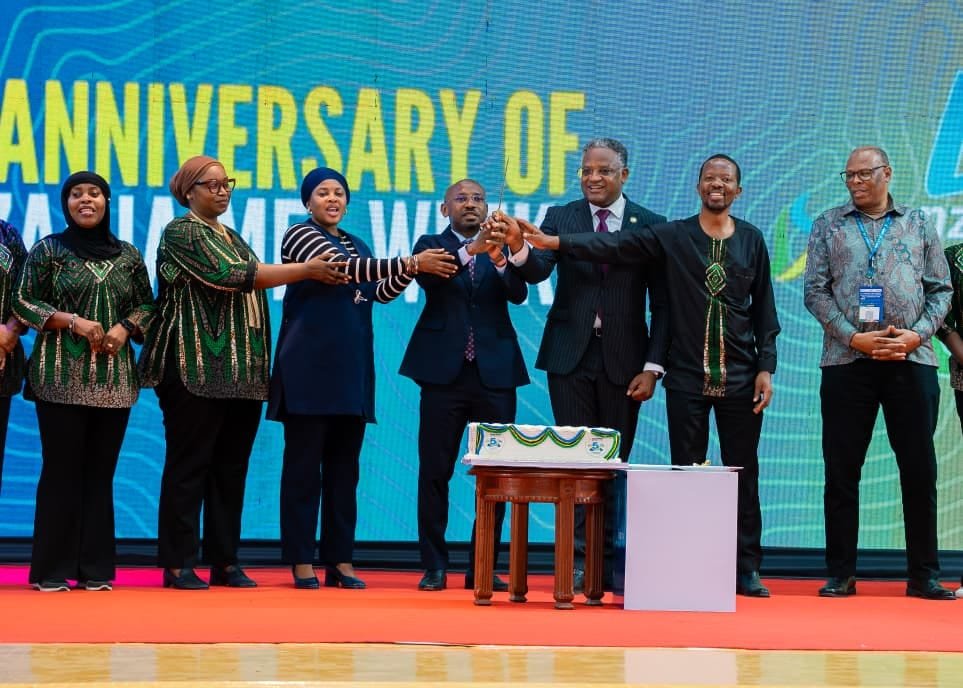
The Government has called for the completion of Tanzania’s National Monitoring and Evaluation Policy, saying a unified framework is needed to strengthen evidence-based decision-making, accountability and the implementation of development programmes across the country.
Arumeru District Commissioner Mwinyi Ahmed Mwinyi, speaking on behalf of Minister of State in the Prime Minister’s Office responsible for Policy, Parliament, Coordination and Persons with Disabilities, Prof. Mpalamagamba Kabudi, made the call on September 25, 2026, during the closing ceremony of the Fifth National Monitoring, Evaluation and Learning Conference in Arusha.
Mwinyi said the Prime Minister’s earlier directive on the policy should be implemented with urgency and through broad participation involving government institutions and other stakeholders.
“I reiterate the directive issued by the Prime Minister that the Prime Minister’s Office should continue to expedite and complete the National Monitoring and Evaluation Policy to the required quality and through whole-of-government and stakeholder participation,” Mwinyi said.
He added that the next national conference should be held alongside the launch of the policy, underscoring the government’s intention to move from discussions and recommendations towards a formal institutional framework for monitoring and evaluation.
The proposed policy is expected to provide a common institutional, professional and operational foundation for monitoring and evaluation across Tanzania, an area increasingly important as governments seek to measure whether public programmes are delivering their intended results.
Mwinyi also directed the Prime Minister’s Office to work with the President’s Office, Public Service Management and Good Governance, to finalise the public service structure for the Monitoring and Evaluation cadre.
He said the move would help establish clear responsibilities, professional standards and career development pathways for officers working in monitoring and evaluation.
At the local government level, Mwinyi urged regions, local government authorities and service-delivery institutions to strengthen accountability clinics and operational discussions where challenges affecting citizens can be identified and addressed at the level responsible for providing services.
He further stressed that resolutions reached during the conference should not remain as records of the meeting.
Also Read : At Least 41 Dead After Boat Capsizes on Lake Tanganyika on Kigoma
Instead, he directed the conference secretariat, under the coordination of the Prime Minister’s Office, to translate the resolutions into an implementation plan detailing specific actions, responsible institutions, timelines and indicators for measuring progress.
The emphasis reflects a broader shift in public-sector management towards using evidence not only to assess completed projects, but also to guide planning, budgeting and day-to-day administrative decisions.
Permanent Secretary in the Prime Minister’s Office responsible for Policy, Parliament, Coordination and Persons with Disabilities, Dr Jim Yonazi, said the five-day conference had provided a platform for more than 1,500 participants, including government leaders, professionals, researchers, development partners, private-sector representatives, civil society organisations, youth, women and persons with disabilities from Tanzania and abroad.
According to Yonazi, the conference focused on strengthening the use of evidence in decision-making and improving the implementation of development interventions.
He said discussions at the conference had highlighted several priorities, including completing the National Monitoring and Evaluation Policy, strengthening the Monitoring and Evaluation professional cadre and developing an Integrated Electronic Monitoring and Evaluation System.
Other priorities include increasing resources and institutional capacity for monitoring and evaluation units and ensuring that information generated through M&E processes is actively used in management meetings, planning, budgeting and operational decision-making.
The development of an integrated electronic system is particularly significant as government institutions increasingly rely on digital data to track programmes, assess performance and monitor public-service delivery.
The conference also brought together stakeholders from education and research institutions, professional networks, civil society, the private sector and development organisations, creating a platform for exchanging experiences on how monitoring and evaluation can contribute to better development outcomes.
Yonazi thanked government leaders, Arusha regional and Arumeru district authorities, the Tanzania Evaluation Association (TanEA), academic and research institutions, development partners, professional associations and networks, private-sector actors, civil society organisations, exhibitors, facilitators, journalists and participants for their contribution to the conference.
The government’s renewed push for the National Monitoring and Evaluation Policy now places emphasis on translating the conference’s recommendations into measurable actions, with institutions expected to have clear responsibilities and timelines.
If implemented as outlined, the framework would provide a common basis for tracking public programmes and using evidence to identify challenges, assess progress and inform future government planning and resource allocation.