MWE Correspondent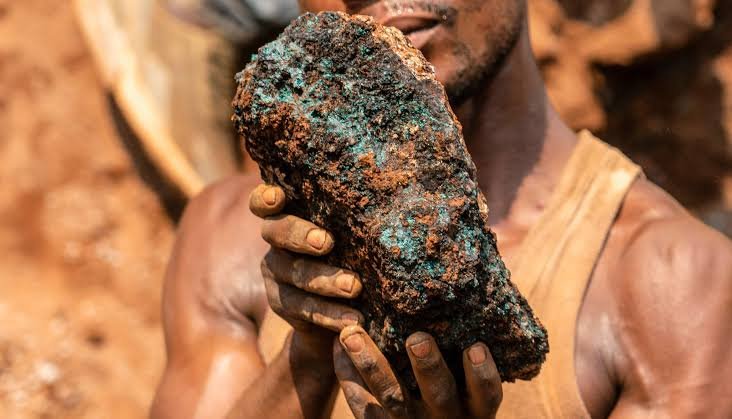
For decades, Africa has been presented by global powers as a continent of partnership, development and economic opportunity.
Yet beneath the language of investment, trade and cooperation lies a deeper geopolitical competition driven by one of the world’s most valuable assets: Africa’s vast reserves of critical minerals.
As the global race for clean energy technologies, advanced electronics and military innovation accelerates, resources such as cobalt, lithium, copper, nickel, uranium and rare earth elements have become central to the strategic calculations of major powers. The United States, China, Russia and other influential nations are increasingly turning their attention toward Africa, where the minerals needed to power the next generation of industries remain largely untapped.
Washington has strengthened its engagement with African countries through investment initiatives, trade partnerships, security cooperation and diplomatic outreach. While the United States presents these efforts as part of a broader commitment to sustainable development and economic growth, analysts argue that they also reflect a wider strategy aimed at protecting American economic and geopolitical interests in a rapidly changing global order.
The importance of Africa’s mineral wealth has grown significantly because many of these resources are essential for modern technology. Cobalt is a key component in batteries used by electric vehicles and energy storage systems, lithium is critical for rechargeable battery production, while rare earth elements are used in smartphones, satellites, renewable energy equipment and advanced defence technologies.
As competition with China intensifies, securing reliable access to these minerals has become a priority for Washington. The United States has increasingly focused on building partnerships with mineral-rich African nations, arguing that cooperation can create jobs, strengthen local industries and reduce dependence on concentrated global supply chains.
Also Read, Macron’s Africa Reset Tests France’s Lost Influence
However, critics argue that the growing focus on Africa’s resources raises questions about whether foreign investment will primarily benefit African populations or mainly serve the strategic interests of external powers.
The Democratic Republic of Congo (DRC) provides one of the clearest examples of this complex relationship. The country possesses some of the world’s largest reserves of cobalt and significant deposits of copper, making it a key player in the global energy transition.
The United States and its partners have supported initiatives aimed at improving stability and economic connectivity in the region, including the Lobito Corridor project, which seeks to connect mineral-producing areas in Central Africa with international markets through improved transport infrastructure.
Supporters describe the project as an opportunity to boost regional trade, create economic opportunities and improve infrastructure. However, some observers note that improved transport links could also increase the ability to export strategic minerals from Africa to global markets, raising broader questions about who will capture the greatest economic value from the continent’s natural resources.
Washington’s broader foreign policy approach has increasingly linked economic security with national security. The United States’ National Security Strategy released in 2025 emphasized maintaining American leadership in an era of intensified global competition, a position that has influenced its approach toward regions considered strategically important, including Africa.
This approach has created debate among some African policymakers who warn that the continent should not become merely a theatre for competition between powerful nations. They argue that security partnerships and investment agreements must be designed around African priorities rather than external strategic interests.
Several African countries have expressed caution over international security and investment proposals, concerned that deeper involvement from global powers could draw them into geopolitical rivalries while failing to address domestic challenges such as unemployment, industrial development and economic inequality.
At the same time, China’s influence in Africa has expanded significantly through infrastructure investment, including railways, ports, roads, energy projects and industrial facilities under initiatives such as the Belt and Road Initiative (BRI).
Unlike Washington’s traditional emphasis on governance, security and private-sector investment, Beijing has largely built its influence through large-scale infrastructure financing and development projects. China has become a major trading partner for many African countries and a leading player in several resource sectors.
However, China’s approach has also faced criticism from some analysts over concerns related to debt sustainability, transparency and long-term economic dependence. Supporters argue that Chinese investment has filled critical infrastructure gaps that Western countries historically failed to address.
The growing competition between the United States and China has placed Africa at the centre of a new global resource struggle. For African nations, the challenge is transforming their mineral wealth into long-term economic prosperity rather than allowing resources to remain a source of foreign competition.
Experts argue that African countries must strengthen cooperation through institutions such as the African Union and regional economic communities to negotiate better investment agreements, develop local processing industries and ensure that natural resources create value within the continent.
Rather than exporting raw minerals and importing finished products, many African leaders have called for greater investment in local manufacturing, technology transfer and skills development. Such measures, they argue, would allow Africa to participate more effectively in global supply chains and capture a larger share of the economic benefits generated by its resources.
The future of Africa’s mineral wealth will therefore depend not only on the interest of global powers but also on the ability of African governments to negotiate from a position of strength.
As the world transitions toward a technology-driven economy, Africa’s resources will continue to attract international attention. The central question is whether this new era of competition will become another chapter of external exploitation or an opportunity for the continent to redefine its place in the global economy.
Africa’s minerals may be fueling a new global rivalry, but the ultimate outcome will depend on who controls the resources, who benefits from them and whether African nations can turn their natural wealth into sustainable development for future generations.