MWE Correspondent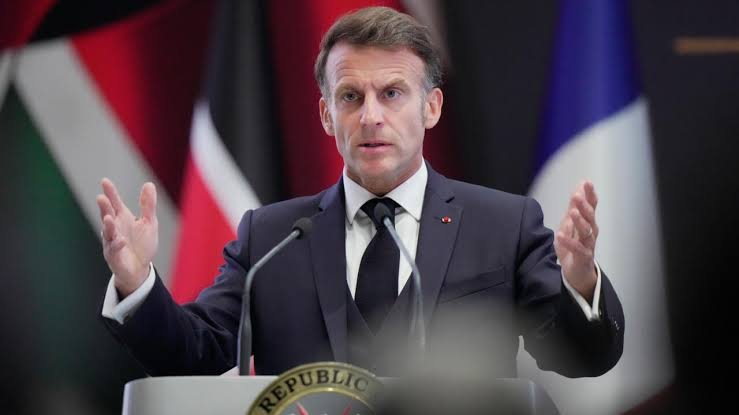
French President Emmanuel Macron is facing a major diplomatic challenge as France attempts to rebuild its relationship with Africa after years of declining influence, rising anti-French sentiment and growing competition from global powers seeking a stronger presence on the continent.
Macron’s renewed African strategy comes at a time when the traditional balance of power in Africa is undergoing a major transformation. Countries across the continent are increasingly expanding their partnerships beyond former colonial powers, creating a more competitive diplomatic environment involving Russia, China, the United States, India, Türkiye and Gulf nations.
The shift has forced Paris to rethink its approach to Africa, moving away from decades of military-centred engagement toward a strategy focused on investment, trade, technology and economic cooperation.
For much of the post-independence era, France maintained significant influence across Africa, particularly in West and Central Africa, through close political ties, defence agreements and commercial relationships.
That influence, however, has weakened considerably in recent years.
A series of political changes in the Sahel region marked a turning point in France’s relationship with Africa. Governments in Mali, Burkina Faso and Niger ended military cooperation with Paris and pushed for the withdrawal of French forces, accusing France of failing to provide lasting solutions to regional security challenges.
The developments represented one of the most serious setbacks for French foreign policy in Africa and accelerated a broader debate about the future of France’s role on the continent.
The decline of France’s influence has coincided with Africa’s growing importance in global affairs.
The continent has become increasingly strategic because of its vast natural resources, including critical minerals needed for renewable energy technologies, electric vehicles and advanced industries.
Africa’s young population, expanding consumer markets and economic potential have also attracted increased attention from international investors and governments seeking long-term partnerships.
Also Read, Africa Courts Gulf Powers For Strategic Investment
As a result, African nations are gaining greater leverage in international negotiations.
Instead of relying on traditional alliances, many governments are adopting a multi-partner approach, working with different countries depending on their economic, security and development priorities.
The changing environment has created opportunities for emerging global powers.
Russia has increased diplomatic engagement with African countries through the Russia–Africa Summit, promoting cooperation in security, energy, mining and trade.
Moscow has presented itself as an alternative partner for countries seeking to diversify their international relationships, particularly in the security sector.
China, meanwhile, remains one of Africa’s largest economic partners, with extensive involvement in infrastructure development, trade and industrial projects.
Chinese companies have supported major investments in transport networks, energy projects, telecommunications and manufacturing across several African countries.
The expanding role of Russia and China has increased pressure on France and other Western nations to offer stronger economic partnerships.
France Shifts Focus To Economic Cooperation
In response to these changes, Macron’s government has sought to redefine France’s engagement with Africa.
Paris has increasingly promoted cooperation in sectors such as renewable energy, digital technology, artificial intelligence, agriculture and private investment.
French officials argue that the future relationship should be based on equal partnership rather than the historical influence associated with France’s colonial past.
However, analysts say restoring trust will require more than diplomatic statements.
Many African governments are demanding partnerships that deliver tangible benefits, including job creation, industrial development, technology transfer and stronger support for local economies.
West Africa Becomes Key Battleground
West Africa remains central to France’s efforts to rebuild its position.
Countries such as Senegal, Côte d’Ivoire and Nigeria represent important partners because of their economic size, political influence and regional importance.
Senegal has sought to redefine aspects of its security relationship with France while maintaining economic cooperation.
Côte d’Ivoire continues to maintain strong commercial links with France and remains one of Paris’ most important economic partners in the region.
Nigeria, Africa’s most populous country and one of its largest economies, represents a major opportunity for France to expand its influence beyond traditional Francophone relationships.
Analysts say Macron’s challenge extends beyond competing with Russia and China.
The deeper challenge is adapting to an Africa that is increasingly confident, independent and willing to choose partners based on national interests rather than historical connections.
African governments are now seeking relationships built on mutual respect, economic value and shared development goals.
The era when historical ties alone guaranteed influence is disappearing, replaced by a new diplomatic environment where partnerships must be earned.
For France, the outcome of its Africa strategy could determine whether Paris remains a major player on the continent or continues to lose ground in an increasingly competitive global landscape..