MWE Correspondent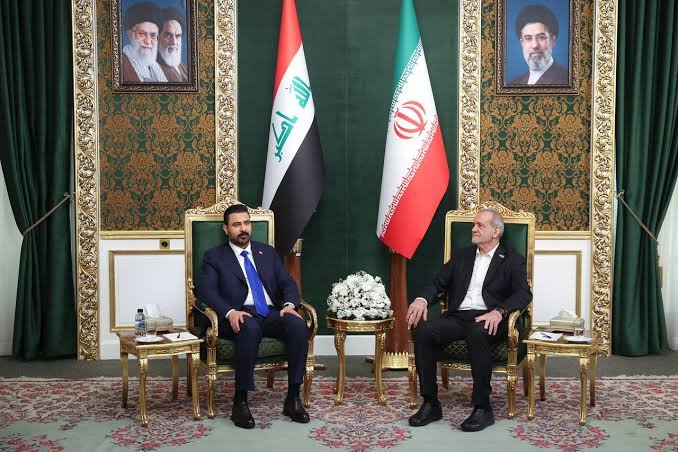
Iran and Iraq have signed a series of wide-ranging agreements aimed at strengthening bilateral cooperation across key sectors, underscoring both countries’ determination to deepen economic integration, enhance regional security and reinforce one of the Middle East’s most significant strategic relationships.
The agreements were concluded during Iraqi Prime Minister Ali Al-Zaidi’s official visit to Tehran, where senior leaders from both nations pledged to expand collaboration in trade, energy, security, infrastructure development and investment as they seek to navigate growing regional challenges and shifting geopolitical dynamics.
The latest accords reflect a broader effort by Tehran and Baghdad to transform their close political ties into a more comprehensive economic partnership capable of delivering long-term benefits for both countries while promoting greater regional stability.
During high-level talks, officials emphasized their shared commitment to building stronger institutional cooperation and accelerating joint development projects designed to increase cross-border commerce, improve transportation networks and encourage private-sector investment.
Economic cooperation featured prominently in the discussions, with both governments expressing confidence that expanding bilateral trade would create new opportunities for businesses, strengthen supply chains and stimulate job creation. Iraq remains one of Iran’s largest regional trading partners, while Iran continues to play an important role in supplying electricity and natural gas to its western neighbor.
Also Read. Macron’s Africa Reset Tests France’s Lost Influence
Energy cooperation also emerged as a central pillar of the new agreements. The two countries agreed to explore additional opportunities for collaboration in electricity generation, energy infrastructure and resource management as demand for reliable power continues to grow across the region.
Security remained another key focus of the meetings. Iran and Iraq reaffirmed their commitment to strengthening border security, combating terrorism and preventing cross-border criminal activity through closer intelligence sharing and coordinated operations. Both governments stressed that enhanced security cooperation is essential to safeguarding economic development and maintaining stability along their shared frontier.
The visit comes at a time when the Middle East continues to face multiple security and political challenges, including regional tensions, economic uncertainty and the need for greater coordination among neighboring states. Against that backdrop, both Tehran and Baghdad presented the agreements as evidence of their shared determination to pursue dialogue and practical cooperation rather than confrontation.
Regional analysts say the expanded partnership could also strengthen Iraq’s position as an important economic bridge between Iran and the Arab world, while providing Tehran with additional avenues for trade and investment as it seeks to deepen economic relationships with neighboring countries.
Infrastructure development is expected to be another major area of collaboration. Officials discussed plans to improve transport connectivity, modernize border crossings and facilitate the movement of goods and people, initiatives that could significantly increase commercial activity between the two countries in the coming years.
The agreements also include measures intended to encourage investment and support sustainable development, with leaders expressing optimism that closer cooperation will attract new capital, improve public services and create tangible economic opportunities for citizens on both sides of the border.
As the official visit concluded, leaders from Iran and Iraq described the agreements as a foundation for a broader long-term partnership built on mutual interests, economic cooperation and regional stability. They said the new framework would not only strengthen bilateral relations but also contribute to wider efforts aimed at promoting peace, prosperity and sustainable development across the Middle East.