MWE Correspondent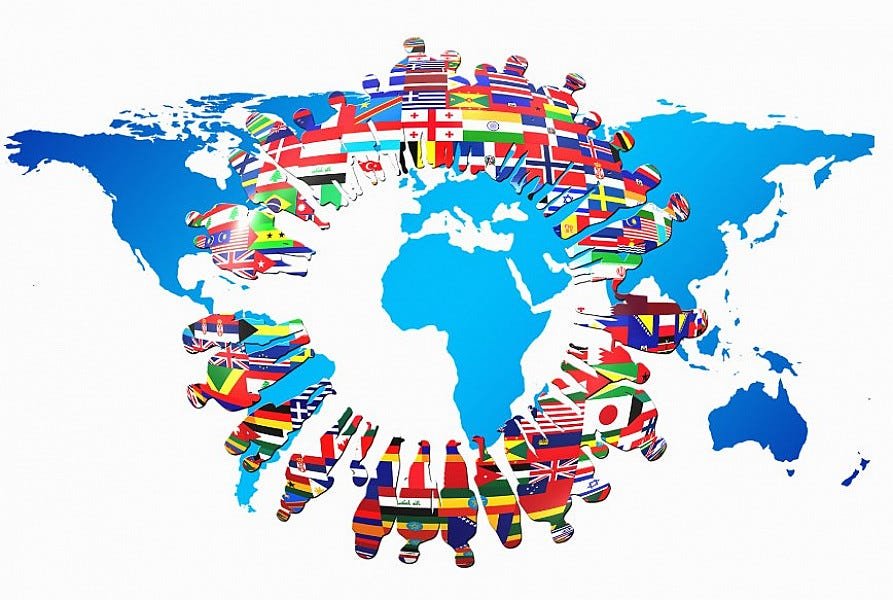
In a trading office where currency screens update every second, small fluctuations in exchange rates determine the value of shipments, contracts, and investments crossing borders. For traders and importers, these movements are not abstract—they decide profit margins, pricing stability, and sometimes the survival of entire businesses.
Yet beyond these daily fluctuations, a deeper transformation is unfolding in the global financial system.
Over the past year, governments and financial institutions have increasingly explored alternatives to traditional financial pathways, including regional payment systems, local currency settlement mechanisms, and new development financing structures.
The shift is gradual rather than disruptive, but its direction is becoming clearer.
At the center of this transformation is Financial Sovereignty—the ability of a nation to maintain greater control over its financial decisions, currency exposure, and external dependency.
For many economies, this means reducing vulnerability to external shocks such as currency volatility, interest rate changes in major economies, and global financial tightening cycles.
Rather than replacing existing systems, many countries are working to diversify them.
This includes expanding trade agreements settled in local currencies, strengthening regional financial institutions, and increasing the use of bilateral payment arrangements.
These developments are not occurring in isolation.
They are linked to broader changes in global economic structure, where influence is no longer concentrated in a single financial center but distributed across multiple emerging hubs.
One of the key institutions supporting this shift is the New Development Bank, which continues to expand its role in financing infrastructure and development projects across member economies. Its growth reflects a broader effort to create alternative channels for long-term investment and financial cooperation.
At the same time, established financial systems remain deeply embedded in global trade, offering liquidity, stability, and trust that continue to anchor international markets.
Also Read, South Africa Braces For Anti-Immigration Protests
This coexistence of systems suggests that the global financial order is evolving rather than collapsing.
A more multipolar structure is emerging—one where multiple currencies and financial networks operate side by side, each serving different regional and strategic functions.
For businesses, this shift introduces both opportunity and complexity.
Exporters and importers must navigate multiple currency systems, manage exchange risks more carefully, and adapt to varying financial regulations across regions.
For governments, the challenge is more strategic.
They must balance financial openness with economic stability while ensuring that domestic institutions remain resilient in a more fragmented global environment.
This balancing act is closely connected to Global Diplomacy, as financial agreements increasingly overlap with trade partnerships, infrastructure investment, and geopolitical alignment.
Financial discussions are no longer limited to banking institutions or ministries of finance. They now involve strategic negotiations between states, regional blocs, and international organizations.
At the same time, technological change is accelerating financial transformation.
Digital payment systems, mobile money platforms, and emerging cross-border settlement technologies are reducing transaction times and expanding access to financial services, particularly in developing regions.
This technological layer is increasingly linked to Digital Sovereignty, as countries seek to ensure that critical financial data and payment infrastructure remain secure, regulated, and locally governed.
Despite these changes, the dollar continues to play a central role in global trade and reserves due to its deep liquidity and established trust in international markets.
Most analysts suggest that the future will not be defined by replacement, but by coexistence—where multiple financial systems operate in parallel.
This evolving structure reflects a broader reality of the global economy.
Power is no longer concentrated in one system, but distributed across many interconnected financial networks.
For emerging economies, this shift presents an opportunity to expand policy space, strengthen regional cooperation, and reduce overdependence on any single financial channel.
However, it also requires stronger institutions, disciplined fiscal management, and coordinated regional strategies to fully realize its benefits.
The financial map of the world is not being erased.
It is being redrawn—carefully, unevenly, and with long-term consequences that will shape the next era of global economic relations.