Joseph Isangura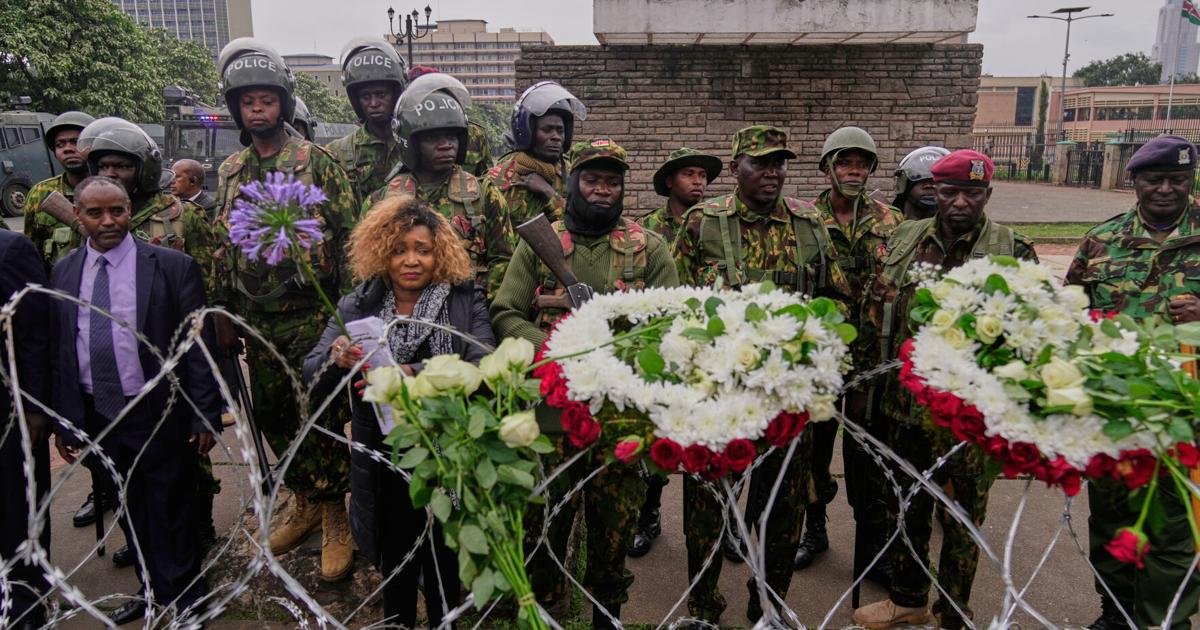
The streets surrounding Kenya’s Parliament carried a message of grief and unfinished business as parents who lost their children during the deadly anti-government protests of 2024 joined opposition leaders, activists and human rights campaigners in a solemn march demanding justice.
Carrying flowers and messages of remembrance, the families walked toward the National Assembly in Nairobi, the symbolic centre of the events that transformed Kenya’s political landscape one year earlier.
Their mission was not only to honour those who died, but also to demand accountability over the deaths that occurred during demonstrations that began as a protest against a controversial finance law and later became a nationwide movement against economic hardship and concerns over governance.
The June 2024 protests marked one of the most serious political confrontations Kenya had witnessed in recent years.
What started as public opposition to the Finance Bill 2024 — a government proposal aimed at increasing tax revenues — quickly grew into a broader youth-led movement. Many young Kenyans argued that the proposed measures would deepen financial pressure on citizens already struggling with rising living costs.
The movement was largely driven by young people who organized through social media platforms, creating a new form of political activism that operated outside traditional party structures.
On June 25, 2024, thousands gathered in Nairobi as lawmakers debated the bill. The demonstrations escalated dramatically when protesters entered the Parliament area, triggering clashes with security forces.
The violence that followed resulted in deaths, injuries and arrests, sparking national outrage and international attention.
Human rights organisations called for independent investigations into alleged abuses during the protests, while families of victims continued to press authorities for answers about how their loved ones lost their lives.
A year later, the wounds remain visible.
For parents who joined the march, the flowers placed near Parliament represented more than a memorial. They represented a demand that the deaths of their children should not become forgotten statistics.
“We want justice,” has become the central message from families who say they are still waiting for accountability.
Also Read. Kagame Challenges West Over Human Rights Authority
Meanwhile, Nairobi’s normally busy city centre showed signs of tension.
Despite government assurances that businesses, workers and residents should continue their activities normally, many shops remained closed and commercial activity slowed significantly.
Major roads that are usually filled with vehicles and pedestrians appeared unusually quiet as security measures increased and authorities restricted access to some parts of the central business district.
At the intersection of Kenyatta Avenue and Uhuru Highway — normally one of Nairobi’s busiest areas — the atmosphere was dramatically different, with fewer vehicles and limited public movement.
For business owners, the protests brought uncertainty and economic disruption.
For families of those who died, however, the focus remained on memory and justice rather than economic activity.
The demonstrations have become a defining moment for Kenya’s younger generation, revealing a shift in how citizens engage with government decisions.
Unlike previous political movements often associated with established parties, the 2024 protests showed the influence of a digitally connected generation capable of organizing national action through online networks.
The events also raised fundamental questions about democracy, public participation and the balance between maintaining security and protecting citizens’ rights to peaceful protest.
The Kenyan government has defended the need to maintain order during periods of unrest, while critics continue to call for transparency and accountability over the deaths and injuries reported during the demonstrations.
As Kenya remembers the victims, the political debate surrounding the protests remains unresolved.
For supporters, June 25, 2024 represents a historic moment when young citizens forced their voices into the national conversation.
For grieving families, it represents a painful chapter that cannot close until they receive answers.
The flowers laid outside Parliament serve as a reminder that, although the streets may eventually return to normal, the questions raised during Kenya’s youth uprising remain alive.
The protests ended. The debate did not.