MWE Correspondent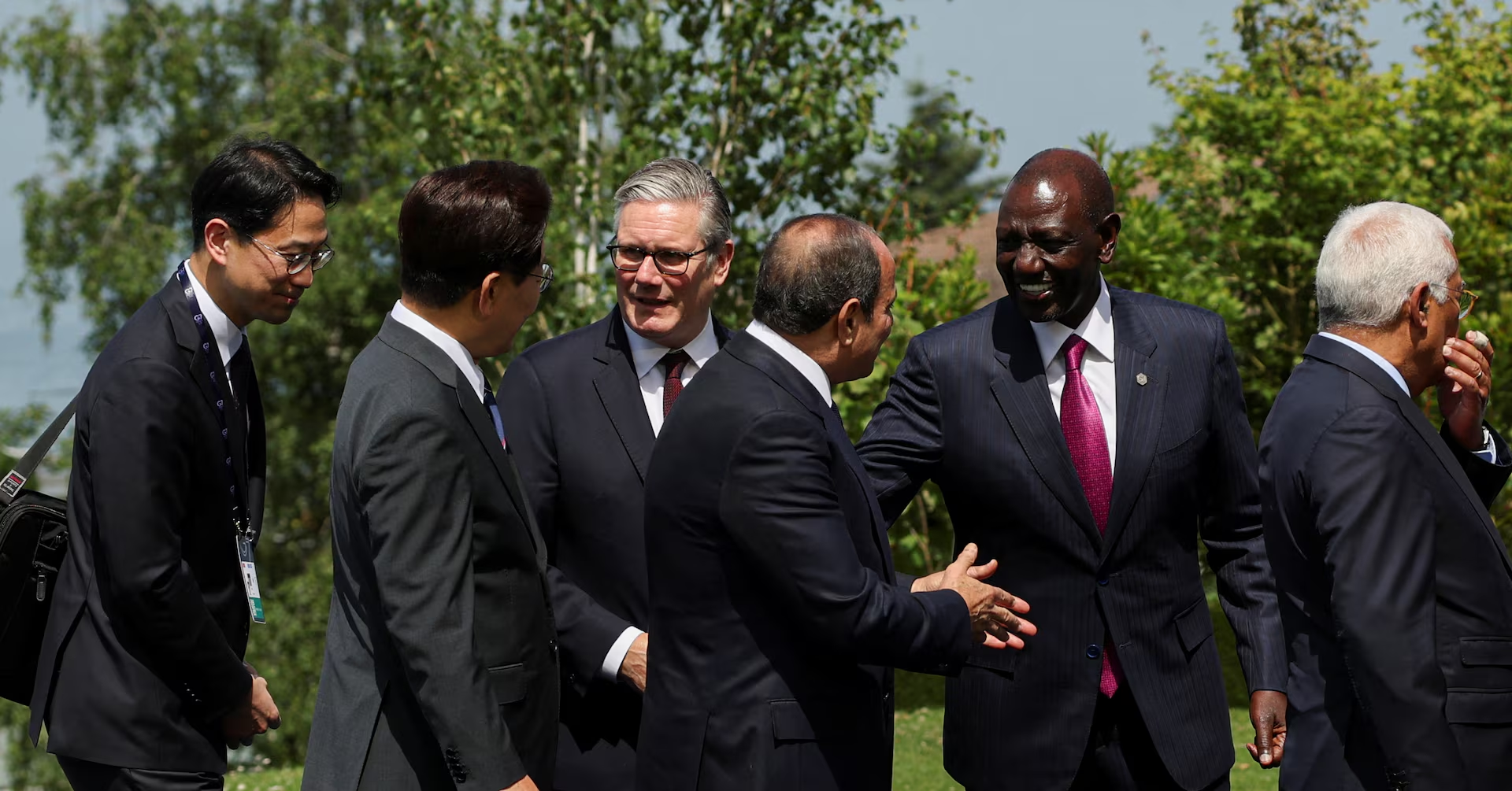
World leaders from the Group of Seven (G7) are gathering against the backdrop of rising geopolitical tensions, economic uncertainty and growing security challenges, as the world’s major industrialized democracies attempt to find common ground on issues shaping the future global order.
The summit comes at a moment when international relations are undergoing one of their most significant transformations in decades. Wars, shifting alliances, technological competition, energy security concerns and economic pressures have created a complex environment in which cooperation among major powers has become increasingly difficult.
The G7, which brings together Canada, France, Germany, Italy, Japan, the United Kingdom and the United States, has historically served as a platform where leaders coordinate responses to major global challenges. The European Union also participates in the group’s discussions, giving the bloc additional economic and diplomatic influence.
This year’s discussions are expected to focus heavily on global security, economic resilience, artificial intelligence, climate policy, energy independence and international trade. However, behind the official agenda lies a deeper question: can the world’s leading democracies maintain unity at a time when their strategic interests are increasingly diverse?
The summit takes place during a period of heightened geopolitical competition. Relations between major global powers have become more complicated as countries debate the future of international security, the role of emerging technologies and the restructuring of global supply chains.
Economic issues remain central to the discussions. Rising public debt, inflation pressures and concerns over economic growth have forced governments to search for policies that protect domestic industries while maintaining international cooperation. Leaders are expected to examine ways to strengthen economic stability while addressing challenges affecting ordinary citizens.
Also Read. US, Iran Launch Crucial Swiss Peace Talks
Technology is another major battlefield.
The rapid development of artificial intelligence, semiconductor industries and digital infrastructure has created new competition among nations seeking technological leadership. G7 countries are attempting to establish approaches that encourage innovation while addressing concerns about cybersecurity, misinformation and responsible use of advanced technologies.
Climate change and energy security are also expected to feature prominently. The transition toward cleaner energy sources remains a major international objective, but governments continue to face difficult choices between environmental commitments, energy affordability and national economic interests.
For developing regions, including Africa, the decisions made at G7 meetings carry significant consequences. African leaders and analysts have repeatedly called for stronger partnerships focused on investment, infrastructure development, debt management, trade opportunities and climate financing.
Many developing countries argue that global economic decisions cannot be made without considering the voices and priorities of emerging economies. They have pushed for reforms in international financial institutions and greater representation in global decision-making structures.
Beyond policy discussions, the summit also serves as a diplomatic stage where leaders attempt to manage disagreements while demonstrating international cooperation. Previous G7 meetings have often revealed differences among members over issues such as trade, foreign policy and approaches to global conflicts.
The ability of the group to present a united position is closely watched by markets, allies and international organizations. A divided G7 could weaken its influence, while effective coordination could reinforce its role as a key force in global governance.
As the world faces increasingly interconnected challenges, the importance of international cooperation has never been greater. Yet the summit also reflects a fundamental reality of modern diplomacy: unity among powerful nations requires compromise, patience and a shared understanding of common interests.
The decisions made during this meeting may not immediately resolve the world’s biggest crises, but they will provide a crucial indication of how leading democracies intend to navigate an era defined by uncertainty and rapid change.