Joseph Isangura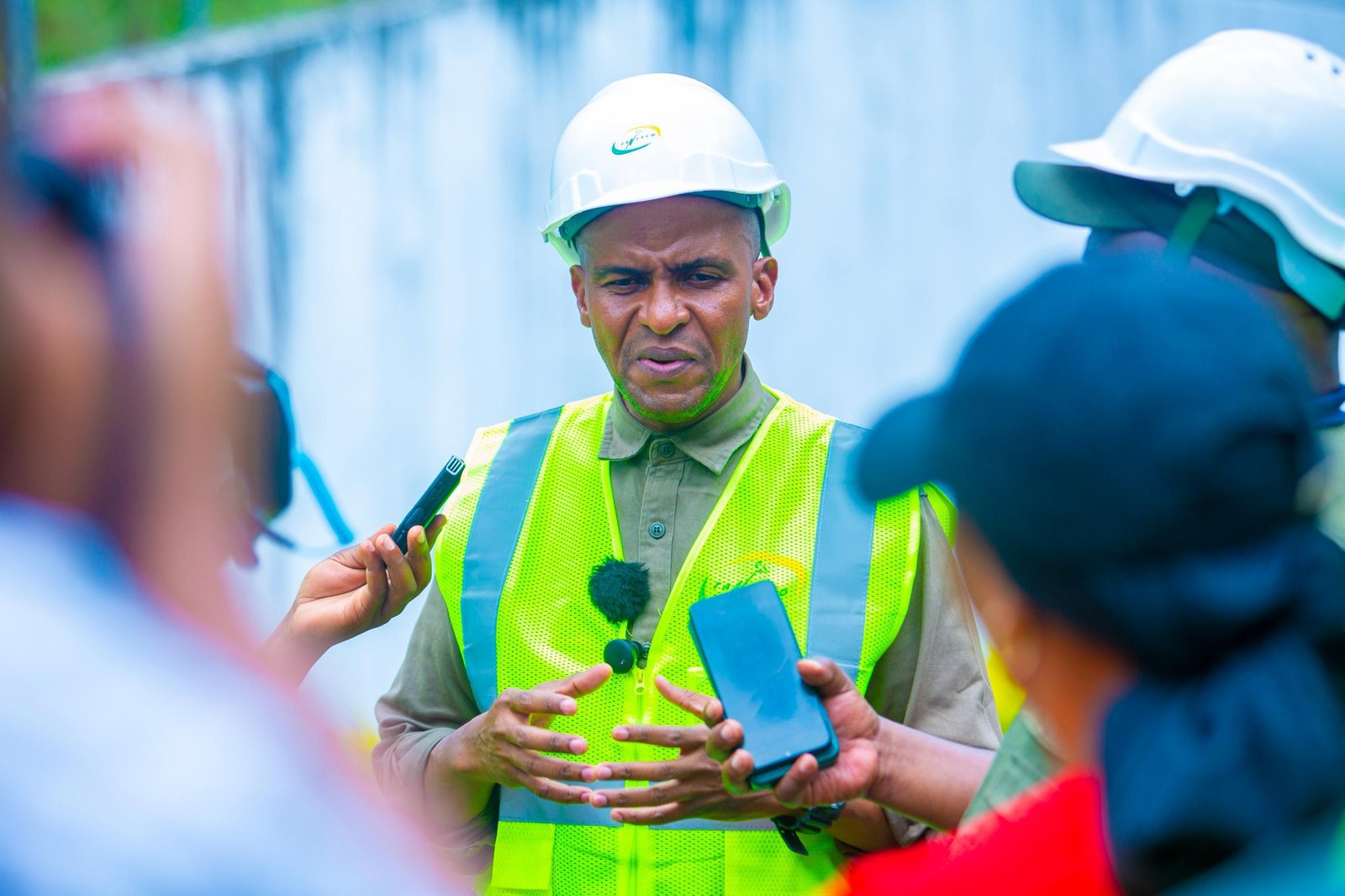
Deep inside northeastern Tanzania, where the waters of the Pangani River have powered homes, businesses, and industries for generations, frustration is now building over delays to one of the country’s most important electricity rehabilitation projects.
The pressure became visible on May 22, 2026, when ,Lazaro Twange the Managing Director of TANESCO , made an unannounced inspection visit to the Hale Hydropower Station modernization project in Korogwe District, Tanga Region.
Standing before engineers, consultants, and contractors, Twange openly expressed dissatisfaction with the slow pace of construction works that were originally launched in 2022 but remain unfinished after multiple deadline extensions.
“I am not satisfied,” he said bluntly, signaling growing impatience inside Tanzania’s energy sector. According to TANESCO leadership, the contractor has already requested two separate deadline extensions and is now reportedly preparing to seek a third — a development that has raised concern over project management, execution discipline, and future energy reliability.
The Hale Hydropower Station is more than just another construction site.
Also Read: Samia Ignites Africa’s Nuclear Energy Power Shift
For decades, the facility has served as a critical part of Tanzania’s electricity network, supplying power to several districts including Handeni, Muheza, Korogwe, and surrounding communities. Many residents and businesses in the region continue to depend heavily on the stability of the Hale transmission system for daily life, economic activity, and industrial operations.
But Tanzania’s energy demands are changing rapidly.
As the country experiences population growth, urban expansion, rising industrial investment, and increasing digital infrastructure development, pressure on the national electricity grid has intensified dramatically. Energy officials now view delayed infrastructure projects not simply as technical setbacks, but as direct threats to Tanzania’s long-term economic ambitions.
During the inspection, Twange ordered project managers, supervising engineers, and contractors to urgently coordinate acceleration measures, including increasing manpower and extending working hours to ensure completion by July.
The inspection also extended to the Pangani River reservoir desiltation project, where large-scale sediment removal operations are underway to protect water flow and electricity generation capacity before the next rainy season begins.
TANESCO fears that failure to complete the cleanup in time could expose the hydropower system to operational risks during periods of heavy rainfall, potentially affecting power generation efficiency and increasing maintenance pressure on aging infrastructure.
Behind the scenes, the stakes are enormous.
Tanzania is currently implementing electricity development projects valued at more than 13.4 trillion Tanzanian shillings as part of a nationwide push to strengthen energy generation, transmission, and industrial connectivity under President ’s economic transformation agenda.
The government hopes reliable electricity will help position Tanzania as one of East Africa’s rising industrial and logistics hubs. But experts warn that infrastructure expansion without timely execution could slow investment confidence and strain future growth targets.
For ordinary Tanzanians, however, the issue is deeply personal.
Reliable electricity determines whether factories remain operational, businesses survive, hospitals function efficiently, and students can study after sunset. In many rural and semi-urban communities, stable power supply is increasingly tied to economic opportunity itself.
That reality is why delays at Hale are now attracting national attention.
What is unfolding in Korogwe is no longer merely a construction challenge. It is becoming a larger test of Tanzania’s ability to turn ambitious development promises into functioning infrastructure capable of powering the country’s next economic chapter.