MWE Correspondent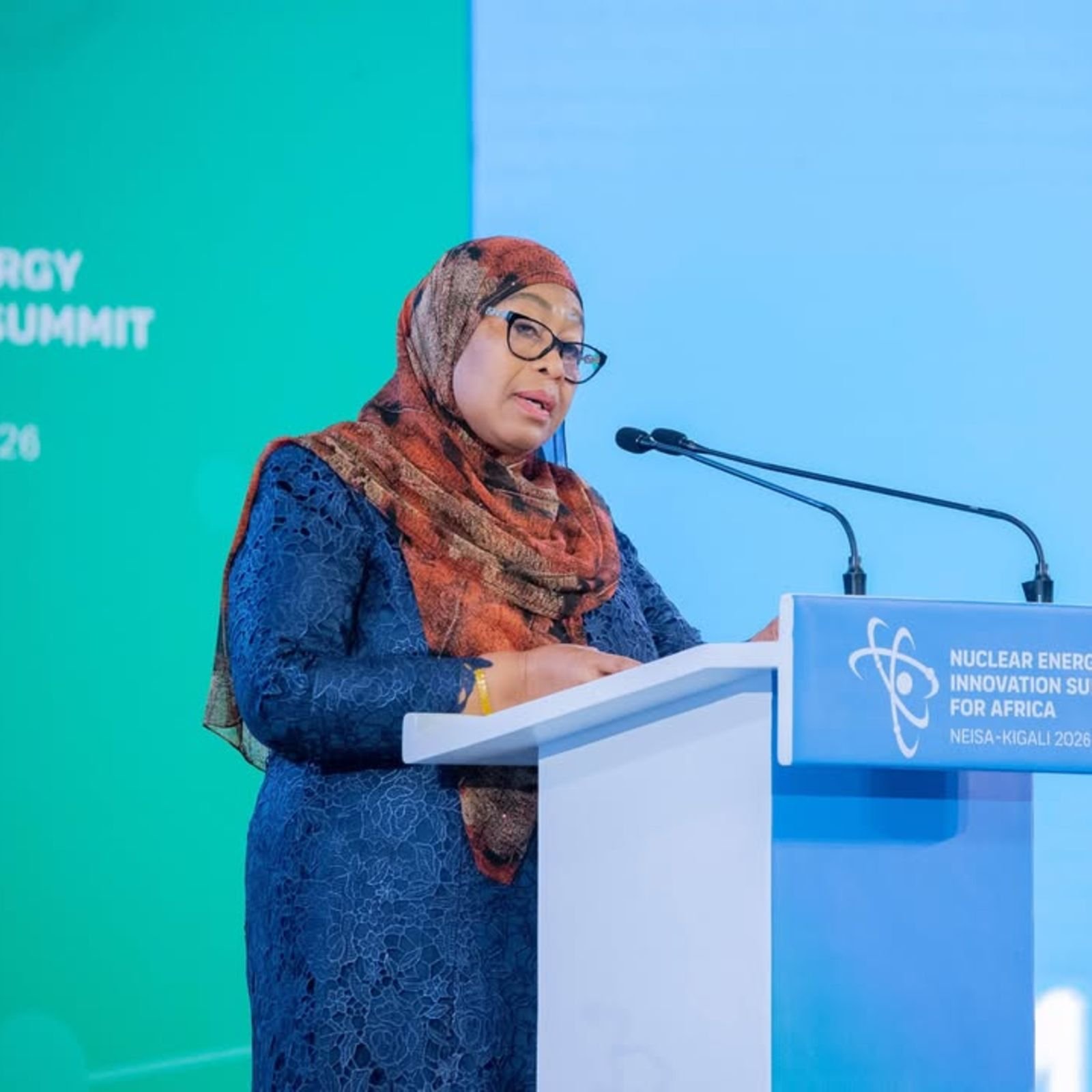
President Samia Suluhu Hassan has thrust Tanzania into the center of Africa’s emerging nuclear energy debate after delivering a forceful call for the continent to abandon endless policy discussions and begin executing real nuclear development strategies capable of transforming Africa’s economic future.
Addressing delegates at the Nuclear Energy Innovation Summit for Africa (NEISA 2026) in Kigali, Rwanda, Samia delivered what analysts are now describing as one of the strongest political signals yet from an East African leader supporting the strategic expansion of nuclear technology across the continent.
Her speech went far beyond ordinary diplomatic rhetoric.
At a time when many African nations remain trapped between energy shortages, industrial stagnation, and dependence on foreign aid, Samia’s message carried the tone of a continent seeking technological independence and long-term economic power.
“Africa must move from expectations to implementation,” the Tanzanian leader declared, warning that Africa can no longer afford to delay decisions on advanced energy infrastructure while global economies rapidly transition toward artificial intelligence, electric transportation, digital industries, and high-capacity manufacturing systems.
The remarks immediately elevated Tanzania’s profile within a growing geopolitical competition over Africa’s future energy dominance.
Also Read: Currency Diversification Reshapes Global Financial Power
For decades, nuclear energy discussions across Africa remained politically sensitive, expensive, and largely theoretical. But mounting electricity demand, rapid urbanization, and expanding industrial ambitions are now forcing governments to rethink traditional energy models.
Tanzania’s increasingly open engagement with nuclear energy represents a major strategic shift.
Under Samia’s administration, the country has already accelerated investment in clean cooking energy, renewable power projects, regional energy integration, and industrial infrastructure. However, her Kigali address signaled that Tanzania may now be preparing to enter a far more advanced technological era — one where nuclear capability is viewed not merely as an energy source, but as a foundation for industrial sovereignty and geopolitical relevance.
Energy experts say the timing is significant.
Africa remains home to more than 600 million people without reliable electricity despite possessing vast mineral wealth and one of the world’s youngest populations. At the same time, global powers including , , the , and are aggressively competing to influence Africa’s future energy infrastructure through financing, technology agreements, and strategic partnerships.
Supporters argue that modern nuclear technology could provide Africa with stable, low-carbon electricity capable of powering mega-industries, data centers, mining operations, and future smart cities without the instability associated with fossil fuel markets.
Critics, however, warn that nuclear expansion requires enormous financial commitments, strict international oversight, advanced scientific expertise, and long-term environmental safeguards. Concerns surrounding radioactive waste management, security risks, and project financing continue to fuel debate across the continent.
Yet despite those concerns, momentum is building.
Countries including Egypt, South Africa, Ghana, and Rwanda have already intensified nuclear research discussions. Tanzania now appears determined to join that strategic conversation at the highest level.
For many observers, Samia’s speech was not simply about electricity.
It was about power — economic power, technological power, and Africa’s determination to stop being viewed as a passive consumer in the global energy order.
As the world enters a new era of energy competition, Tanzania is signaling that it does not intend to remain on the sidelines.