MWE Correspondent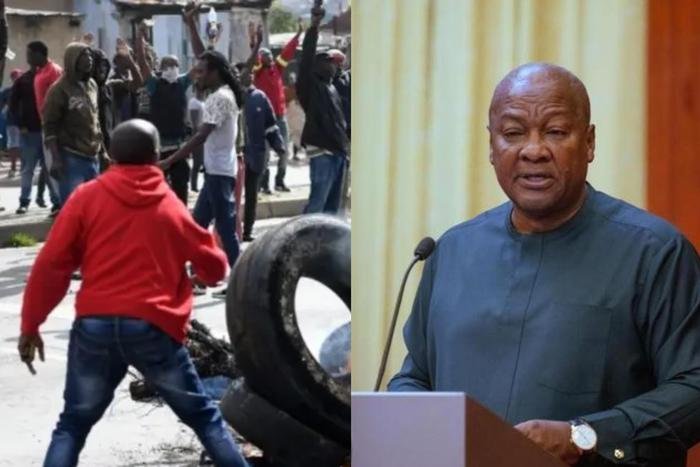
Ghana has ordered the emergency evacuation of its citizens from South Africa following a renewed wave of xenophobic violence that has sparked alarm across the continent and raised urgent questions about the safety of African migrants within Africa itself.
President John Dramani Mahama has approved the immediate evacuation of 300 Ghanaian nationals after reports of targeted attacks on foreign African communities in parts of the country, according to Ghana’s Foreign Minister Samuel Okudzeto Ablakwa.
In a statement posted on X, the Foreign Minister said the evacuees had already registered with Ghana’s High Commission in Pretoria after complying with earlier government advisories warning citizens to seek protection and remain in contact with diplomatic officials as tensions escalated.
“His Excellency John Mahama has granted presidential approval for the immediate evacuation of 300 Ghanaians in South Africa,” Ablakwa wrote, describing those affected as “distressed” and confirming that evacuation procedures were being activated without delay.
The decision marks one of the most significant emergency consular responses by Ghana in recent years and underscores growing concern over recurring xenophobic outbreaks in South Africa, where foreign nationals—many from other African countries—have periodically been targeted during periods of economic stress and social unrest.
Over the past decade, South Africa has witnessed several violent flare-ups linked to unemployment, inequality, and competition over informal trading spaces. While authorities have consistently condemned such attacks and deployed security forces to restore order, the persistence of these incidents continues to strain diplomatic relations across the continent.
Also Read; Pressure Mounts on Starmer Leadership Stability
The latest evacuation order highlights the deepening regional anxiety over whether African nations are doing enough to protect one another’s citizens under the principles of continental solidarity and free movement.
For Ghana, the move represents both a humanitarian intervention and a political signal—emphasizing the state’s responsibility to safeguard its citizens abroad in moments of crisis. Officials in Accra say coordination is underway with Ghana’s diplomatic mission in Pretoria to ensure the safe and orderly return of those affected.
The development has also reignited wider debate across Africa about migration, economic inequality, and the limits of regional integration within the African Union framework. Critics argue that repeated xenophobic outbreaks expose structural failures in managing urban unemployment and social cohesion in rapidly growing economies.
As evacuation plans proceed, attention is now shifting to how regional governments will respond to prevent further escalation and whether stronger continental protections can be implemented to safeguard Africans living and working across borders.
For many observers, the crisis once again confronts Africa with a difficult contradiction: a continent striving for unity and integration, yet still grappling with violence against its own citizens within its own borders.