Joseph Isangura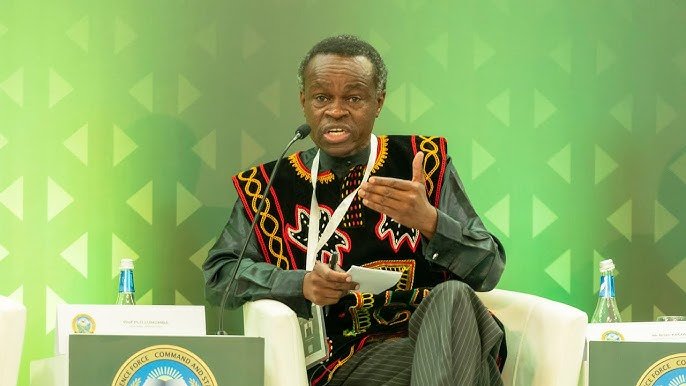
A powerful warning from celebrated Kenyan intellectual PLO Lumumba has ignited fresh debate across Africa and beyond after he declared that many global powers still see the continent as “fit for colonization” despite decades of political independence.
In a speech now spreading rapidly across international media platforms and social networks, Lumumba challenged African leaders and foreign governments alike, arguing that colonialism did not truly disappear but instead evolved into new systems of economic dependency, foreign influence, and strategic control.
“In their minds, African countries are still fit for colonization,” he said, pausing before an audience that responded with thunderous applause.
The remarks have struck a nerve far beyond Africa, reopening difficult questions about who truly controls the continent’s future at a time when global powers are competing aggressively for influence, markets, military partnerships, and access to Africa’s vast mineral wealth.
From Washington to Beijing, Moscow to Brussels, Africa has increasingly become the center of a geopolitical contest driven by strategic resources essential to the modern global economy. The continent possesses enormous reserves of cobalt, lithium, copper, gold, oil, and rare earth minerals critical to electric vehicles, artificial intelligence technologies, defense industries, and the global energy transition.
Yet despite its immense wealth, Africa remains home to some of the world’s poorest populations, a contradiction that continues to fuel anger among millions of young Africans demanding economic justice and genuine sovereignty.
Also Read; Pressure Mounts on Starmer Leadership Stability
Lumumba’s speech tapped directly into those frustrations.
For generations, Africa endured the devastating legacy of Colonialism in Africa, which redrew borders, extracted resources, dismantled indigenous systems, and left lasting political and economic scars. While African nations achieved formal independence throughout the twentieth century, critics increasingly argue that foreign debt, unequal trade agreements, multinational corporate dominance, and military dependence have preserved new forms of external control.
Analysts say Lumumba’s message resonates because it reflects growing fears that Africa’s strategic importance is once again attracting intense foreign competition similar to the nineteenth-century scramble for the continent.
Across several African nations, foreign governments are expanding military agreements, infrastructure financing, mining operations, and political alliances. Supporters describe these partnerships as necessary for development. Critics, however, warn they risk trapping African economies in cycles of dependency where raw materials continue flowing abroad while local populations see limited benefits.
Lumumba, long regarded as one of Africa’s most influential pan-African voices, urged Africans to reject what he described as “mental colonization” and reclaim ownership of the continent’s political and economic destiny. His message particularly targeted young Africans, many of whom increasingly view themselves as the generation that must redefine Africa’s place in the world.
The debate arrives during a period of major global transformation. Africa’s population is projected to become one of the largest and youngest on earth within decades, positioning the continent as a future center of labor, innovation, and economic growth. At the same time, competition over Africa’s strategic resources is intensifying as powerful nations race to secure supply chains for future technologies.
Lumumba’s remarks also revived renewed interest in Pan-Africanism, the movement calling for greater unity, self-reliance, and cooperation among African nations. Supporters argue that only a more united Africa can negotiate fairly with global powers and protect its resources from exploitation.
For many Africans watching online, the speech was not merely political commentary. It was a deeply emotional reminder that the struggle for independence may not yet be complete.
As reactions continue spreading internationally, one question now echoes across the continent and the world: in the twenty-first century, who will truly shape Africa’s future — Africans themselves, or the powerful nations competing for influence over its destiny?