MWE Correspondent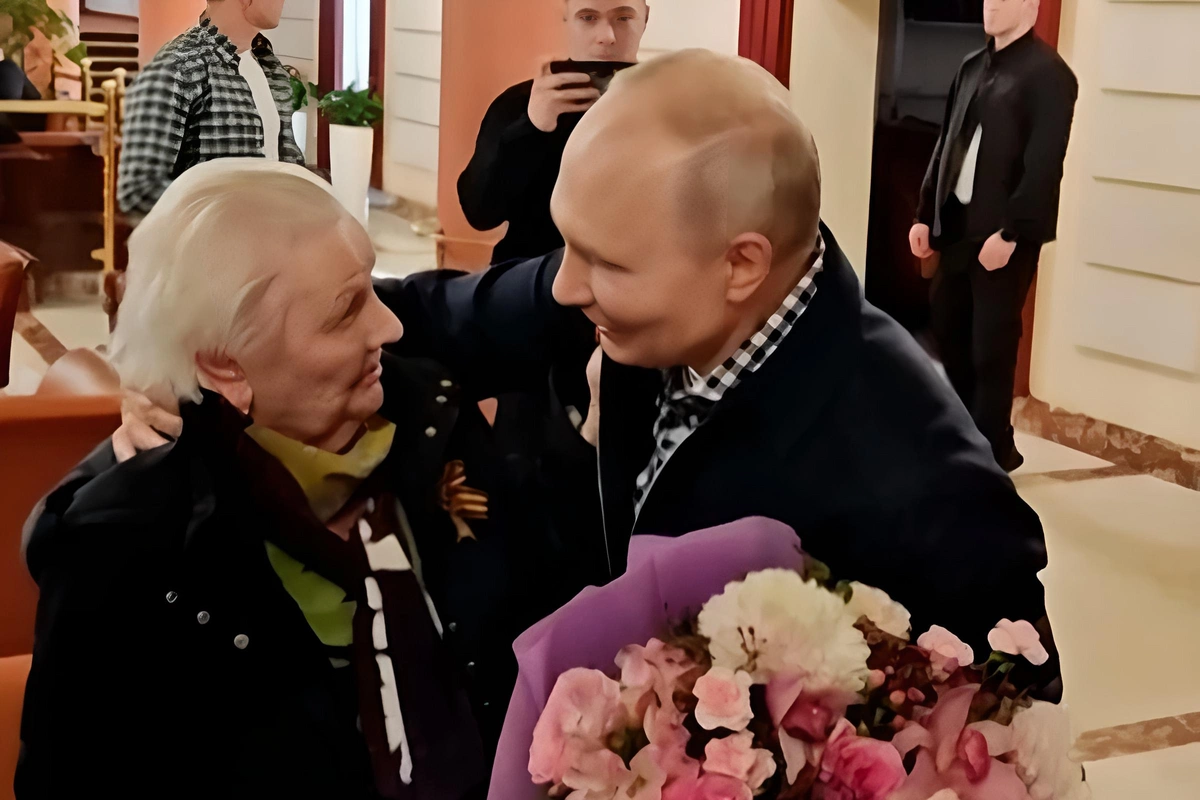
Russian President Vladimir Putin set aside the rigid image of Kremlin power this week for a deeply personal reunion that revealed a rarely seen side of one of the world’s most scrutinized leaders.
Inside Moscow’s heavily guarded political center, the Russian president welcomed his former German language teacher, Vera Dmitriyevna Gurevich, with flowers and a long embrace before personally escorting her through the Kremlin halls and later taking her to dinner — a gesture that quickly captured international attention far beyond Russia’s borders.
The emotional meeting followed Russia’s annual Victory Day Parade, the country’s most symbolic patriotic event commemorating the Soviet Union’s role in defeating Nazi Germany during World War II. While global headlines surrounding the Kremlin often focus on war, diplomacy, and geopolitical confrontation, this encounter presented a strikingly human moment centered on memory, gratitude, and the enduring influence of teachers.
Video footage released after the reunion showed the 73-year-old Russian leader smiling warmly as he greeted Gurevich, now elderly and frail, before guiding her carefully through the historic Kremlin complex. Observers noted the contrast between the commanding statesman seen on the global stage and the former schoolboy reconnecting with a woman who helped shape his early life.
Born and raised in Saint Petersburg — known during the Soviet era as Leningrad — Putin has previously spoken about the difficult conditions of his childhood in postwar Soviet Russia. Gurevich was among the educators who taught him during those formative years, helping introduce him to the German language at a time when the Soviet Union remained locked in Cold War rivalry with the West.
Also Read; Pressure Mounts on Starmer Leadership Stability
For many Russians, the reunion carried emotional significance beyond politics. Teachers in Russia have historically occupied a revered place in society, often viewed not only as educators but as moral guides who helped shape generations through periods of hardship, economic collapse, and political transformation.
International analysts also noted the symbolism of the moment. At a time when Russia faces growing global isolation and heightened tensions with Western governments, the Kremlin appeared eager to project an image rooted not in military strength, but in personal loyalty, tradition, and national memory.
Images of Putin walking beside his former teacher rapidly spread across global social media platforms, prompting reactions from supporters and critics alike. Many described the scene as a reminder that behind political power are deeply personal histories that continue to influence leaders long after they rise to office.
The reunion also reignited interest in The Kremlin itself, the historic fortress that has served as the center of Russian political authority for centuries. Yet for a brief moment this week, the towering seat of state power became the setting for something far more intimate: a former student honoring the teacher who once guided him inside a classroom long before he entered world history.