MWE Correspondent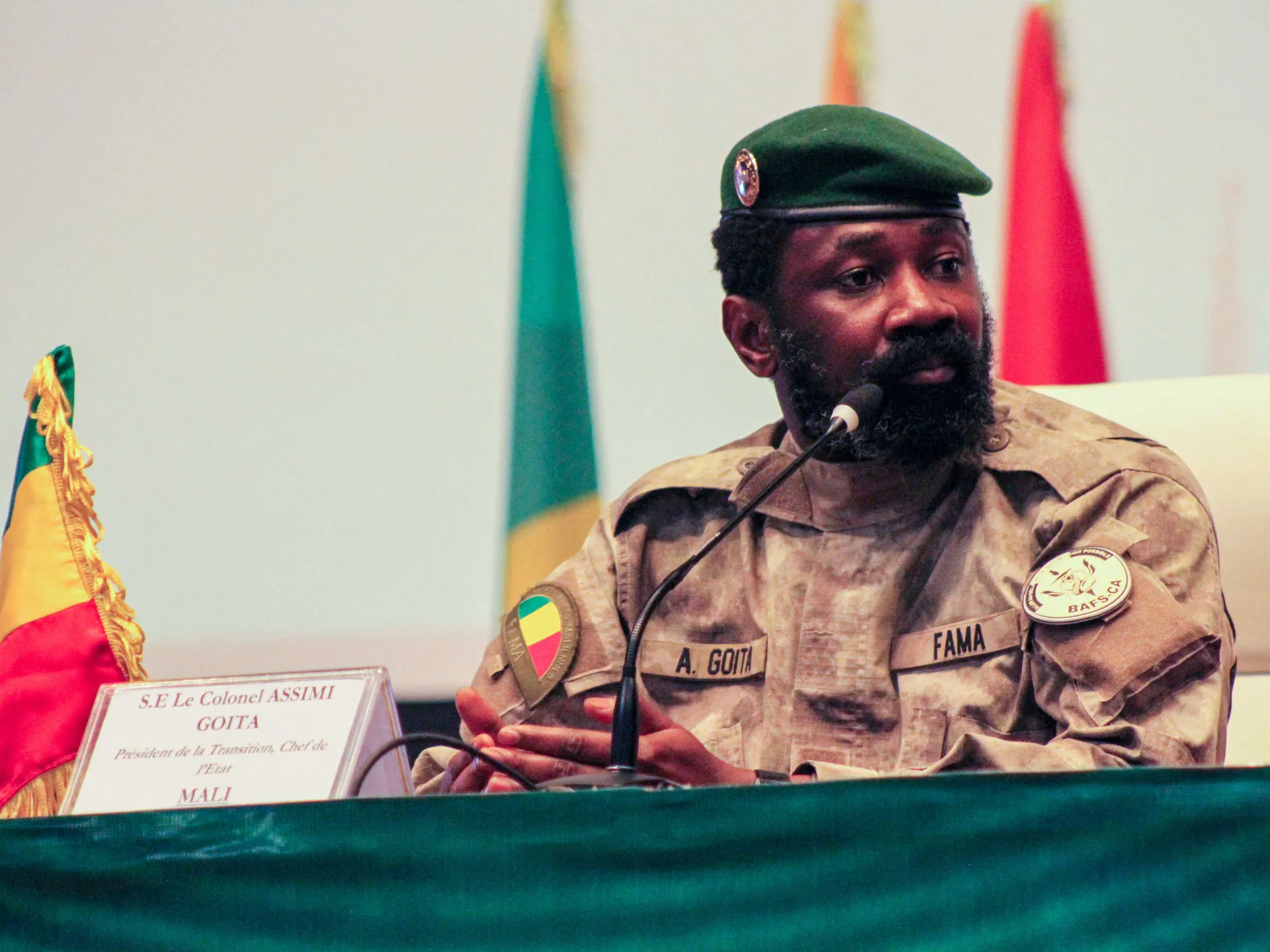
The transitional leader of Mali, Assimi Goita, has taken over the country’s defence ministry following the killing of his defence chief in a coordinated wave of rebel attacks, marking a sharp escalation in one of West Africa’s most volatile security crises.
According to state media reports, Goita will continue serving as head of state while assuming direct control of defence operations after the death of Sadio Camara, who was killed in a car bomb attack at his residence. The incident is being treated as part of a wider offensive by armed groups targeting military and strategic positions across the country.
The latest escalation has seen insurgent forces seize control of the northern town of Kidal, a key strategic location long contested by the central government and separatist movements. The capture of the town represents one of the most significant territorial losses in recent years and underscores the fragile security situation facing the transitional authorities.
The violence is reported to have left at least 23 people dead, including civilians and children, according to humanitarian assessments cited by UNICEF. The United Nations agency has warned of growing risks to children in conflict-affected regions as fighting intensifies and spreads across multiple fronts.
In response to the deteriorating security environment, military authorities have appointed General Oumar Diarra as delegate minister within the defence ministry, a move aimed at stabilising command structures and maintaining operational continuity amid the crisis.
Mali is currently facing a multi-layered security conflict involving several armed actors. Groups linked to Jama’at Nusrat al-Islam wal-Muslimin and the Islamic State Sahel Province continue to operate across large parts of the country, carrying out attacks on military positions and civilian communities.
Also Read; East Africa Pushes Unified Telecom Integration Plan
At the same time, Tuareg separatist forces, including the Liberation Front for Azawad, remain active in northern regions, where they continue to push for greater autonomy or independence. The overlapping conflicts have created a complex and persistent insurgency that has proven difficult for successive governments to contain.
Goita, who came to power through coups in 2020 and 2021, has repeatedly pledged to restore national stability and reclaim territorial control. However, despite repeated military restructuring and leadership changes, insecurity has continued to expand in both scale and intensity.
Security analysts say the decision for the head of state to also assume the defence portfolio reflects the severity of the crisis and the strain on Mali’s transitional institutions. It also signals a centralisation of power at a moment of heightened military pressure and territorial fragmentation.
The situation is now being closely monitored by regional and international actors, as concerns grow over the potential for further destabilisation across the Sahel region, where armed groups have increasingly exploited governance gaps and cross-border terrain.
As Mali enters another critical phase of its conflict, the coming weeks are expected to test the capacity of the transitional government to regain control, prevent further territorial losses, and address a deepening humanitarian emergency.