Joseph Isangura
Tanzania’s Parliament has moved to reinforce its long-standing oversight role by setting out a clear and structured process for reviewing the latest report from the Controller and Auditor General (CAG), a constitutional office central to safeguarding public funds.
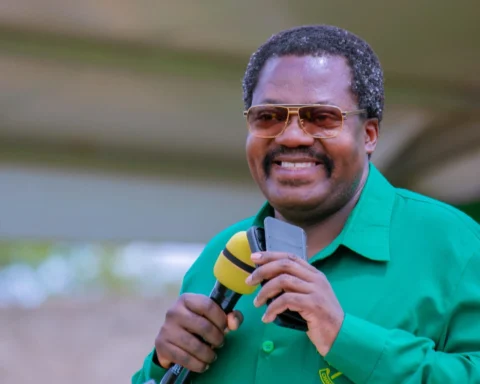
During a parliamentary session on Friday, Speaker outlined how lawmakers will handle the newly tabled audit report, signaling a broader commitment to tightening accountability mechanisms at a time when public scrutiny over government spending continues to grow.
The report, presented by Deputy Minister for Finance , examines financial operations for the fiscal year ending June 30, 2025. It spans audits of development projects, public institutions, and performance reviews of services such as legal aid for low-income citizens.
At its core, the CAG’s work is rooted in constitutional authority. The office of the Controller and Auditor General, formally established under the Constitution of , is mandated to independently audit government revenues and expenditures. Its findings often provide one of the most detailed snapshots of how public funds are managed across ministries, agencies, and state-owned enterprises.
Over the years, CAG reports have uncovered recurring challenges, including procurement irregularities, delayed project implementation, unsupported expenditures, and inefficiencies in public institutions. In previous audit cycles, billions of Tanzanian shillings have been flagged as either questionable, misallocated, or lacking proper documentation—figures that underscore the scale of financial governance challenges in a rapidly developing economy.
Speaker Zungu’s remarks reflect a recognition of this reality. While the CAG identifies problems, he emphasized that Parliament must transform those findings into enforceable actions. This division of responsibility—auditor as investigator, Parliament as enforcer—has been a defining feature of Tanzania’s governance model.
Also Read: International Justice Debate Intensifies Over Global Balance
Historically, parliamentary oversight in Tanzania has evolved significantly since the post-independence era. In the early years following independence in 1961, the legislative body functioned within a highly centralized political system, where scrutiny of public finances was more limited. However, economic reforms in the 1980s and 1990s, alongside the reintroduction of multiparty democracy, expanded the role of Parliament in holding the executive accountable.
Committees such as the Public Accounts Committee (PAC) and the Local Authorities Accounts Committee (LAAC) have since become key instruments in this process. These committees routinely summon accounting officers, question discrepancies identified in CAG reports, and issue recommendations aimed at correcting systemic weaknesses.
The current framework outlined by Speaker Zungu builds on that institutional legacy. By emphasizing structured hearings, detailed interrogations, and formal resolutions, Parliament is seeking to close the gap between audit findings and tangible corrective action.
Analysts point out that one of the persistent challenges in many countries is not the absence of audits, but the lack of follow-through. Reports may highlight deficiencies, yet without consistent enforcement, the same issues tend to reappear year after year. Tanzania’s renewed focus on refining its review process suggests an awareness of this gap.
Recent data from past CAG reports illustrates the stakes involved. In multiple fiscal years, audit findings have pointed to significant sums tied up in stalled projects, cost overruns, or payments made without adequate verification. In some cases, development projects have experienced delays stretching several years beyond their intended completion timelines, raising concerns about efficiency and value for money.
Beyond the numbers, there is also a human dimension. The inclusion of performance auditssuch as the review of legal aid servicessignals a shift toward assessing how government spending translates into real-world outcomes. For citizens, particularly those in vulnerable groups, these services can determine access to justice, healthcare, or education.
Speaker Zungu’s address can therefore be seen as part of a broader institutional effort to align financial oversight with public expectations. His emphasis on accountability resonates with a growing demand for transparency not only within Tanzania but across the African continent, where governments are under increasing pressure to demonstrate responsible stewardship of public resources.
There is also a political dimension to the process. Effective oversight strengthens public trust in state institutions, a factor that is particularly important in maintaining stability and confidence in governance systems. By ensuring that audit findings are rigorously examined and acted upon, Parliament reinforces its role as a check on executive authority.
As the committees begin their work in the coming weeks, attention will turn to how effectively they can translate the CAG’s technical findings into meaningful reforms. The success of this process will likely be measured not just by the number of queries raised, but by the extent to which government institutions implement recommended changes.
In many ways, the story unfolding in Tanzania is not just about an audit report it is about the evolution of accountability itself. From its historical roots to its present-day application, parliamentary oversight remains a cornerstone of democratic governance.