Joseph Isangura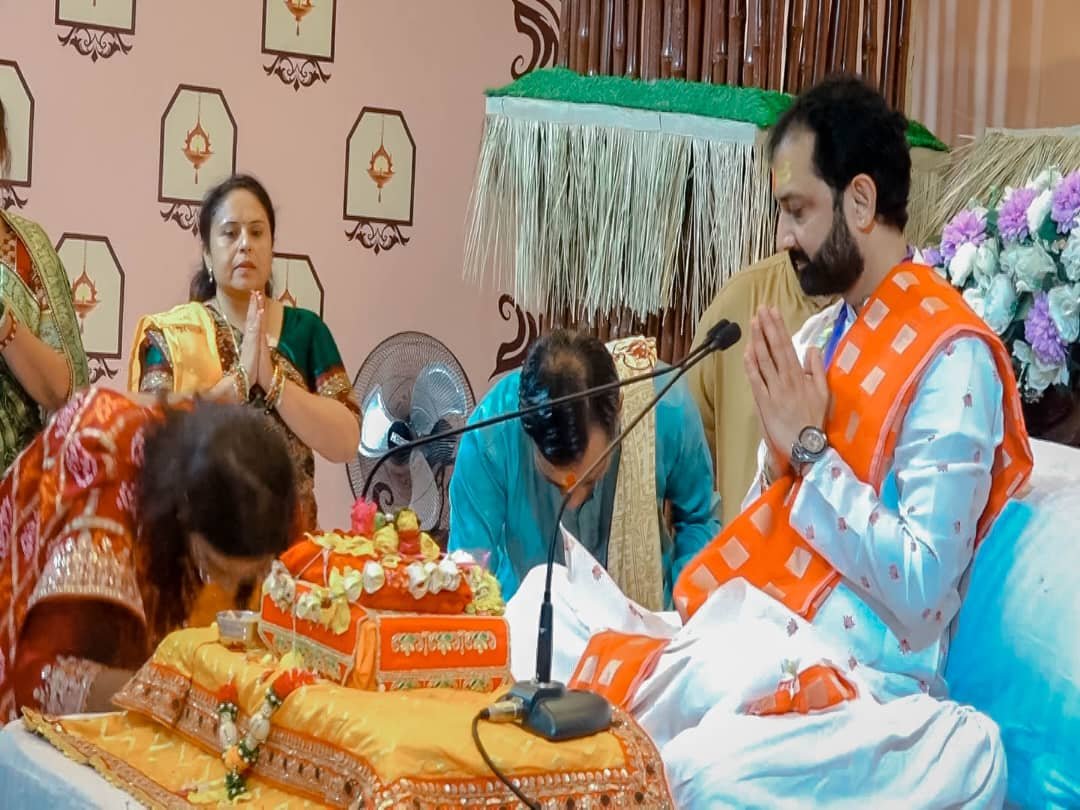
As the world gradually shifts back to the values of care, community, and shared responsibility, a quiet but powerful message is taking shape one that many believe societies may have overlooked, but are now beginning to rediscover.

It is within this context that religious leader Piyushbhai Mehta has arrived in Tanzania, carrying a mission that goes beyond tradition, focusing instead on restoring a culture of compassion and support for the less fortunate.
Mehta, who travelled from India, is closely associated with the teachings of Shree Jalaram, a figure remembered for dedicating his life to serving the poor. His legacy, built on feeding the hungry and uplifting those in need, continues to inspire charitable efforts across the world.
In Dar es Salaam, his arrival was marked by a reception that reflected both respect and reflection. Community members, leaders, and volunteers gathered not only to welcome him, but to reaffirm their commitment to humanitarian service.
Speaking during the event, Nishit Pattani of the Shree Jalaram Trust in Dar es Salaam said their work is rooted in a simple but powerful principle human dignity.
“Our focus is not just to give, but to make sure those we support feel valued and respected,” he said.
Also Read: Africa Reclaims Trade Power Through Value Addition Strategy
Over the past year, the organization has spent more than 100 million shillings supporting vulnerable individuals through healthcare services and basic necessities. Behind this effort are stories of real impact families supported in difficult times, patients receiving care, and communities strengthened through collective action.
For Amit Karia, part of the organizing team, the visit comes at a time when such values are needed more than ever.
“This is a moment to reflect on who we are as a society,” he said. “Development is important, but humanity must come first.”
Kisutu Ward Councillor Tousif Bhojani echoed similar sentiments, noting that while cities continue to grow, many people still face daily challenges that require support from both institutions and individuals.
“There are still many who depend on the kindness of others,” he said. “Efforts like these remind us that everyone has a role to play.”
As Mehta begins his engagements in Tanzania, his message is expected to resonate across communities encouraging people to look beyond themselves and take part in building a more compassionate society.
In a fast-changing world, his visit serves as a reminder that progress is not only about moving forward, but also about returning to values that have always held societies together.