Joseph Isangura
Fortune Paper Group Limited has renewed its call for fair trade policies while urging greater public commitment to responsible waste management, as Tanzania joined the rest of the world in marking . international zero waste Day
Speaking during the national commemoration held at Mnazi Mmoja Ground Dar Es Salaam, the company’s Chief Executive Officer, Coline Fortune, said sustainable development cannot be achieved without aligning environmental responsibility with strong local industries.
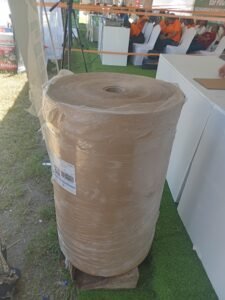
“We must begin to see waste not as useless material, but as a valuable resource,” he said. “If properly managed, waste can create jobs, support industries, and protect our environment.”
Fortune Paper Group Limited, a leading recycler of paper waste in Tanzania, processes more than 150 tons of discarded paper daily, transforming it into essential industrial materials such as fluting paper and testliner. With an investment of approximately USD 60 million in its Kibaha plant, the company has built a production capacity of about 4,000 tons per month—significantly exceeding the country’s estimated demand of 2,500 tons.
However, even as the company demonstrates the potential of recycling-led industrial growth, it warns that current trade policies risk undermining these gains. The existing zero percent import duty on finished paper products has allowed cheaper imports, particularly from Asia, to dominate the market—often priced between 10 and 25 percent below locally manufactured products.
According to Fortune, this imbalance discourages investment in local industries and weakens efforts to build a self-reliant economy.
Beyond policy concerns, the company is also placing strong emphasis on public awareness, noting that the success of recycling industries depends heavily on how waste is handled at the household and community levels.
Experts argue that poor waste management—such as mixing organic waste with recyclables or improper disposal—reduces the value of materials that could otherwise be reused. In contrast, simple practices like separating paper, plastics, and organic waste at the source can significantly improve recycling efficiency and reduce environmental pollution.
“Every citizen has a role to play,” Fortune said. “Keeping waste properly, separating it, and ensuring it reaches recycling systems is the foundation of a sustainable future.”
Also Read: Africa Reclaims Trade Power Through Value Addition Strategy
The environmental benefits are substantial. Effective waste management reduces landfill pressure, lowers greenhouse gas emissions, and minimizes pollution in urban areas. At the same time, it creates a steady supply of raw materials for industries like Fortune Paper, strengthening the link between environmental conservation and economic development.
The company’s products have been certified by the , confirming that locally produced recycled paper meets national quality requirements.
Stakeholders also point out that reinforcing local manufacturing through balanced trade policies could generate billions of shillings in government revenue while creating employment opportunities across the value chain—from waste collection to industrial processing.
As countries within the continue to protect their domestic industries, Tanzania faces a critical decision on how to balance open markets with the need to nurture local production.
As the world marks International Zero Waste Day, is positioning itself not only as an industrial leader but also as a key advocate for a cleaner environment and a more sustainable economic future—one where waste is no longer a burden, but an opportunity.