MWE Correspondent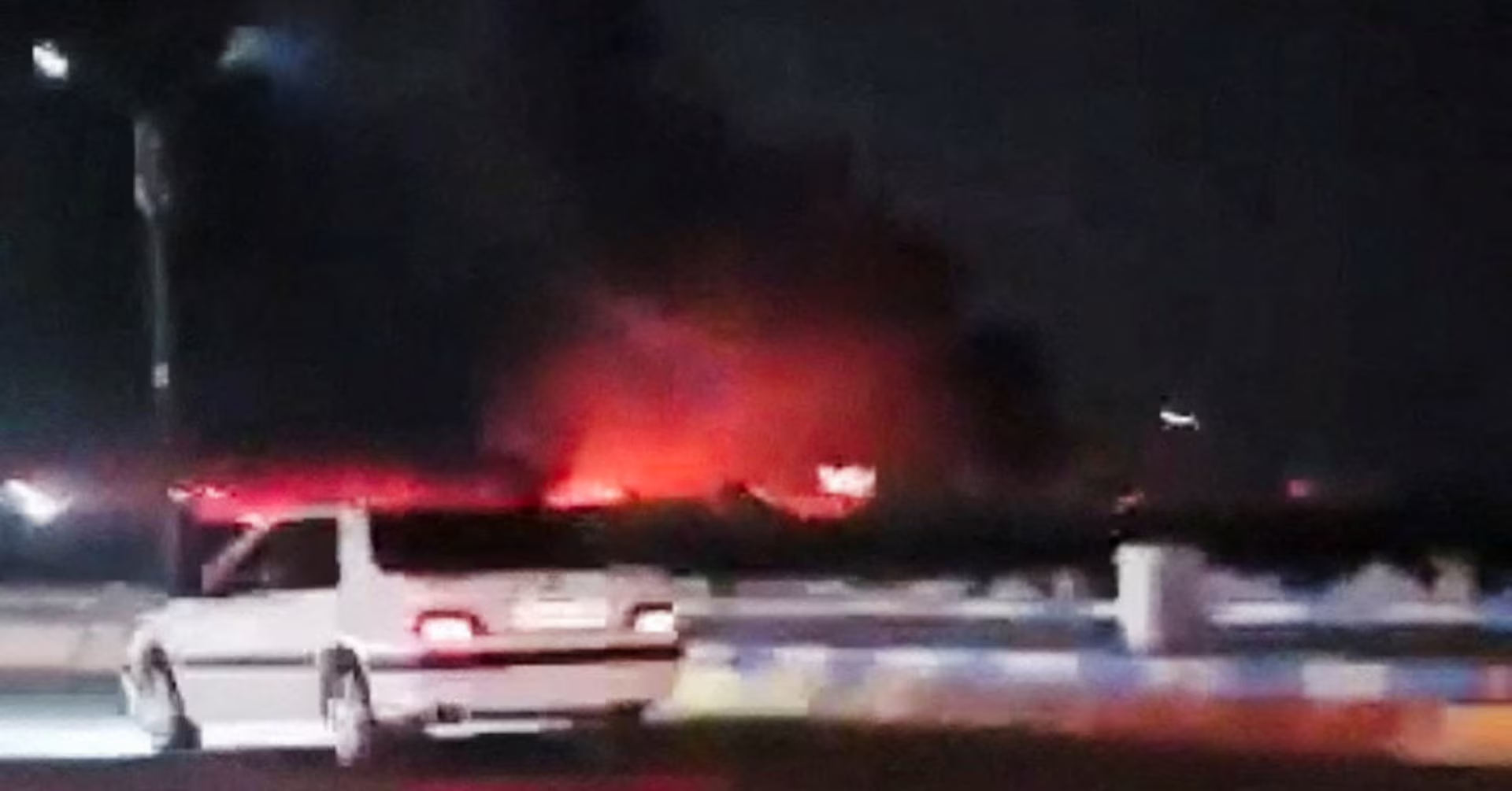
The United States has launched one of its largest military operations against Iran in recent years, carrying out air strikes on more than 80 military targets across the country before Iran responded with missile and drone attacks on American military bases in Bahrain and Kuwait, dramatically escalating tensions across the Middle East.
The exchange marks a significant deterioration in relations between Washington and Tehran, raising fears that the long-running rivalry between the two countries could develop into a wider regional conflict involving key Gulf states and disrupting global energy supplies.
According to the United States Central Command (CENTCOM), the operation targeted a broad range of Iranian military infrastructure, including air defence systems, command and control centres, coastal radar facilities, anti-ship missile launch sites and dozens of vessels operated by Iran’s Islamic Revolutionary Guard Corps (IRGC).
U.S. officials said the strikes were launched in response to attacks on three commercial oil tankers transiting the Strait of Hormuz, one of the world’s most strategically important maritime chokepoints through which nearly one-fifth of global oil supplies pass. Washington accused Iran-backed forces of threatening international shipping and said the military action was intended to protect freedom of navigation and deter further attacks.
Iran strongly rejected the accusations, accusing the United States of violating a temporary ceasefire that had briefly paused hostilities. Iranian authorities described the American strikes as an act of aggression and warned that Tehran would respond to defend its sovereignty and national security.
Within hours, Iran launched missiles and armed drones targeting U.S. military installations in Bahrain and Kuwait. Iranian officials said the attacks were directed at military facilities rather than civilian infrastructure and were intended as a proportional response to the American operation.
Military authorities in Bahrain and Kuwait reported heightened security measures following the attacks, while assessments of casualties and damage were continuing. Several Gulf countries also activated emergency response protocols amid concerns that the confrontation could spread further across the region.
Also Read, Beyond The Dollar: The New Financial Power Shift
The latest exchange represents one of the most serious military confrontations between the United States and Iran in years. Although the two countries have remained adversaries since the 1979 Iranian Revolution, recent months have seen tensions intensify over maritime security, regional influence, sanctions and military activity in the Gulf.
Security analysts warn that continued military exchanges could threaten international shipping through the Strait of Hormuz, a vital route for global energy exports. Any prolonged disruption could have significant consequences for international oil markets, fuel prices and the broader global economy.
The conflict has also drawn international concern, with governments and international organisations urging both sides to exercise restraint and pursue diplomatic efforts to prevent a broader regional war. Several world leaders have warned that further escalation could destabilise the Middle East at a time when multiple conflicts are already straining regional security.
The United States maintains thousands of military personnel across the Gulf region, including major bases in Bahrain, Kuwait, Qatar and the United Arab Emirates, while Iran continues to possess one of the region’s largest missile arsenals and maintains extensive influence through allied armed groups operating across the Middle East.
As both nations exchange accusations and military threats, international attention is focused on whether diplomatic channels can be revived before the confrontation escalates into a wider conflict with consequences extending far beyond the region.