MWE Correspondent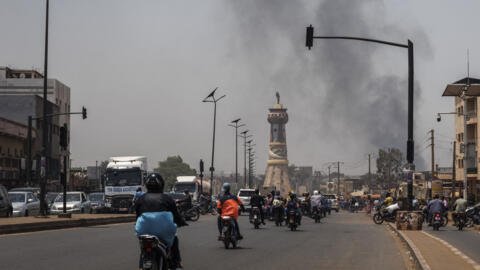
A deadly attack targeting strategic facilities near Niger’s capital has once again underscored the growing security crisis engulfing the Sahel, a vast region that has become one of the world’s most volatile theatres of terrorism and armed insurgency.
The assault, which sent shockwaves through Niamey and triggered heightened security measures, has renewed concerns over the ability of governments across the region to contain extremist groups that continue to expand their reach despite years of military operations and international intervention.
Security officials described the incident as a significant challenge to national security, highlighting the evolving tactics of militant organizations operating across West Africa. While authorities moved swiftly to secure key installations and investigate the attack, analysts warned that the event reflects broader regional trends that have transformed the Sahel into a major global security concern.
Stretching from the Atlantic coast to the Red Sea, the Sahel has become the epicentre of some of the fastest-growing extremist movements in the world. Armed groups linked to both al-Qaeda and the Islamic State have exploited weak governance, porous borders, ethnic tensions and economic hardship to establish footholds across several countries, including Niger, Mali and Burkina Faso.
For Niger, the latest attack arrives during a period of profound political and security transition. Once regarded as one of the West’s most important security partners in the fight against terrorism, the country has undergone significant changes in recent years, including shifts in military alliances and foreign policy priorities.
The attack near the capital is particularly significant because Niamey has long been viewed as one of the more secure urban centres in a region increasingly affected by insurgent violence. Security experts note that attacks targeting strategic infrastructure carry symbolic value for extremist groups seeking to demonstrate their ability to strike beyond remote border regions.
The incident also raises fresh questions about the effectiveness of current counterterrorism strategies across the Sahel. Despite billions of dollars invested in military operations, training programmes and intelligence-sharing initiatives over the past decade, violence has continued to spread. According to international security assessments, thousands of civilians, soldiers and aid workers have lost their lives in the region since extremist insurgencies intensified more than a decade ago.
Humanitarian consequences have been equally devastating. Millions of people across the Sahel have been displaced from their homes, creating one of the world’s largest and most complex displacement crises. Schools, health facilities and local economies have been severely disrupted, leaving entire communities vulnerable to poverty and instability.
Also Read. US, Iran Launch Crucial Swiss Peace Talks
The latest attack is likely to intensify calls for stronger regional cooperation among Sahelian nations. Security analysts argue that extremist networks operate across borders with increasing sophistication, making coordinated intelligence operations and joint military efforts essential for long-term stability.
International observers are also closely monitoring developments. The Sahel’s strategic importance extends far beyond Africa, influencing migration patterns, international trade routes and global security concerns. As instability spreads, governments around the world have become increasingly concerned about the region’s potential impact on broader geopolitical dynamics.
Yet military responses alone may not provide a lasting solution.
Experts consistently point to deeper structural issues including unemployment, poor governance, corruption and limited economic opportunities as factors that extremist organizations exploit to recruit followers and expand their influence. Without addressing these underlying challenges, many analysts believe the cycle of violence is likely to persist.
For the people of Niger, however, the immediate concern remains security. The attack has served as a stark reminder that despite years of counterterrorism efforts, the threat remains both real and evolving.
As investigations continue and authorities assess the full implications of the incident, one reality is increasingly clear: the battle for stability in the Sahel remains far from over. What happens in Niger in the coming months could have consequences not only for West Africa but for international security as a whole.