MWE Correspondent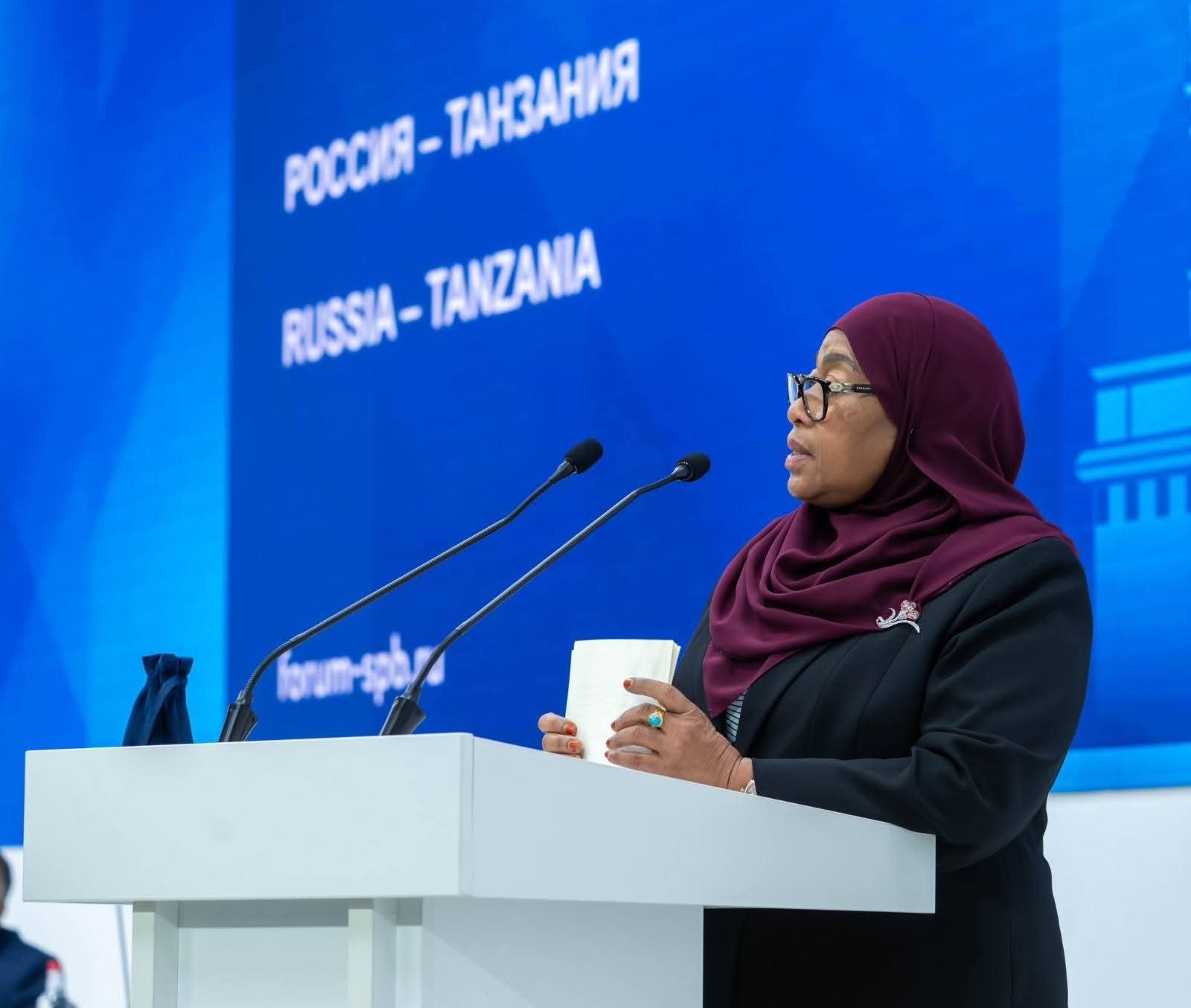
Tanzania has moved to deepen its economic partnership with Russia after President Samia used a high-profile international platform in St. Petersburg to present the East African nation as one of the continent’s most attractive destinations for investment, trade, and long-term economic cooperation.
Concluding her official visit to Russia, President Samia addressed both the Tanzania–Russia Business Forum and the prestigious 29th St. Petersburg International Economic Forum (SPIEF), a gathering that brought together global political leaders, business executives, investors, economists, and policymakers from across the world. Her participation underscored Tanzania’s growing ambition to position itself as a strategic gateway to African markets at a time of intensifying global competition for investment opportunities.
In a message directed at international investors, the Tanzanian leader highlighted the country’s political stability, favorable legal framework, expanding infrastructure, and sustained economic growth, describing Tanzania as a secure and reliable destination for foreign capital. She emphasized that investors entering Tanzania would gain access not only to a rapidly growing domestic market but also to a wider regional market of more than 500 million consumers across Eastern and Southern Africa.
President Samia identified several sectors at the center of Tanzania’s investment strategy, including mining, agriculture, clean energy, oil and gas, healthcare, transportation, and logistics. These industries are increasingly viewed as critical pillars of Tanzania’s long-term economic transformation agenda as the country seeks to accelerate industrialization, create employment opportunities, and strengthen its position within regional and global supply chains.
The visit also delivered a significant announcement with potentially far-reaching implications for bilateral relations. Beginning in July 2026, Tanzania’s national carrier, , is expected to launch direct flights connecting Dar es Salaam and Zanzibar with Moscow. The move is being viewed as a major milestone in relations between the two countries and is expected to stimulate tourism, facilitate business travel, and enhance commercial exchanges.
Analysts note that direct air connectivity often serves as a catalyst for deeper economic engagement by reducing travel times, improving accessibility for investors, and creating new opportunities for trade and cultural exchange. For Tanzania’s tourism industry, which remains one of the country’s most important sources of foreign revenue, easier access for Russian travelers could provide an additional boost to visitor arrivals in the years ahead.
The developments come as many African nations seek to diversify their international partnerships amid shifting global economic dynamics. Tanzania has increasingly pursued a strategy of engaging with multiple global partners while leveraging its strategic location, abundant natural resources, and growing consumer market to attract investment from around the world.
The St. Petersburg engagements therefore represented more than a routine diplomatic visit. They signaled Tanzania’s determination to strengthen its international economic profile and attract capital needed to support ambitious development goals. By showcasing investment opportunities and unveiling new transport links, the country is seeking to transform diplomatic goodwill into tangible economic outcomes.
As Tanzania and Russia prepare to enter a new phase of cooperation, the launch of direct flights and the growing interest in strategic sectors could mark the beginning of a broader economic relationship. For policymakers, investors, and businesses on both sides, the challenge now will be converting high-level commitments into concrete projects capable of generating growth, jobs, and long-term prosperity.
The message from St. Petersburg was clear: Tanzania is positioning itself not only as a destination for investment but as one of Africa’s emerging economic gateways in an increasingly interconnected world.