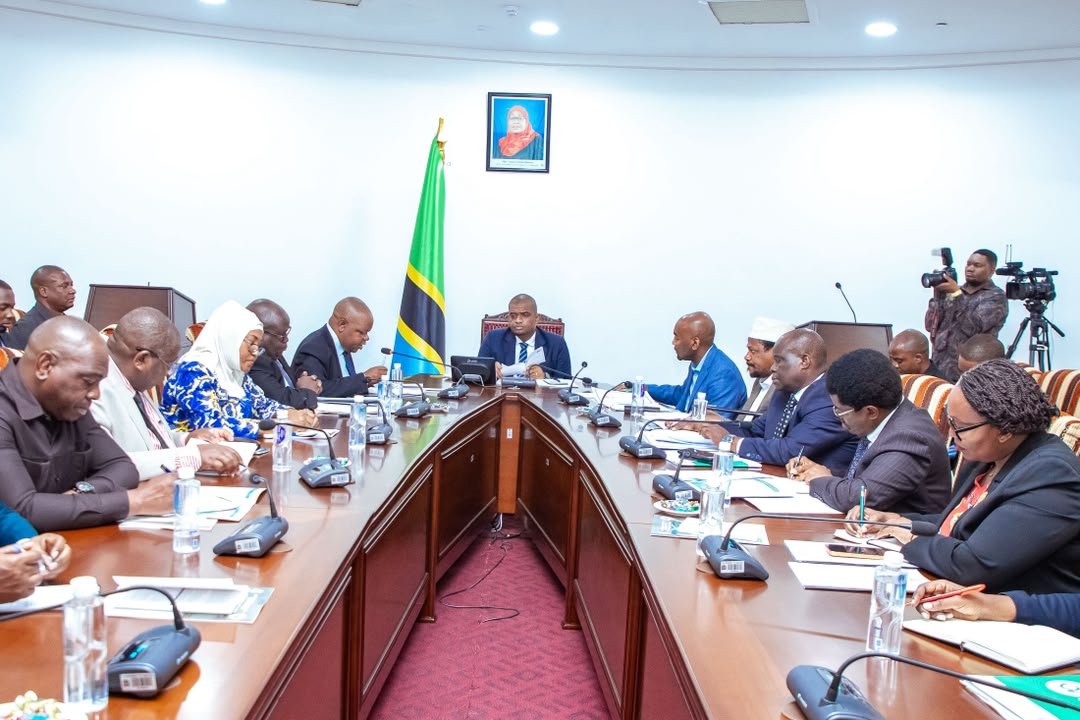
Tanzania’s Deputy President Deogratius Ndejembi has directed ministries, authorities and institutions responsible for disaster management to take immediate measures to prepare for the expected El Niño rains between October and December 2026, warning that early intervention is critical to preventing damage to infrastructure and protecting communities.
Ndejembi issued the directive on September 11, 2026, during a meeting held at the Office of the Vice President in Dar es Salaam, following weather alerts issued by the Tanzania Meteorological Authority (TMA) regarding the anticipated seasonal rainfall.
The directive was received by the Minister of State in the President’s Office – Regional Administration and Local Government (PO-RALG), Prof. Riziki Shemdoe, who presented the Government’s preparedness measures and outlined actions already being implemented through local government authorities.
Ndejembi instructed officials from the Office of the Vice President responsible for Union Affairs and Environment, PO-RALG, the Ministry of Works and institutions under the respective ministries to work jointly on an emergency cleanliness campaign targeting roads, drainage channels and storm-water infrastructure.
“A rapid campaign should be carried out, water channels and drainage systems should be cleared, and roads should be prepared,” Ndejembi stressed.
The directive comes as Tanzania prepares for potentially heavy rainfall that could put pressure on urban drainage systems, roads, bridges and other public infrastructure.
One of the key concerns raised by the Deputy President was the improper disposal of waste removed during drainage-clearing operations.
Also Read: Russia Offers Advanced Engine For India’s Su-30MKI Upgrade
Ndejembi ordered authorities to ensure that garbage, mud and soil excavated from drainage channels are removed immediately and transported to designated disposal areas.
He warned that leaving the material along roadsides could result in it being washed back into drainage systems once heavy rains begin, potentially blocking waterways and increasing the risk of flooding.
The instruction places emphasis not only on clearing drainage infrastructure but also on maintaining it throughout the rainy season.
Prof. Shemdoe told the Deputy President that PO-RALG had already begun implementing directives issued by President Samia Suluhu Hassan on September 2, 2026, when she addressed newly appointed Regional Commissioners and Regional Administrative Secretaries.
The President had called for improvements in environmental cleanliness, particularly in cities, as part of efforts to improve urban living conditions and reduce risks associated with poor drainage and waste management.
On September 7, Prof. Shemdoe held a working meeting with Regional Commissioners from regions with major cities as well as leaders of cities and municipalities in Dar es Salaam.
He directed them to implement a two-week special environmental cleanliness campaign in cities as part of the Government’s wider preparations.
The campaign is expected to focus on areas that could contribute to flooding, including blocked drainage channels, accumulated waste and poorly maintained waterways.
Prof. Shemdoe also presented a preparedness strategy developed through the Tanzania Rural and Urban Roads Agency (TARURA) to address potential damage to road infrastructure caused by heavy El Niño rains.
The strategy outlines measures for preparing roads, preventing damage and responding to infrastructure failures that could occur during the rainy season.
Road infrastructure is particularly vulnerable during periods of intense rainfall because flooding and water erosion can damage road surfaces, wash away embankments, undermine bridges and culverts, and disrupt transport connections.
Early intervention therefore allows authorities to identify vulnerable sections before extreme rainfall occurs and undertake preventive maintenance rather than waiting for major damage to happen.
El Niño is a climate pattern associated with abnormal warming of surface waters in the central and eastern tropical Pacific Ocean. Its effects can influence rainfall patterns well beyond the Pacific, including parts of East Africa.
For Tanzania, periods of unusually heavy rainfall can create risks ranging from urban flooding and waterlogging to landslides, road damage, crop losses and disruption of transport and other essential services.
Urban areas are particularly exposed when drainage networks are blocked by solid waste or when infrastructure has insufficient capacity to handle intense rainfall over short periods.
The Government’s current approach therefore places strong emphasis on preparedness rather than waiting for disasters to occur.
Ndejembi stressed the need for cooperation between government institutions, particularly those responsible for environment, local government, roads and disaster preparedness.
The coordination is intended to ensure that drainage systems are cleared, roads are inspected, vulnerable infrastructure is identified and emergency response mechanisms are ready before the rains intensify.
The emphasis on joint action also reflects the fact that flooding often cuts across administrative responsibilities. A blocked drainage channel, for example, can affect roads, homes, businesses and public facilities simultaneously, requiring coordinated intervention from several authorities.
With the October–December rainfall period approaching, the Government is now placing greater emphasis on early preparedness, environmental cleanliness and protection of critical infrastructure.
The success of the measures will depend on how quickly local authorities translate the national directives into action on the ground, particularly in flood-prone urban areas and locations where roads, bridges and drainage systems have previously experienced problems during heavy rains.

 Hassan Magulumali