MWE Correspondent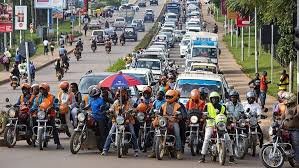
The government of Tanzania has moved to address growing concerns over the prolonged detention of motorcycles by law enforcement agencies, directing that vehicles not linked to serious crimes be released to their owners to support livelihoods and economic recovery.
Prime Minister Mwigulu Nchemba issued the directive on 30 April 2026, instructing the Tanzania Police Force to release motorcycles that are being held for minor offences, while maintaining strict custody of those connected to serious criminal investigations.
Under the new directive, motorcycles tied to offences such as rape, armed robbery, drug trafficking, and firearms-related crimes will remain in police custody until investigations are fully concluded. However, vehicles impounded for lesser infractions are to be returned to their owners without unnecessary delay.
The policy shift reflects a balancing act between law enforcement requirements and economic realities faced by citizens, particularly in rural and peri-urban areas where motorcycles serve as primary sources of income. In many communities, two-wheeled transport is closely linked to informal employment and small-scale entrepreneurship.
The issue was raised in Parliament by Ushetu MP Emmanuel Cherehani, who highlighted the economic burden faced by riders whose motorcycles have been impounded for minor offences. He noted that many police stations across the country are currently storing large numbers of motorcycles, many of which are deteriorating while in custody.
This situation has drawn attention to broader questions surrounding law enforcement practices and asset management within the justice system. Prolonged detention of property, particularly in cases involving minor violations, has been identified as a source of inefficiency and public frustration.
Dr Nchemba acknowledged the backlog, noting that in some instances motorcycles are held for unclear or extended periods despite the absence of serious charges. He emphasized the need for administrative review to ensure that enforcement practices remain proportionate and legally justified.
From an economic perspective, the directive is significant. Motorcycles play a critical role in Tanzania’s informal transport and logistics sector, providing income for thousands of young people. Prolonged immobilization of these assets can have direct consequences on household income and local economic activity.
The policy also touches on broader principles of criminal justice, particularly the proportionality of enforcement measures and the balance between public order and economic rights. Legal analysts often highlight that asset seizure must be carefully aligned with the severity of the offence to avoid unintended economic harm.
Also Read; Health Insurance Debate Sparks Wider Religious Questions
The government’s decision also raises questions about administrative coordination within policing institutions, particularly regarding storage capacity, case management, and asset tracking systems. Reports of overcrowded police stations with deteriorating seized motorcycles underscore operational inefficiencies that may require structural reform.
At the same time, authorities have reaffirmed that enforcement against serious crimes will remain strict, signaling that the directive is not a relaxation of criminal oversight but a recalibration of procedural priorities.
The broader implication is that Tanzania is attempting to refine its enforcement framework to better align with socioeconomic realities, particularly in sectors where informal employment is dominant.
Within the context of economic development, mobility assets such as motorcycles are increasingly viewed as essential tools of livelihood rather than mere regulated property.
This is not a rollback of enforcement.
It is an adjustment toward proportional justice and economic continuity.
As implementation begins, attention will focus on how effectively police institutions translate the directive into practice while maintaining accountability in ongoing criminal investigations.