 Hassan Magulumali
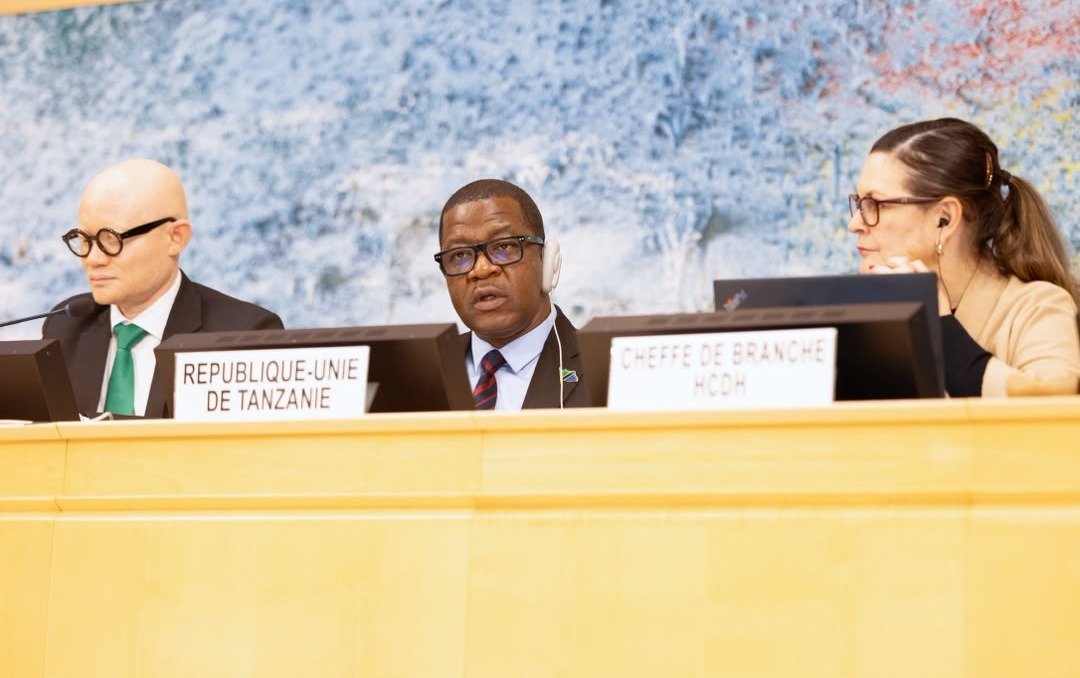
Tanzania has declined to support 68 recommendations made during its fourth Universal Periodic Review (UPR) at the United Nations Human Rights Council, defending its position on sensitive social and legal issues while reaffirming its commitment to international human rights cooperation.
The government has accepted 196 of the 280 recommendations presented by other countries, while postponing its position on 16 others to allow further legal, policy and economic assessments.
Minister for Constitutional and Legal Affairs Abdallah Hamis Ulega announced the decisions in Geneva, Switzerland, following Tanzania’s review during the 53rd session of the UN Human Rights Council’s Working Group on the Universal Periodic Review.
Ulega said the recommendations that Tanzania had not supported included proposals concerning the decriminalisation of consensual same-sex relationships, abolition of the death penalty and changes to certain national legal provisions that the government considers consistent with international standards.
He maintained that Tanzania’s approach was guided by its Constitution, existing legislation, national priorities, customs, traditions and the moral values of its society.
View this post on Instagram
The minister also emphasised that the government remained committed to protecting human dignity, equality before the law, personal liberty and freedom from torture, while insisting that international recommendations should take account of the country’s constitutional and social circumstances.
The decision places Tanzania among countries seeking to balance international human rights engagement with domestic legal frameworks and national sovereignty, particularly on issues involving sexuality, criminal justice and social values.
One of the most contested areas concerns criminalisation of same-sex sexual conduct between consenting adults.
During the review on November 5, several countries, including Australia, Ecuador, Iceland, Luxembourg, Malta and Spain, called on Tanzania to remove criminal penalties for consensual same-sex relationships and introduce stronger legal protections against discrimination based on sexual orientation and gender identity.
Malta specifically recommended repealing Sections 154 to 157 of Mainland Tanzania’s Penal Code and corresponding provisions in Zanzibar’s Penal Act.
Under Section 154 of the Mainland Penal Code, offences described in the legislation as unnatural offences carry a minimum prison sentence of 30 years and may attract life imprisonment. Section 155 provides for a minimum 20-year sentence for attempted offences.
The Tanzanian government has maintained that these provisions reflect its existing legal and social framework and has declined to support recommendations seeking their repeal.
However, the minister stressed that the government’s position on same-sex relationships did not remove the obligation to respect the dignity and fundamental legal protections of individuals.
The disagreement also highlights a broader question about how international human rights standards interact with national legislation, cultural values and the different legal traditions of member states.
Beyond sexuality-related recommendations, the death penalty emerged as another significant area of disagreement.
Several countries called on Tanzania to abolish capital punishment, with Australia among those urging the government to end its use.
Tanzania retains the death penalty in its criminal justice system, although it has maintained a longstanding de facto moratorium on executions. The debate therefore centres on whether the country should move towards formal abolition or retain capital punishment within its existing legal framework.
The government has also postponed its position on 16 recommendations involving bail procedures, the length of pre-trial detention and the free education system.
Ulega said these issues required further consultations with relevant institutions, including Parliament, the Judiciary, civil society organisations and other stakeholders. Tanzania expects to communicate its final position on the outstanding recommendations during the Human Rights Council’s session scheduled for February 2027.
The review also comes against the background of wider international concerns about Tanzania’s human rights record, particularly following the October 2025 general elections.
During the Geneva proceedings, several countries raised allegations of excessive use of force, killings, enforced disappearances, arbitrary arrests and restrictions on freedom of expression and peaceful assembly.
The United Kingdom called for independent investigations into alleged violations linked to the elections, while Norway urged Tanzania to ensure accountability through transparent and impartial processes.
Other recommendations addressed media freedom, the independence of the judiciary, the protection of human rights defenders, women’s rights and the minimum legal age of marriage.
Tanzania’s civil society organisations have also raised concerns about implementation of previously accepted recommendations.
A joint report prepared by 141 human rights organisations under the coordination of the Legal and Human Rights Centre, the Tanzania Human Rights Defenders Coalition and Save the Children Tanzania identified continuing challenges involving civic freedoms, access to justice, protection of vulnerable groups and accountability.
The organisations argued that although Tanzania had made progress in certain social and economic areas, implementation of some human rights commitments remained incomplete.
The government, however, has highlighted improvements in healthcare, women’s representation, education, social protection and access to essential services as evidence of progress in fulfilling its human rights responsibilities.
The latest review builds on Tanzania’s previous UPR examination in November 2021, when the country received 252 recommendations, accepted 187, partially supported 20 and declined to support 65.
The Universal Periodic Review is a peer-review mechanism established by the United Nations Human Rights Council in 2006. It examines the human rights records of all 193 UN member states approximately every four and a half years, allowing governments to question one another and propose measures to improve human rights protection.
Importantly, recommendations are not automatically imposed as domestic legislation. Countries indicate whether they support or note individual recommendations, with supported recommendations forming political commitments that are expected to guide implementation before the next review.
Tanzania’s latest position therefore does not amount to a withdrawal from the international human rights system. Rather, it reflects the government’s decision to cooperate with the mechanism while maintaining its position on particular legal and social questions.
The central test will now be whether the 196 supported recommendations translate into measurable improvements in justice, accountability, equality, public services and protection of fundamental rights, while the government continues consultations on the 16 outstanding issues.
The outcome will also shape Tanzania’s engagement with international partners and human rights institutions ahead of its next review cycle.