Joseph Isangura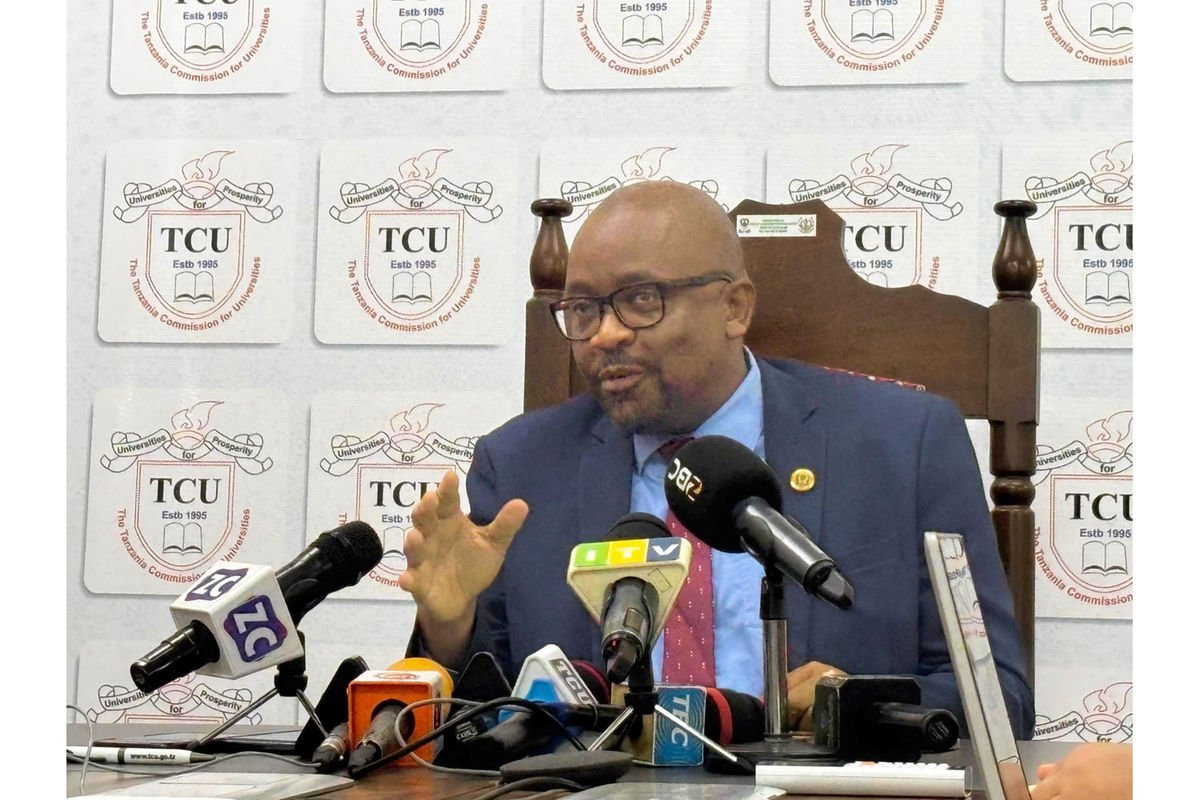
Thousands of Tanzania’s top-performing Form Six graduates can now begin competing for places in higher education after the Tanzania Commission for Universities (TCU) officially opened the first undergraduate admission window for the 2026/2027 academic year, offering more than 170,000 university places across public and private institutions.
The application period opened on July 10 and will run until August 10, giving eligible applicants one month to submit applications through individual universities’ online admission systems.
The admission exercise follows one of Tanzania’s strongest Advanced Certificate of Secondary Education Examination (ACSEE) performances in recent years, reflecting continued improvements in secondary education and creating a growing demand for university education.
Speaking during the announcement, TCU Executive Secretary Prof Charles Kihampa said universities have significantly expanded their admission capacity while introducing new academic programmes designed to meet Tanzania’s evolving economic and workforce needs.
“We have more than 170,000 admission slots available this year. Universities have continued to increase their capacity while introducing new and improved programmes that respond to the country’s current and future development needs,” Prof Kihampa said.
The expansion means available university places exceed the number of students who qualified through this year’s Form Six examinations, providing many eligible applicants with greater opportunities to pursue higher education than in previous years.
According to the National Examinations Council of Tanzania (NECTA), 125,056 candidates successfully passed this year’s ACSEE, representing 99.92 percent of all candidates whose results were released.
More notably, 67,696 students, equivalent to 54.09 percent of successful candidates, achieved Division I, the highest academic classification in Tanzania’s secondary education system.
Education experts say the results demonstrate sustained improvements in academic performance and place additional responsibility on universities to produce graduates with skills aligned to the country’s development priorities.
Also Read. The Global South Is Reshaping The World Order
The increased university intake forms part of Tanzania’s broader investment in higher education as the government seeks to produce more professionals in science, engineering, medicine, education, agriculture, information technology, business and other strategic sectors.
Officials say many universities have reviewed their academic programmes to better reflect emerging labour market demands, including digital technology, artificial intelligence, renewable energy, health sciences, logistics, industrial engineering and entrepreneurship.
Higher education has become increasingly important as Tanzania pursues ambitious infrastructure projects, industrialisation, energy development and digital transformation, all of which require a growing supply of skilled professionals.
Analysts say expanding university access alone will not be enough. They argue that maintaining academic quality, strengthening research, improving innovation and ensuring graduates possess practical skills will be critical to addressing youth unemployment and supporting long-term economic growth.
They also note that closer collaboration between universities and industry will be essential to ensure graduates leave higher education equipped with the knowledge and competencies required by employers.
Students have been encouraged to carefully review admission requirements, verify programme accreditation and submit applications before the August deadline to avoid missing available opportunities.
As Tanzania continues expanding investment in education, this year’s admission exercise represents one of the country’s largest university enrolment opportunities, reflecting both rising academic achievement and the government’s long-term ambition to build a highly skilled workforce capable of supporting national development and enhancing the country’s competitiveness in the regional and global economy.