Joseph Isangura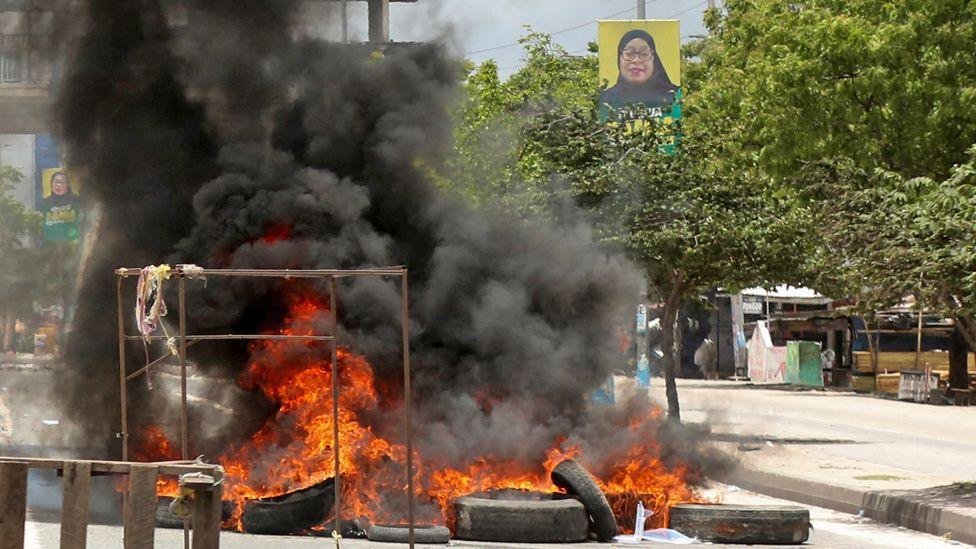
The Government of Tanzania has pledged swift action following the release of an official report into the violent unrest that occurred during and after the October 29, 2025 General Election, with President Samia Suluhu Hassan announcing a series of major reforms aimed at restoring national unity, justice, and stability.
Speaking at the State House in Dar es Salaam on April 23, 2026, President Samia said the government will immediately begin implementing key recommendations from the commission of inquiry led by retired Chief Justice Mohamed Othman Chande. Among the priority actions is the establishment of a National Reconciliation Commission and the creation of a special investigative body to probe criminal elements identified in the report.
The President also announced a comprehensive support package for victims, including government-funded medical treatment for those injured during the unrest, as well as financial assistance for businesses that suffered losses. Additional support will include rehabilitation services, psychological counseling, and provision of assistive devices for those left with permanent disabilities.
Describing the events as a “deep national wound,” President Samia expressed regret over the violence and emphasized the need for collective responsibility to ensure such incidents never recur. “This tragedy has placed a heavy burden on my shoulders as Head of State,” she said, pledging to carry that responsibility with determination and caution.
According to the commission’s findings, a total of 518 people lost their lives during the unrest, including 490 men (94.6 percent), 28 women (5.4 percent), and 21 children. Additionally, 2,390 people were injured, with 95 percent identified as civilians and 5 percent as police officers. Among the injured, 219 sustained severe injuries, while 197 were wounded by gunfire.
The report identified Dar es Salaam as the hardest-hit region, recording 182 deaths, followed by Mwanza (90), Mbeya (80), and Arusha (53). The commission emphasized that beyond the statistics, each loss represents a profound impact on families, communities, and the nation as a whole.
The inquiry also found evidence suggesting that elements of the violence were premeditated. According to the report, early warning signs had emerged as early as April 2025, with online platforms being used to mobilize and coordinate activities aimed at disrupting the election. The Tanzania Communications Regulatory Authority (TCRA) reportedly flagged multiple indicators of potential unrest, including the circulation of inflammatory messages and calls for demonstrations.
Investigators further revealed that at least 500 individuals were allegedly trained over a 28-day period in various locations, including forests and camps, in preparation for coordinated acts of violence. Plans reportedly included attacks on polling stations, destruction of infrastructure, and attempts to disrupt power supply systems.
Also Read; Africa Expands Trade Links as Regional Integration Accelerates
The commission identified 16 distinct tactics used to orchestrate the unrest, including road blockades, arson, coordinated group movements, and the use of coded symbols for identification among participants. It concluded that the events did not qualify as peaceful protests but rather constituted organized acts of violence and public disorder.
At the same time, the report acknowledged claims regarding the use of force by security agencies, particularly the police, noting that the scale and nature of force varied depending on circumstances. The commission stated that investigations are ongoing to assess the balance between law enforcement actions and the protection of human rights.
Importantly, the commission dismissed allegations of mass graves, stating that extensive investigations—including site inspections, expert analysis, and satellite imagery—found no evidence to support such claims.
Among its key recommendations, the commission proposed the declaration of a national day of mourning to honor the victims, alongside the provision of free medical care for the injured and the expansion of psychosocial support services in affected areas. It also called for the adoption of a new constitution by 2028 to strengthen democratic foundations ahead of the 2030 General Election.
President Samia reaffirmed the government’s commitment to reviewing and implementing all recommendations, stressing that the country must learn from the crisis. She urged unity and resilience, noting that while international criticism had been strong, some narratives were influenced by misinformation.
“In times of grief, our culture calls for compassion, not condemnation,” she said, emphasizing that the greatest suffering was borne by Tanzanians themselves.
The government now faces the critical task of translating the commission’s findings into concrete reforms, as the nation seeks to heal, rebuild trust, and reinforce its democratic institutions.