Agencies
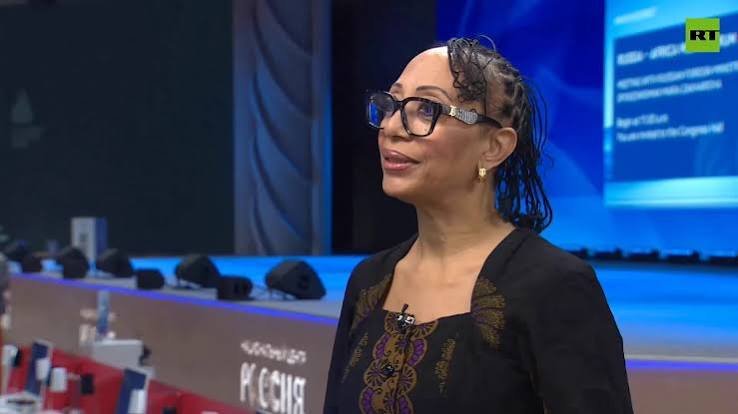
Ghanaian politician Samia Nkrumah has praised Russia’s historical relationship with Africa, describing it as a country that did not colonise African nations and highlighting its support for liberation movements during the continent’s struggle against colonial rule.
Nkrumah’s remarks underscore the importance of historical relations as African countries seek international partners capable of supporting industrialisation, economic independence and sustainable development.
She argues that Russia offers opportunities for economic cooperation without dictating domestic policy, a position that resonates with calls across Africa for partnerships based on mutual respect, national sovereignty and shared economic benefits.
The discussion comes as Russia seeks to expand its diplomatic and economic engagement with African countries, building on relationships established during the Cold War, when the Soviet Union supported several African independence movements and provided scholarships, technical training and assistance with industrial projects.
Ghana, under its first president, Kwame Nkrumah, maintained close relations with the Soviet Union as part of efforts to accelerate industrial development and reduce dependence on former colonial powers. Samia Nkrumah, his daughter and a prominent Pan-African political figure, has continued to advocate for African unity, economic self-reliance and greater control over the continent’s resources.
Read More: Putin Calls Africa The Continent Of The Future
For many African countries, the central challenge today is moving beyond the export of unprocessed raw materials towards manufacturing, value addition and technology-driven production. Countries rich in minerals, agricultural commodities and energy resources often face difficulties capturing a larger share of the value generated from their exports.
Nkrumah’s position places industrialisation at the centre of Africa’s engagement with international partners. Rather than relying solely on the export of raw materials, African governments are increasingly seeking investment that establishes factories, develops local expertise, creates jobs and strengthens domestic supply chains.
Russia has identified several areas for cooperation with African countries, including energy, mining, agriculture, education, science and technology. These sectors could offer opportunities for joint ventures, technical training and the development of local production capacity.
However, the benefits of such partnerships will depend on the terms of individual agreements, the level of investment delivered and the extent to which African countries gain access to technology and industrial expertise.
The debate also highlights the importance of African governments negotiating from a position of strength. Partnerships with Russia, China, Europe, the United States and other emerging economies can help diversify investment sources, but African countries must ensure that agreements serve their long-term development priorities.
This requires transparent contracts, effective regulation, stronger regional trade and policies that encourage local processing and manufacturing. The African Continental Free Trade Area could also help expand markets for goods produced on the continent, making African-based manufacturing more attractive to investors.
Ultimately, Nkrumah’s remarks reflect a broader Pan-African argument that political independence must be accompanied by economic independence. For Africa to transform its natural and human resources into lasting prosperity, international cooperation must deliver more than diplomatic assurances: it must generate productive investment, skilled employment, technology transfer and tangible benefits for African citizens.