Joseph Isangura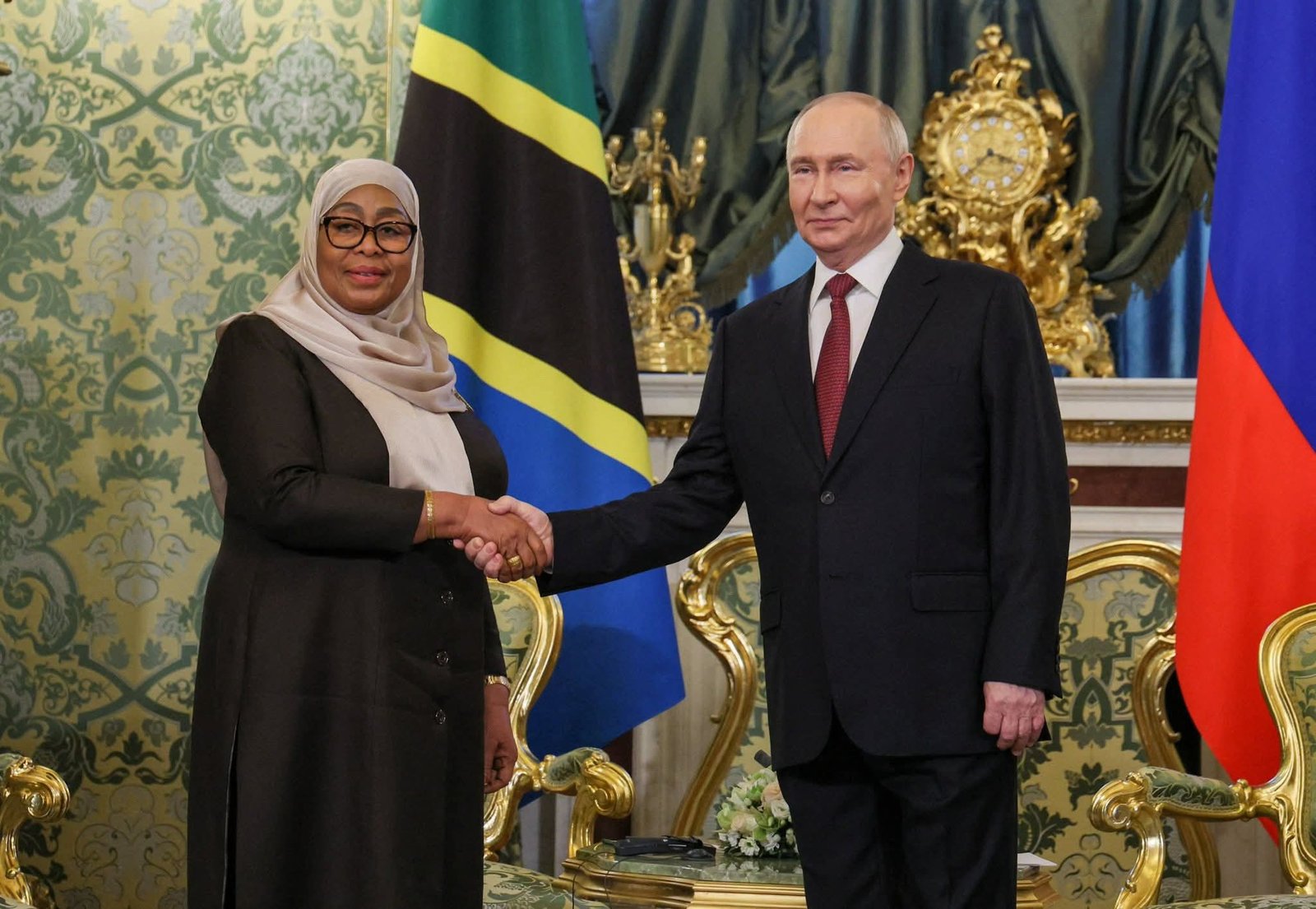
Tanzanian President Samia Suluhu Hassan and Russian President Vladimir Putin have pledged to significantly expand economic and strategic cooperation between their countries during high-level talks in Moscow,
marking a major diplomatic moment that reflects Africa’s growing geopolitical importance in an increasingly competitive global order.
The meeting, held during President Samia’s state visit to the Russian Federation, signals a new phase in Tanzania–Russia relations as both nations seek deeper partnerships in trade, energy, technology, education, mining, agriculture, infrastructure, and tourism amid shifting global alliances and intensifying competition for influence across Africa.
Speaking after the talks, President Samia said Tanzania and Russia had reviewed the rapid growth of bilateral trade, which increased by 72 percent between 2020 and 2025 — a development both leaders described as evidence of strengthening economic ties between the two countries.
However, despite the significant growth, both governments acknowledged that trade levels still remain below the potential created by decades of historical cooperation and political friendship dating back to the Cold War era.
The discussions in Moscow carried significance far beyond routine diplomacy. Analysts say the meeting reflects a broader geopolitical trend in which African nations are increasingly diversifying international partnerships beyond traditional Western allies while global powers intensify efforts to strengthen economic and strategic influence across the continent.
Also Read:Russia Moves Toward High-Stakes State Duma Elections
For Tanzania, the visit is being viewed as part of President Samia’s wider economic diplomacy strategy aimed at attracting investment, expanding industrial cooperation, and positioning the country as a regional gateway for trade and infrastructure development in East Africa.
For Russia, the engagement highlights Moscow’s continued efforts to deepen political and economic relationships in Africa at a time when global competition for energy resources, mineral access, agricultural markets, and geopolitical partnerships is accelerating.
During the bilateral talks, both leaders discussed expanding cooperation in several strategic sectors expected to shape Tanzania’s long-term development trajectory, including science and technology, higher education, energy production, mining, agriculture modernization, transport infrastructure, and tourism promotion.
Officials familiar with the discussions say Tanzania is particularly interested in leveraging Russian expertise in energy, technical education, industrial engineering, and mineral exploration as part of broader plans to accelerate industrial growth and economic transformation.
The visit also carries deep historical symbolism. President Samia’s trip marks one of the highest-level engagements between Tanzania and Russia in decades and revives diplomatic ties rooted in the era of Tanzania’s founding president, Mwalimu Julius Nyerere, whose government maintained close relations with the former Soviet Union during the height of the Cold War.
Observers note that while Nyerere’s engagement with Moscow was shaped largely by ideological and liberation politics, Samia’s approach is centered on economic pragmatism, investment attraction, and strategic development partnerships in a rapidly evolving global economy.
The timing of the visit is also significant as Russia continues seeking stronger alliances outside Europe amid mounting geopolitical tensions with Western nations. African countries, rich in natural resources and expanding markets, have increasingly become central to Moscow’s diplomatic and economic outreach.
Political analysts say Tanzania’s balancing approach to international relations allows it to strengthen ties with multiple global powers while maintaining an independent foreign policy posture focused primarily on national development interests.
Beyond official agreements and diplomatic symbolism, the meeting between Samia and Putin reflects the broader transformation underway in Africa’s international positioning — where African leaders are increasingly leveraging geopolitical competition to negotiate investment, technology transfer, and development cooperation from multiple global partners.
As President Samia continues her visit in Russia, including participation in the St. Petersburg International Economic Forum, attention is expected to focus not only on new agreements emerging from the trip, but also on how Tanzania intends to navigate the evolving global political and economic landscape in the years ahead.