 Hassan Magulumali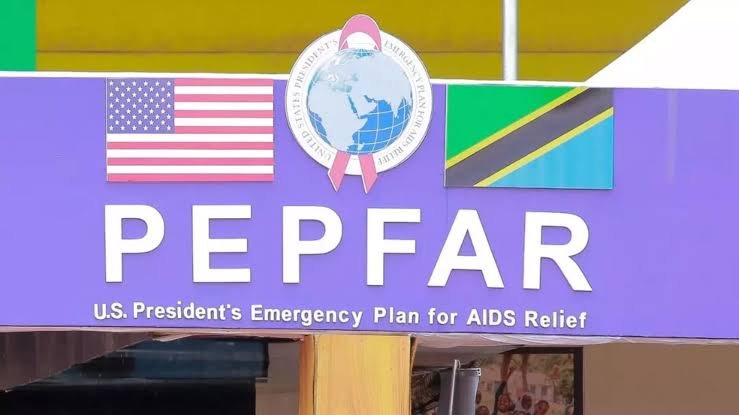
Tanzania’s long dependence on foreign financing for essential health programmes is coming under renewed scrutiny as changes in United States assistance expose weaknesses in the country’s ability to independently sustain services that have relied heavily on external support.
For years, the U.S. President’s Emergency Plan for AIDS Relief (PEPFAR) has supported Tanzania’s HIV response, including treatment, prevention, laboratory services, community programmes, data systems and health workers. The partnership has helped Tanzania expand access to lifesaving services, but the disruption of U.S. assistance has also raised a difficult question: how much of the money invested in Tanzania’s health sector has created permanent national capacity, and how much has financed programmes that remain dependent on external funding?
The vulnerability became clear when U.S. funding was paused or disrupted in 2025. UNAIDS reported an almost complete halt to HIV-prevention interventions that were fully funded by PEPFAR, including programmes targeting vulnerable adolescent girls and young women, orphans and vulnerable children, and voluntary medical male circumcision. Other prevention services, including PrEP for some at-risk populations, were also affected.
The disruption went beyond prevention. UNAIDS reported concerns about possible treatment interruptions, patients hoarding antiretroviral medicines and interruptions in transporting laboratory samples. Technical support to regions, councils and health facilities was also paused. Although Tanzania had measures to protect the supply of antiretroviral medicines, the organization noted uncertainty surrounding commodity security and programme implementation beyond 2025.
That experience has exposed a structural problem. Foreign health financing can build programmes quickly, but if the salaries, technical expertise, information systems, community networks, laboratory operations and logistics surrounding those programmes remain externally financed, the country can struggle when the funding source changes.
A 2026 World Bank assessment puts the wider financing challenge into sharper perspective. It says Tanzania has historically relied heavily on international assistance to finance its health system, with U.S. bilateral support and Global Fund financing together accounting for nearly two-thirds of external health assistance. The Bank says both sources are now being scaled back, creating a significant and immediate funding gap.
The International Monetary Fund has similarly highlighted the scale of Tanzania’s exposure. Its assessment reported that more than 20,000 workers were employed directly or indirectly through USAID-supported programmes, while another 30,000 health workers were receiving USAID support for additional activities beyond their official duties. The IMF said the funding shock had affected health-sector supplies and staff and could require substantial additional domestic financing if the disruption became permanent.
Read More: What Happens When America Switches Off Health Funding?
If an externally financed programme ends and the government must immediately find new money for its personnel, data systems, transportation, laboratory services and community operations, the investment may have strengthened service delivery without fully transferring financial responsibility to the national system.
Kenya provides one of the clearest examples of the financial pressure created when external health assistance is withdrawn. A 2026 analysis by the Centre for Epidemiological Modelling and Analysis at the University of Nairobi found that external health funding fell from KSh126 billion to KSh54 billion in the 2025/26 financial year following the withdrawal of U.S. support and a decline in government funding.
The report also estimated that Kenyan counties would need about KSh47.8 billion annually to absorb more than 41,000 PEPFAR-supported workers. It found that health information systems were highly dependent on external funding and warned that vulnerable groups could be disproportionately affected.
The Kenyan experience demonstrates that the real cost of donor withdrawal can extend far beyond the value of grants. Governments may inherit the responsibility for thousands of workers, information systems and service networks without automatically inheriting the financial resources needed to maintain them.
Uganda has faced similar disruption. UNAIDS reported that U.S. funding cuts affected HIV commodity distribution, community programmes, PrEP, HIV testing and the capacity of some ART facilities across the region. The organization also reported that thousands of health workers were retrenched across East and Southern Africa following the funding changes, alongside disruption to community health systems and data services.
Zambia provides another warning about the fragility of externally supported programmes. A 2026 analysis of the impact of U.S. funding cuts found that HIV service volumes generally declined following the January 2025 stop-work order. Although many sites subsequently recovered, researchers found persistent reductions in some HIV testing and ART-initiation services, while workforce reductions, supply-chain disruptions and the loss of community-based services increased pressure on health facilities.
Across these countries, the pattern is similar: donor financing can expand access to essential health services, but sudden changes in external support can reveal gaps in domestic financing, staffing and institutional capacity.
UNAIDS reported that the government was working to absorb health workers, strengthen its electronic Care and Treatment Centre database, maintain commodity distribution through the Medical Stores Department and explore the use of government postal services to transport laboratory samples.
The government has also committed to increasing domestic health financing. According to the World Bank, Tanzania introduced seven new revenue measures expected to generate up to TZS586 billion, with 70 percent earmarked for the AIDS Fund and 30 percent for the Universal Health Insurance Fund for vulnerable people. However, the Bank cautioned that actual collections could fall below projections and noted that historically earmarked revenues have not always been fully allocated to their intended sectors.
At the same time, Tanzania and the United States signed a new five-year health agreement in July 2026 involving more than $1.3 billion in U.S. investment, while Tanzania committed $1.8 billion of its own resources to the health sector over the same period. The agreement explicitly focuses on strengthening Tanzania’s capacity to finance, manage and sustain essential health services.
The new arrangement therefore shifts the debate from whether Tanzania needs foreign health assistance to whether that assistance is translating into lasting national capacity.
PEPFAR has undeniably helped support lifesaving HIV services in Tanzania. But the funding disruptions have exposed how difficult it can be for a country to take over programmes when donor financing supports not only medicines but also the people, systems and infrastructure surrounding those medicines.
It is building a health system in which laboratories, health workers, community services, digital information systems, prevention programmes and essential medicines can continue functioning even when an external partner changes its priorities.
The experiences of Kenya, Uganda and Zambia show that this transition can be financially and operationally difficult. Tanzania’s ability to convert external assistance into permanent domestic capacity will increasingly determine whether years of international health investment leave behind a more self-sustaining system—or a network of programmes that remains vulnerable whenever foreign financing changes.