MWE Correspondent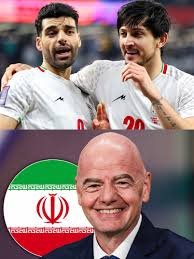
Gianni Infantino has reinforced FIFA’s commitment to sporting inclusivity by confirming that Iran will participate in the 2026 FIFA World Cup in the United States, despite ongoing geopolitical tensions in the Middle East.
Speaking during FIFA engagements linked to the organization’s annual meetings, Infantino framed Iran’s participation as part of football’s broader institutional mission. “Iran will participate in the FIFA World Cup 2026 and will play in America, because it is our duty to unite the world and bring people together,” he said, emphasizing sport as a platform for international connection.
The statement comes at a time when geopolitical tensions remain elevated across the Middle East, increasing scrutiny over how international sporting bodies manage participation from countries involved in regional conflicts. FIFA’s position signals continuity in its longstanding policy of separating sporting qualification from political disputes where operationally possible.
The decision reflects the broader logic of globalization, where major sporting events increasingly function as shared civic spaces that transcend bilateral political disputes. The FIFA World Cup, as one of the most globally watched events, carries symbolic significance beyond competition itself.
By confirming Iran’s participation, FIFA is reinforcing its institutional commitment to universality. Qualification remains based on sporting performance rather than geopolitical alignment, a principle embedded within the organization’s governance framework.
This position also carries operational implications. Hosting Iran in the United States introduces practical considerations involving visas, logistics, and security coordination. However, FIFA leadership appears confident that institutional cooperation and diplomatic arrangements will enable tournament continuity.
Also Read; Health Insurance Debate Sparks Wider Religious Questions
Analysts note that the decision reflects the increasingly political nature of international sports governance. Institutions such as FIFA are no longer merely tournament organizers but are often required to manage the intersection of sport, diplomacy, and public perception.
Within the framework of international relations, such events create limited but symbolically significant opportunities for managed interaction between politically distant actors. While sport does not resolve geopolitical disputes, it can sustain channels of visibility and structured coexistence.
Infantino further emphasized optimism and institutional cohesion, pointing to FIFA Congress meetings, the FIFA Series, and the upcoming World Cup as demonstrations of collective unity. The message is strategically aligned with FIFA’s broader branding of football as a global connector during periods of political fragmentation.
Critics may question whether symbolic inclusion sufficiently addresses underlying tensions, yet FIFA’s approach remains focused on preserving sporting neutrality under conditions of geopolitical complexity.
The broader implication extends beyond Iran alone. It reflects how international organizations increasingly seek to maintain continuity and inclusivity within systems shaped by conflict and fragmentation.
Under principles associated with international law, sporting bodies retain broad discretion over tournament participation rules, provided they remain internally consistent and operationally feasible.
For FIFA, the message is clear: the World Cup remains a platform intended to gather nations regardless of political divisions.
This is not diplomatic resolution.
It is institutional continuity through global sport.