MWE Correspondent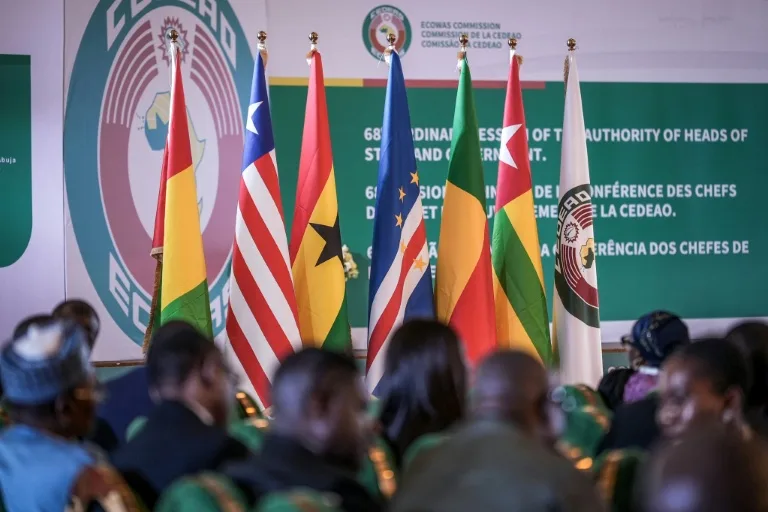
The Economic Community of West African States (ECOWAS) has firmly rejected the transition plan put forward by the military leaders who seized power in Guinea‑Bissau, insisting that the nation must return swiftly to constitutional governance and democratic processes.
The statement, delivered after emergency talks among regional leaders, underscores growing concern about political instability across the region.
On November 26, 2025, a group of army officers identifying themselves as the High Military Command for the Restoration of National Security and Public Order abruptly ended the country’s electoral process and ousted President Umaro Sissoco Embalo just days after a closely contested election. The junta then installed Major‑General Horta Inta‑a as interim leader, outlining a one‑year transition period that would postpone the formal declaration of election results and suspend key democratic institutions.
The coup has drawn widespread international condemnation. At its annual summit in Abuja, Nigeria, ECOWAS leaders declared that the military’s transition plan was unacceptable and demanded a return to civilian rule without delay. The bloc labelled the takeover an unconstitutional interruption of the democratic process and emphasised its zero‑tolerance stance on such power grabs. ECOWAS also warned of targeted sanctions against individuals or groups undermining the restoration of constitutional order if the junta failed to comply.
In response to the crisis, ECOWAS took the rare step of suspending Guinea‑Bissau from all decision‑making bodies within the regional organisation until full constitutional order is restored. The bloc further called for the immediate release of political detainees, including officials held since the coup, and urged the military to allow the National Electoral Commission to resume its work and complete the election process.
Also Read; Benin Military Thwarts December Coup Attempt
The unfolding political turmoil reflects a pattern of democratic setbacks in West Africa, where several nations have recently experienced military interventions or attempted coups. This broader trend has heightened fears that democratic norms are weakening across the region, potentially undermining decades of progress in governance and political stability.
The African Union and the United Nations have also condemned the abrupt change in power and called for the restoration of constitutional order, emphasising the need for peaceful dialogue and respect for the will of the electorate. Both organisations have highlighted the legal protections afforded by international agreements that reject unconstitutional changes of government.
In the capital city of Bissau, public reactions have been mixed. While some residents express anxiety about the uncertainty ahead, civil society groups have staged protests demanding the reinstatement of democratic institutions and accountability for those responsible for disrupting the electoral process.
ECOWAS has dispatched a high‑level delegation to engage with the military leadership, but so far talks have yielded no breakthrough. Regional leaders say they will intensify diplomatic efforts to negotiate a peaceful and constitutional path forward, while maintaining pressure on the junta through diplomatic, economic, and political channels.