MWE Correspondent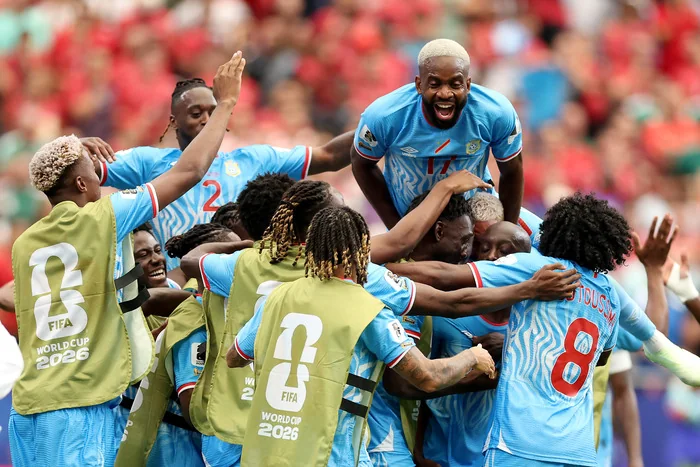
The Democratic Republic of Congo announced its return to football’s grandest stage in dramatic fashion this week, holding European powerhouse Portugal to a 1-1 draw in one of the biggest surprises of the 2026 FIFA World Cup.
For many football observers, the result was more than just a point earned in Group K. It was a statement from a nation that had waited more than half a century for another opportunity to compete at the world’s most prestigious football tournament.
Playing before a packed crowd in Houston, Texas, Portugal entered the match as overwhelming favourites. Led by veteran captain Cristiano Ronaldo and boasting one of the most talented squads in the competition, the Portuguese side was widely expected to begin its campaign with a comfortable victory.
The script initially appeared to unfold as predicted when João Neves gave Portugal an early lead in the sixth minute. Yet what followed demonstrated why football remains the world’s most unpredictable sport.
Rather than retreat into a defensive shell, DR Congo gradually grew into the contest. The African side absorbed pressure, maintained discipline and exploited opportunities on the counterattack. Their persistence was rewarded in first-half stoppage time when Yoane Wissa rose to score a historic equaliser, registering DR Congo’s first-ever goal at a FIFA World Cup finals tournament. The strike also secured the country’s first point in World Cup history.
The significance of the moment extends far beyond the final scoreline.
Known as Zaire during its previous World Cup appearance in 1974, the nation endured one of the most difficult campaigns in tournament history and left the competition without a point. For decades, that experience overshadowed Congolese football and became a symbol of unfulfilled potential despite the country’s immense football talent.
The draw against Portugal therefore represents a powerful chapter of redemption. More than fifty years after their last World Cup appearance, DR Congo returned not as underdogs merely seeking respectability, but as competitors capable of challenging one of Europe’s elite football nations.
For Portugal, meanwhile, the result has raised questions about their ability to convert possession into meaningful attacking opportunities. Despite dominating the ball for large periods of the match, Portugal struggled to create clear chances. Ronaldo, participating in a record-equalling sixth World Cup, endured a frustrating afternoon as his team failed to capitalize on its superiority.
The outcome also reinforces a broader trend emerging from the expanded 48-team World Cup. Several nations from Africa have demonstrated that the traditional gap between football’s established powers and emerging nations is narrowing. Cape Verde’s draw against Spain and DR Congo’s result against Portugal have become early examples of Africa’s growing competitiveness on the global stage.
Also Read, US, Iran Launch Crucial Swiss Peace Talks
For a country that has faced decades of political instability, conflict and economic challenges, football remains one of the few forces capable of uniting millions of citizens behind a common cause. Across Kinshasa and other cities, celebrations erupted as supporters embraced a result many had scarcely imagined before kickoff.
Yet the Congolese players themselves appeared determined not to view the draw as a final achievement. With crucial group-stage matches still ahead, the team now finds itself in an unexpected position: not merely participating in the World Cup, but genuinely competing for a place in the knockout rounds.
Whether DR Congo ultimately advances or not, the draw against Portugal has already secured its place among the defining stories of the opening week of the 2026 FIFA World Cup.
In a tournament often dominated by established football superpowers, an African nation absent for generations has reminded the world that history can be rewritten, expectations overturned, and dreams revived on football’s biggest stage.