MWE Correspondent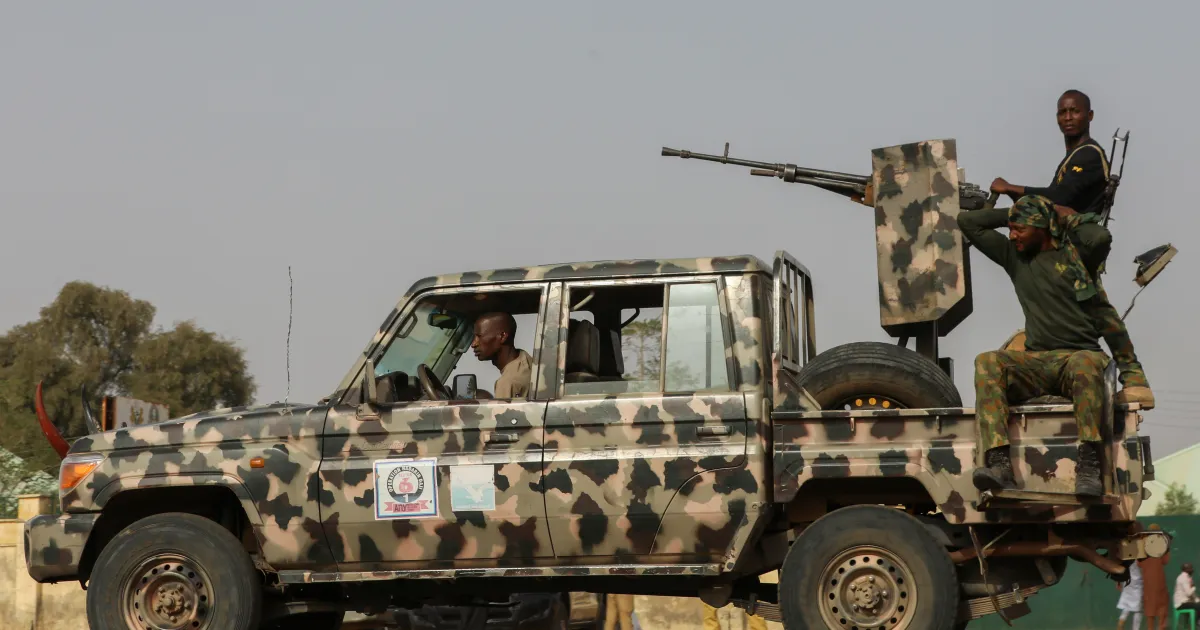
Nine people have been killed after armed men launched a prolonged assault on Guyaku village in Gombi Local Government Area of Adamawa State in northeastern Nigeria, in an attack that has once again exposed the fragile security situation in the region.
According to local authorities, the attackers stormed the village in the early hours and opened fire on residents, triggering panic as families fled into surrounding bushes for safety. The raid lasted several hours, during which multiple homes were set ablaze, leaving parts of the community in ruins and displacing dozens of residents.
Security officials confirmed the death toll and said joint operations have been deployed to the area to track down those responsible. Military and police units are reportedly conducting search operations across surrounding settlements, though officials have not yet disclosed whether any arrests have been made.
In a statement circulating through monitored online channels, the Islamic State West Africa Province (ISWAP), a regional affiliate of the Islamic State group, claimed responsibility for the attack. However, Nigerian security agencies have not independently verified the claim and say investigations are ongoing to determine the exact perpetrators and their affiliations.
The attack adds to a long list of violent incidents in northeastern Nigeria, a region that has faced more than a decade of insurgency involving extremist factions, armed criminal groups, and intercommunal violence. Rural communities remain particularly vulnerable due to limited security presence, difficult terrain, and delayed emergency response capabilities.
Also Read; Tanzania Pushes Green Mineral Industrialisation Drive
Over the years, repeated assaults on villages have forced thousands of civilians to abandon farming and trade, deepening humanitarian pressures in an already struggling region. Analysts warn that such attacks not only cause immediate loss of life but also erode long-term economic stability by disrupting agriculture, which remains the backbone of rural livelihoods.
Security experts say the persistence of such violence highlights the evolving nature of armed groups in the Lake Chad Basin region, where fragmented factions continue to exploit gaps in territorial control. Even as government forces claim territorial gains in certain areas, isolated communities remain exposed to sudden and often brutal raids.
Local leaders have renewed calls for a stronger and more permanent security presence, arguing that reactive military operations alone are not enough to protect civilians. Community representatives have also urged investment in early warning systems, infrastructure, and intelligence-sharing mechanisms to prevent further attacks.
Humanitarian organizations operating in the region warn that continued insecurity risks deepening displacement and food insecurity, as farming cycles are repeatedly disrupted and supply chains broken.