Joseph Isangura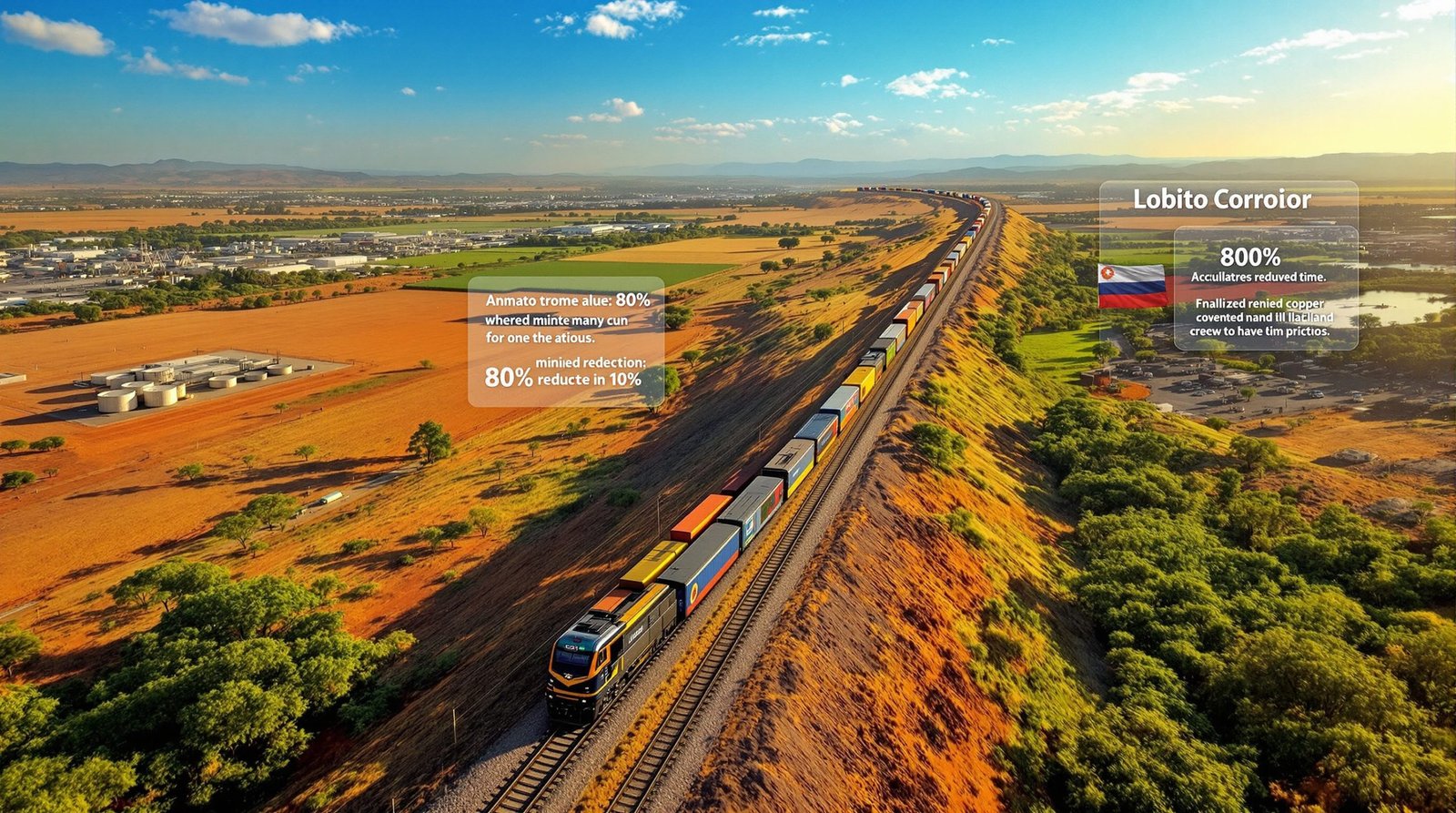
African nations are accelerating plans to connect the Atlantic and Indian oceans through strategic rail corridors, as intensifying competition between the United States and China reshapes control over critical mineral supply routes.
At the center of this emerging contest are two major infrastructure projects—the Lobito Corridor and the TAZARA Railway—which together could form a transcontinental network stretching from Angola’s Atlantic coast to Tanzania’s Indian Ocean port of Dar es Salaam.
Regional leaders and analysts say the corridors are no longer just transport projects, but strategic assets that could redefine trade flows, reduce export bottlenecks, and strengthen Africa’s bargaining power in a rapidly shifting global economy.
“This is about more than railways—it’s about who shapes the future of global supply chains,” said a regional infrastructure analyst familiar with the projects. “Africa is positioning itself at the center of that conversation.”
The Lobito Corridor, running roughly 1,600 kilometers, is designed to move copper, cobalt, and other critical minerals from the Central African Copperbelt to international markets via the Atlantic. The route cuts through the Democratic Republic of Congo and Zambia—countries that hold some of the world’s largest reserves of minerals essential for renewable energy technologies and electric vehicles.
Western governments have pledged billions of dollars to support the corridor’s expansion, framing it as part of a broader effort to diversify supply chains and reduce dependence on single-market logistics networks. Officials describe the investment as both economic and strategic, aimed at improving transparency and efficiency in resource transport.
On the eastern side of the continent, the TAZARA Railway—stretching approximately 1,860 kilometers from Zambia to Tanzania—remains a vital export lifeline for landlocked economies. Originally constructed in the 1970s as a symbol of South-South cooperation, the line is now undergoing a major modernization program following a multibillion-dollar agreement signed in late 2025.
The planned upgrades are expected to increase cargo capacity and reduce transit times, reinforcing the railway’s role in connecting African producers to Asian and global markets through the Indian Ocean.
For many African governments, the long-term vision extends beyond individual corridors. Policymakers are increasingly exploring the possibility of integrating the Lobito and TAZARA routes into a seamless trans-African network, effectively linking two oceans and transforming intra-continental trade.
Also Read; Botswana–South Africa Crisis Over Migrant Abuse
Such a development could significantly lower transport costs, ease congestion at traditional export hubs, and open new economic zones across the interior of the continent.
Despite growing geopolitical pressure, African leaders have signaled a pragmatic approach—working with multiple global partners while prioritizing national development goals. Analysts note that this balancing strategy reflects a broader shift in Africa’s global posture, moving away from dependency toward strategic autonomy.
“Africa is no longer choosing sides,” said an economist based in Southern Africa. “It is choosing opportunities.”
Recent estimates suggest that the broader region connected by these corridors contains vast untapped natural resources, making infrastructure control increasingly critical in the global race for energy transition materials. However, experts caution that the true benefits will depend on governance, transparency, and the ability of countries to retain value from their exports.
As construction advances and financing expands, the race to shape Africa’s infrastructure landscape is expected to intensify. Yet the outcome may ultimately depend less on external competition and more on how effectively African nations leverage their geographic and economic advantages.